

What you'll learn in 30 seconds
Selling socks online takes more than great designs. This guide now covers the business side too: how big the market is, which business model fits you, how to price for profit, and where to sell. Then we walk through 14 tips on branding, photos, email, social media, and the mistakes that trip up new sellers.
Rising Popularity of Selling Socks Online
Socks used to be an afterthought. Now they’re one of the easiest products to build a brand around. Two big shifts explain why.
The Power of Customization
The allure of custom socks lies in their ability to be personalized to suit individual preferences. Whether it’s a favorite sports team, a beloved pet, or a cherished hobby, custom socks allow people to showcase their unique passions.
As a result, more and more consumers are turning to online platforms to find the perfect pair that truly represents their personality. Your online store could be the place where they find that perfect pair of socks and Sockrates can be the manufacturer to help make that happen for you!
Fashionable and Functional
Gone are the days when socks were merely a daily boring necessity. I guess you could say those are pre-sockratic times (aahh… sorry. We thought that was funny). 🤓
Today, socks have become a fashion statement, with an array of vibrant colors, patterns, and designs available. From whimsical prints to sophisticated styles, socks offer a versatile accessory to complete any outfit. If you sell socks online, you can tap into a market that craves both style and comfort.
It’s worth mentioning that without using the best custom sock manufacturers, you won't get very far. We of course pride ourselves in being a leading custom sock manufacturer, but regardless of who you work with make sure your chosen custom sock manufacturer delivers quality.
Before we get to the tips, let’s look at the numbers behind the sock business.
How Big Is the Sock Market (and Is It Actually Profitable)?
Short answer: big, and yes, if you price it right.
Grand View Research valued the global socks market at $49.5 billion in 2025. It expects that figure to reach $73.8 billion by 2033, growing about 5.2% a year. Lifestyle socks, the everyday and fashion kind, made up roughly 60% of those sales. That’s the exact space most online sock brands play in.
So, is selling socks profitable? It usually is. Socks are cheap to make, light to ship, and people rebuy them often. SaleHoo’s product research puts novelty socks at 50 to 85 percent gross margin. For a new brand, a realistic target is 50 to 80 percent, depending on your model.
Three things decide where you land. Custom and private label designs earn more than reselling generic pairs. Your own store keeps more of each sale than a marketplace does. And shipping, fees, and ads all come out of that margin. Gross margin isn’t take-home pay, so plan for those costs from day one.
Choose How You’ll Sell: Business Models Explained
There’s no single way to sell socks online. The model you pick shapes your costs, your margins, and how much control you have. Here are the main paths.
White Label: Buy Pre-Made, Add Your Brand
White label means buying socks a factory already makes, then adding your label or packaging. It’s the fastest way to start. You skip design and sampling, and minimums are often low. The trade-off? Other sellers can buy the exact same socks. That makes standing out hard, and you end up competing on price. White label works best for testing a niche before investing in your own designs.
Private Label: Made to Your Spec
Private label means a manufacturer knits socks to your design. You choose the colors, yarn, length, and pattern. The result is a product nobody else sells. It costs more upfront and takes more planning. You’ll need samples, approvals, and a minimum order per design. In return, you get stronger margins and a brand people can’t find elsewhere. This is the model most lasting sock brands grow into.
Bulk Custom Orders for Events, Teams, and Gifting
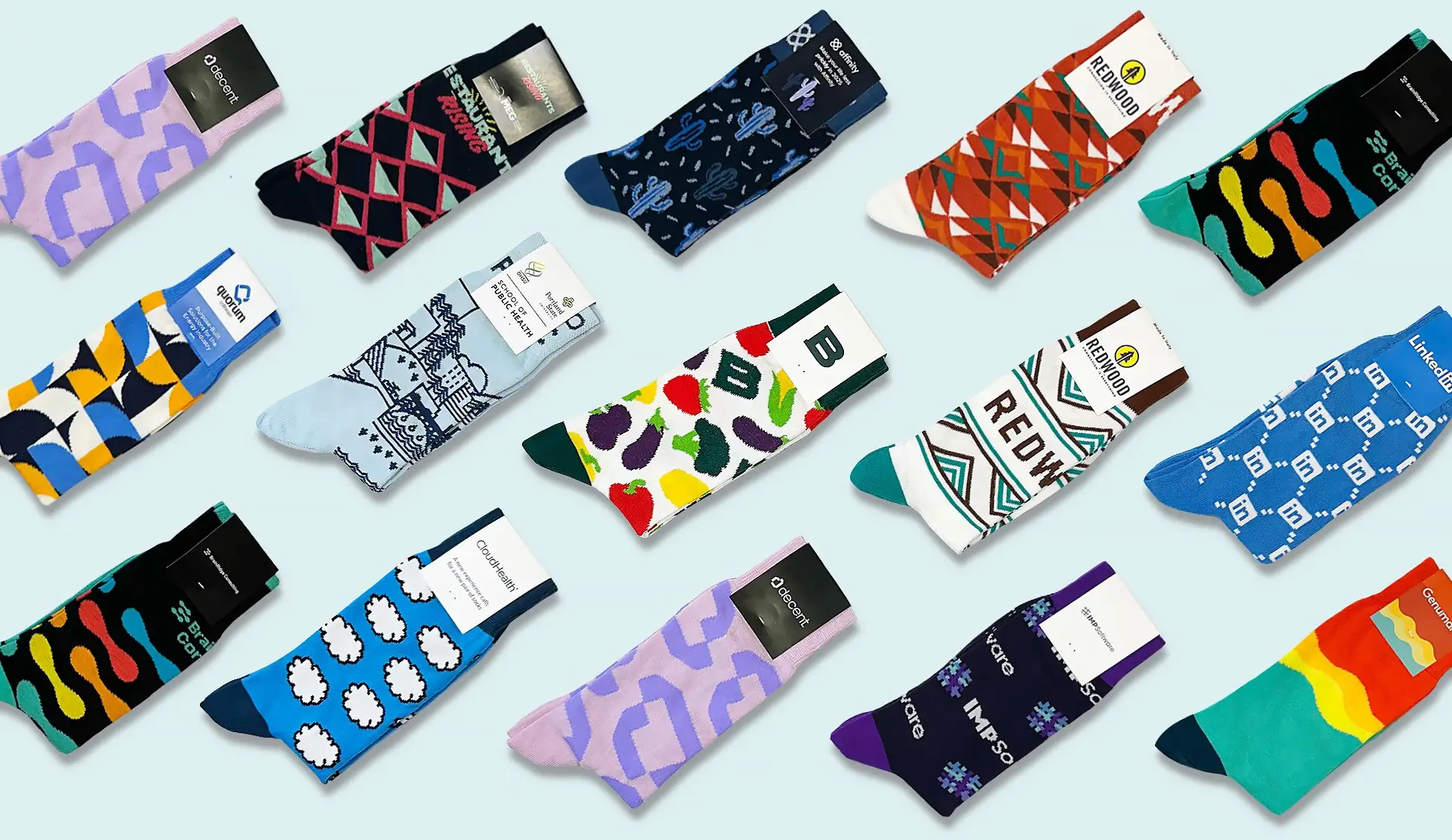
Not every sock business sells pair by pair. Some sell in bulk to companies, schools, sports teams, and event planners. Think branded socks for a trade show, a charity run, or a holiday employee gift. Orders are larger and less frequent. Buyers care most about deadlines and accurate brand colors. One good corporate client can be worth hundreds of single-pair shoppers.
Reselling Used or Gently Worn Socks
Some people resell gently worn socks through general secondhand marketplaces, though it’s a small category and platforms like eBay don’t allow used socks at all.
The bulk custom model is exactly where Sockrates fits. Orders start at 100 pairs per design, so a first run for a small team or single event stays realistic. You can browse recent custom sock projects to see how brands, teams, and events use them.
Where to Sell Your Socks Online: Platform Comparison
Once you know your model, pick where you’ll sell. Most sellers start with one channel and add a second later. Here’s how the main options compare on fees, control, and fit.
Your Own Store (Shopify or Similar)
Your own store gives you the most control. You own the customer list, the branding, and the checkout. Shopify’s Basic plan costs $39 a month, or $29 billed annually, plus 2.9% + 30¢ per online card sale. The catch is traffic. Nobody finds your store unless you bring them there through social, ads, email, or search.
Best for: brands with original designs that want long-term customer relationships.
Amazon
Amazon puts you in front of a huge pool of ready buyers. You pay for that reach, though. The Professional selling plan costs $39.99 a month. Clothing referral fees are tiered by price: 5% at $15 or under, 10% up to $20, and 17% above $20. Fulfillment by Amazon adds its own fees if you use it. You also get little brand control and limited customer data.
Best for: sellers with competitive prices and multi-packs who want volume.
Etsy
Etsy suits original, creative socks. There’s no monthly fee to start. You pay $0.20 per listing and a 6.5% transaction fee on the item plus shipping. A payment processing fee applies on top, and it varies by country. One rule matters a lot here: Etsy doesn’t allow reselling mass-produced items. Your socks must be your own design, even if a production partner knits them.
Best for: designers with a distinct style and gift-friendly products.
eBay
eBay works well for clearing overstock, sample runs, and retired designs. For most categories, sellers without an eBay store pay a 13.6% final value fee on the total sale, plus a small per-order fee. It’s weaker for brand building, since many buyers shop on price. And if you’re asking whether you can sell used socks on eBay, the answer is no, even when they’re clean.
Best for: moving new, surplus inventory.
A simple approach that works for many sellers: use your own store as home base, then add one marketplace to reach new buyers.
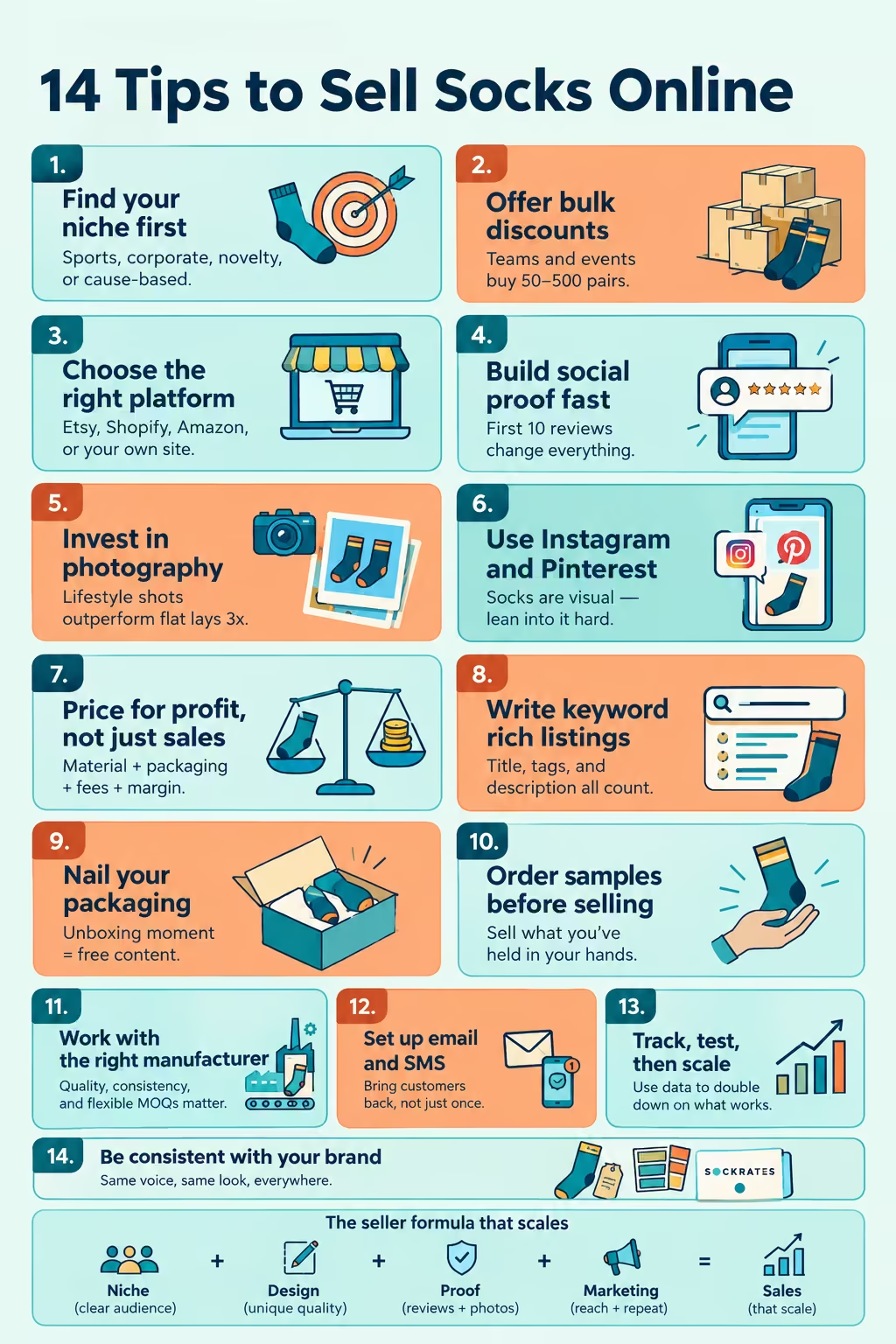
14 Tips to Sell Socks Online Successfully
1. Identify Your Niche Market
To stand out in the competitive online marketplace, it’s crucial to identify your niche market. Targeting a specific audience allows you to tailor your products and marketing efforts to meet their unique needs. You could focus on custom socks for sports enthusiasts, cat lovers, or eco-conscious consumers. By honing in on a niche, you can establish yourself as a go-to brand for a particular audience and sell socks online like crazy.
Example: Targeting sports enthusiasts, you can create custom socks featuring team logos or sports-related designs. This niche market allows you to cater specifically to fans who want to show their support for their favorite teams.
2. Compelling Branding
Building a strong and recognizable brand is essential for long-term success. Your brand should reflect the values and personality of your target audience. Create a compelling brand story, design a memorable logo, and develop a consistent visual identity across all platforms. The goal is to make your brand instantly recognizable and build trust among your potential customers.
The good news is that creating custom socks with vibrant colors that pop and stand out is easy with Sockrates. You’ll be building a brand with custom socks in less time than you can say ‘e-commerce’.
Example: A brand targeting nature lovers can incorporate eco-friendly organic socks, use earthy color palettes, and donate a percentage of profits to environmental organizations. This creates a strong brand identity that resonates with environmentally conscious customers.

3. Source or Manufacture Quality Socks
Your supplier decides two things customers notice fast: how the socks feel and how long they last. It also sets your margin. Overseas factories often offer lower unit prices, but minimums tend to be higher and shipping takes longer. Domestic or nearby partners may cost more per pair, but they usually move faster and are easier to work with.
Before you commit, check four things:
- Minimum order (MOQ). Can you order a small first run per design?
- Samples. Will they knit a sample of your design before full production?
- Lead time. How many weeks from approval to delivery?
- Guarantees. What happens if colors or sizing come out wrong?
Example: Sockrates knits every order at its mill in Castel Goffredo, Italy. Designs are knit into the yarn rather than printed on, so they won’t fade, peel, or crack. Colors are matched with exact Pantone codes and test-stitched before production starts.
4. High-Quality Product Photography
When selling socks online, visuals are everything. Invest in high-quality product photography that showcases the unique features of your socks.
Ensure that the colors are accurate, the details are clear, and the images are visually appealing. High-resolution images will not only attract customers but also instill confidence in the quality of your products.
Use professional product photography that captures the intricate details of your custom socks. Show close-up shots of the stitching, unique patterns, and vibrant colors to entice customers.
Example: For instance, if you sell socks online with intricate floral designs, showcase the fine details of the floral patterns in your product photos.
5. Engaging Product Descriptions
In addition to stunning visuals, well-crafted product descriptions play a vital role in helping you sell socks online. They help inform your visitors on your product features and benefits and also help with your SEO marketing.
Avoid generic descriptions and instead focus on highlighting the unique aspects of your socks. Describe the materials used, the comfort level, and any special design features. Use persuasive language to evoke emotions and create a sense of desire in your potential customers.
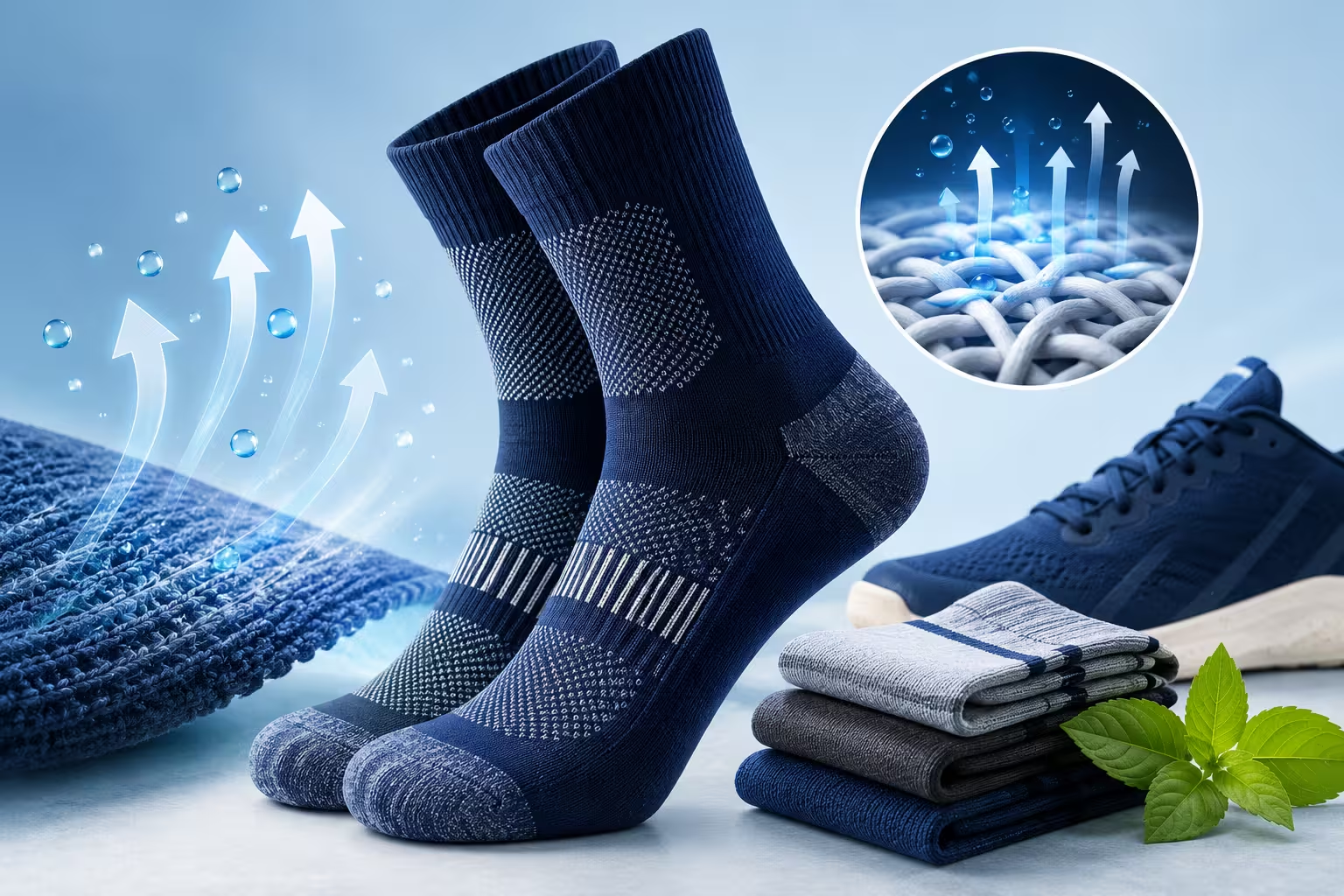
Example: Instead of simply stating, “These socks are comfortable,” use persuasive language to create desire. For instance, describe how your premium moisture-wicking athletic socks keep feet dry during intense workouts or highlight the cushioning and support of your socks for ultimate comfort throughout the day.
6. Price Your Socks for Profit
Pricing is where many new sellers leave money on the table. Start with a simple formula:
Retail price = total cost per pair × markup
Total cost means everything it takes to get one pair to a customer. That covers production, packaging, shipping, and platform fees. A markup of 2x to 3x that cost is a common starting point.
Example: Say a custom pair costs you $9 all in. At a 2.5x markup, you’d retail it around $22. That sits right in the premium range. Bombas, for comparison, sells single pairs from about $12.50 to $24.
Knowing your cost upfront makes this easy. Custom Sockrates orders run $7.75 to $18.75 a pair depending on quantity, with design, labels, and delivery included.
Bundles raise order value fast. Offer a 3-pack or 5-pack at a small discount per pair. Customers feel they’re saving, and you ship more pairs per order.
7. Seamless Website Experience
Your website is your online storefront, so it’s crucial to provide a seamless and user-friendly experience. Optimize your website’s loading speed, ensure intuitive navigation, and make the purchasing process as smooth as possible. Include customer testimonials and reviews to build trust, and implement a responsive design to cater to mobile users.
Again, similarly to product descriptions, not only is a healthy website with clean code good for your customer experience, but it will greatly boost your SEO.
Example: Optimize your website’s loading speed and ensure that the layout is intuitive. Offer a clear and straightforward navigation menu that directs customers to different sock collections or customization options and implement a user-friendly checkout process with multiple payment options and clear instructions for customers to complete their purchases smoothly.
8. Leverage Social Media
Social media platforms offer excellent opportunities to showcase your socks and connect with your target audience. Create compelling social media posts featuring your products, engage with your followers, and collaborate with influencers in your niche. Platforms like Instagram and Pinterest are particularly effective for visual products like custom socks.
Example: Create engaging social media posts featuring lifestyle images of people wearing your custom socks in various settings. Show how your socks add style and personality to different outfits. Encourage customers to share their own photos using your socks and create branded hashtags for user-generated content.

9. Collaborate with Influencers
Influencer marketing can significantly boost your online presence and attract a wider audience. Identify influencers in your niche who align with your brand values and have an engaged following.
Collaborate with them to create sponsored content featuring your custom socks. By leveraging their reach and influence, you can effectively promote your products to a highly targeted audience.
Example: Partner with fitness influencers who promote an active lifestyle. Have them showcase your athletic socks in their workout videos or posts, emphasizing the durability and comfort they provide during exercise.
Their endorsement can help you reach a wider audience of fitness enthusiasts.
10. Build an Email List From Day One
Social followers can vanish with one algorithm change. Your email list is yours. Start collecting addresses from your very first visitor. Three automated emails do most of the work:
- Welcome offer. Give new subscribers 10% off or free shipping on their first order.
- Abandoned cart follow-up. Remind shoppers what they left behind within a few hours.
- Reorder reminder. Socks wear out. Nudge buyers a few months after they purchase.
These flows pull real weight. In Omnisend’s 2026 report, abandoned cart and welcome emails drove 76% of automated orders.
Example: Send a “your sock drawer misses you” email 90 days after a first order, featuring your newest designs.
11. Offer Limited Editions & Exclusivity
Creating a sense of exclusivity and urgency is an old but highly effective tactic that can drive sales and increase demand for your custom socks.
Consider offering limited-edition designs or collaborating with artists or designers for special collections. Limited stock and time-limited promotions can create a buzz and encourage customers to make a purchase before the opportunity slips away.
Example: Introduce limited-edition holiday-themed sock collections or collaborate with local artists to create exclusive designs available only for a limited time. Promote the scarcity of these socks to create a sense of urgency and encourage customers to make a purchase before they’re gone.
12. Provide Excellent Customer Service
Exceptional customer service is crucial for building a loyal customer base. Respond promptly to inquiries and provide assistance whenever needed. Offer hassle-free returns and exchanges, and actively seek feedback to improve your products and services.
By going the extra mile to ensure customer satisfaction, you’ll establish a positive reputation and gain valuable word-of-mouth referrals. Here at Sockrates, we offer free designs, 7-day delivery and impeccable attention to detail just to name a few of our service benefits! Visit our process page to learn more.
Example: Offer a live chat feature on your website to promptly address customer inquiries and provide personalized assistance. You’d be surprised at how many businesses miss this! Respond to customer emails or social media messages within 24 hours and offer hassle-free returns or exchanges for any customer who isn’t fully satisfied with their purchase.
If you want to see what our customers say about working with Sockrates, you can browse our Google reviews!

13. Analyze & Adapt
Lastly, you can’t sell socks online successfully (or anything for that matter) without proper analytics. Continuous monitoring and analysis of your business performance are essential for growth. Use web analytics tools to track key metrics such as website traffic, conversion rates, and customer behavior.
Use this data to identify areas of improvement and make data-driven decisions. Stay ahead of industry trends and adapt your strategies accordingly to stay ahead of the competition. Analyze the data to identify trends, such as which sock designs or collections perform best, and adjust your marketing and product strategies accordingly.
Example: For instance, if you notice a particular design sells well, consider creating similar variations to capitalize on its popularity.
Remember, these examples are just starting points, and you can adapt them to fit your specific niche and target audience. The key is to tailor your strategies to align with your brand and customer preferences, ensuring that your custom sock business stands out and attracts loyal customers.
But when it comes to custom sock manufacturing and sourcing the highest quality socks, we’ve got you covered. In case you need, you can read all about how we produce our custom socks here.
14. Common Mistakes to Avoid
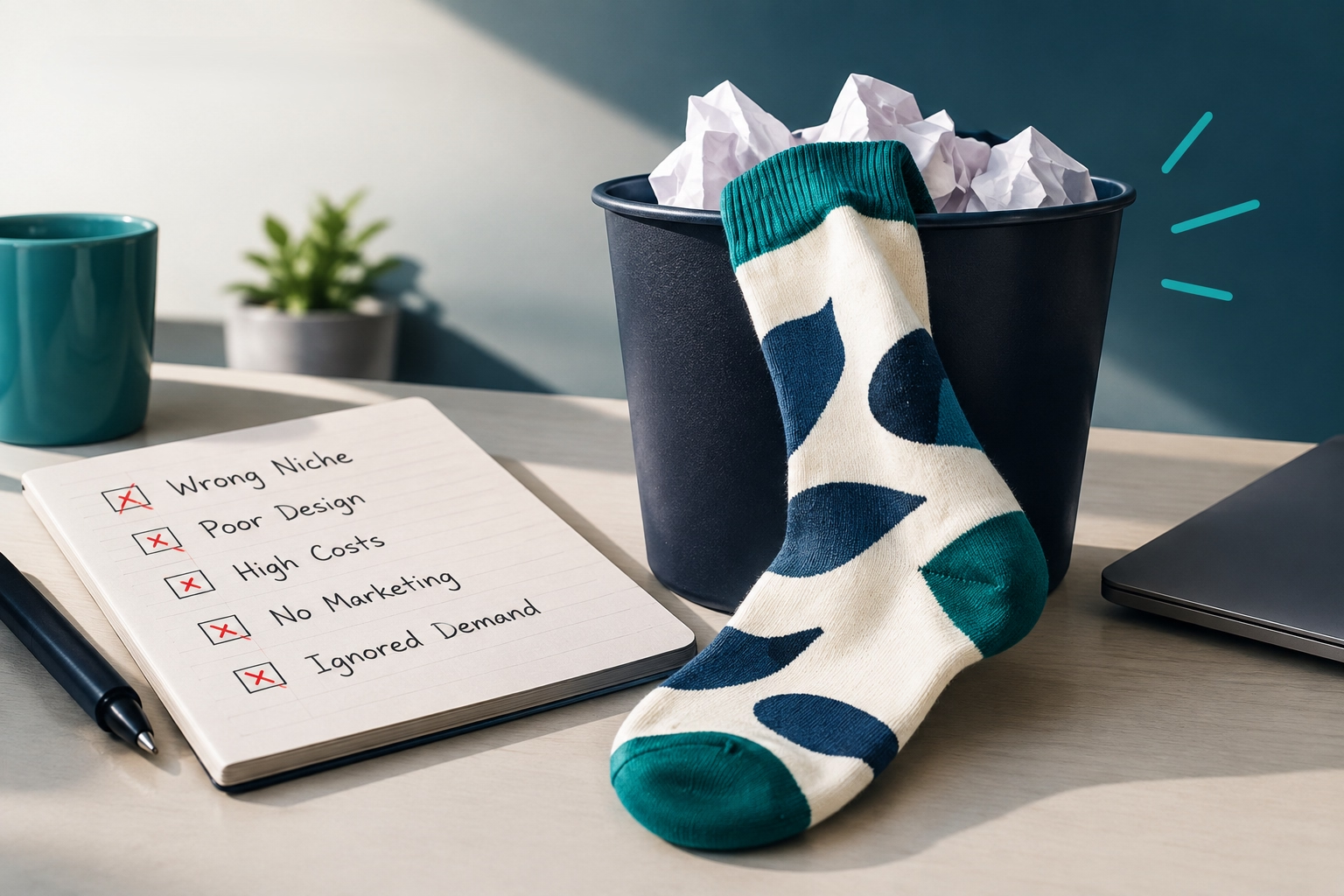
Even strong sock brands stumble early. These are the mistakes that cost new sellers the most:
- Overordering inventory. Start with a small run per design, then reorder what actually sells.
- Underpricing. If your price doesn’t cover fees, shipping, and ads, every sale loses money.
- Skipping samples. A sample catches color and sizing issues before 500 pairs arrive.
- Weak packaging. Loose socks in a mailer feel cheap. Thoughtful sock packaging makes them giftable.
- Launching too many designs. Three strong designs usually beat twelve average ones.
Conclusion
Selling socks online works best when the business side is as strong as the designs. Pick a model that suits you, price for real profit, and choose the right platform. Then use these 14 tips to build a brand customers keep coming back to.
So, what are you waiting for? Start your journey to sock-selling success today with our form!
Bonus Content – Case Study
These Kids Made $10 MILLION Selling Socks!
Frequently Asked Questions
Create socks your team will actually be proud to give away