
Quick Answer: What It Takes to Start a Sock Business
Starting a sock business comes down to five decisions. You pick a niche, finalise a design, choose a manufacturer, build a brand, then sell. A small first launch usually costs between $2,000 and $10,000, depending on order size and how much work you do yourself. Bulk custom socks commonly price between $7.75 and $18.75 a pair, with the lowest rates at higher volumes. Print on demand can start under $500, though margins are much thinner.
Is Starting a Sock Business Actually Profitable
Yes, and the category is growing. The global socks market was valued at USD 49.5 billion in 2025 and is forecast to reach USD 73.8 billion by 2033. Cotton socks and mid calf lengths lead that demand, so the mainstream is far from saturated.
The margin maths is friendly too. A well made custom pair often lands around $8 to $12 delivered. Premium brands sell single pairs between $16 and $30. That gap leaves room for shipping, returns, and ad spend.
Profit is not automatic though. Three things separate the businesses that last from the ones that quietly close.
Differentiation: Nobody needs another plain black crew sock. Your product has to do something specific, whether that is grip, warmth, compression, or humour.
A narrow first audience: Selling "socks for everyone" means competing with Adidas and Uniqlo on price. Selling grip socks to Pilates studios means competing with almost nobody.
Pricing discipline: Founders often price low out of nerves, then discover ads and returns eat the whole margin. Set your price from landed cost, not from what feels comfortable.
So can you make money selling socks? Yes, if you sell a specific sock to a specific buyer at a price that covers your real costs.
Choose the Right Business Model for You
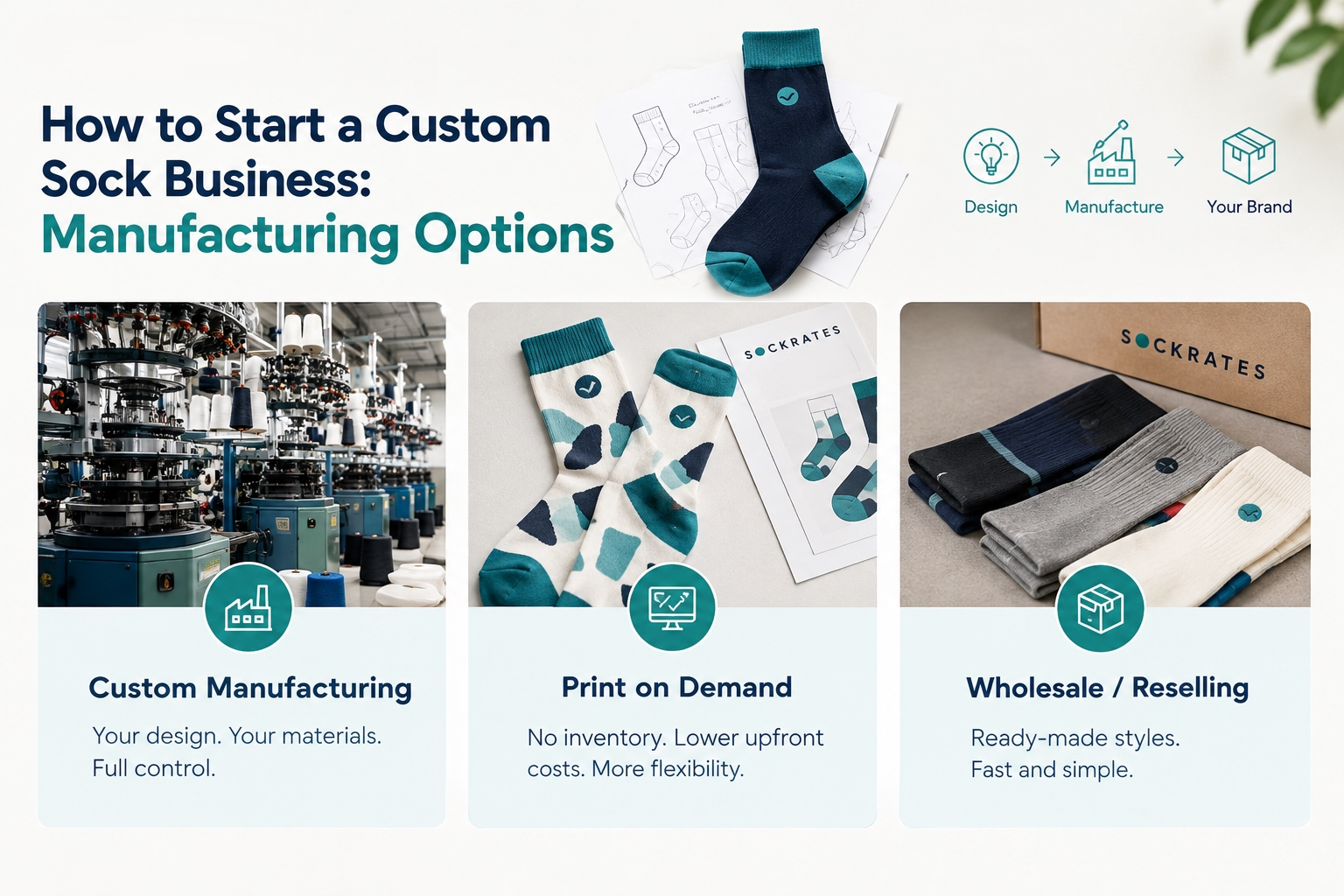
Before you sketch a design or register a name, decide how your socks will exist. This one choice sets your budget, your quality ceiling, and your margins. Three paths are realistic for a new founder. The right one depends on how much cash you have, how much control you want, and how good the product needs to be.
Custom or Private Label Manufacturing
Here a factory produces socks to your specification and your branding. You choose the yarn, the colours, the length, the cuff, and the packaging. Quality and margins are both in your hands, which is why serious brands end up here.
Minimums vary widely across the industry. Some manufacturers will not open a machine for less than 600 pairs. Others produce from around 100 pairs per design. That range matters enormously for a first time founder. A 100 pair run is a manageable test, while a 1,000 pair run is a real financial commitment.
Print on Demand
With print on demand, a partner prints and ships each pair after someone buys it. You hold no inventory and risk almost nothing upfront.
The tradeoffs are real. Print quality varies, designs can crack or fade after washing, and you rarely control the base sock. Per unit costs also stay high because nothing is produced in volume. Use this model to test which designs people actually click and buy. It is a poor foundation for a brand you want to scale.
Wholesale or Reselling
You can also buy finished stock socks in bulk and sell them under your own storefront or label. It is fast and cheap to begin, and it works well alongside other products in a shop.
The limit is obvious. You are selling the same socks as everyone else who buys from that supplier. Without a distinctive product, you compete only on price and marketing.
Validate Demand Before You Invest a Dollar
Here is the pattern that shows up again and again in small business forums. Someone falls in love with an idea, orders 2,000 pairs, builds a full website, then starts looking for customers. The socks sit in a spare room for two years.
The data backs up how common this is. When CB Insights reviewed 431 startups that shut down, poor product market fit was cited by 43%, ahead of timing and unit economics. Building something nobody asked for is the most expensive mistake available to you.
Validation is cheap by comparison. Try these before you commit to inventory.
Pre-sell with a real design: Put a mockup on a simple landing page and take pre-orders or deposits. Ten paid orders tell you more than a hundred people saying they love it.
Order the smallest possible batch: Suppliers with a 100 pair minimum let you test a real product without gambling your savings. You get something people can touch, wash, and reorder.
Sell in person first: Markets, club events, race days, and pop ups give you honest feedback within hours. You will learn which design sells and which one people politely put down.
Pitch businesses directly, with a mockup in hand: For B2B, this is the strongest test there is. Many custom sock suppliers create free design mockups, so you can approach a gym, brewery, or HR team with a visual and ask for a commitment before spending anything.
Find Your Niche and Target Customer
A niche is not a style preference. It is a group of people with a shared reason to buy.
On the consumer side, a few niches consistently support real brands.
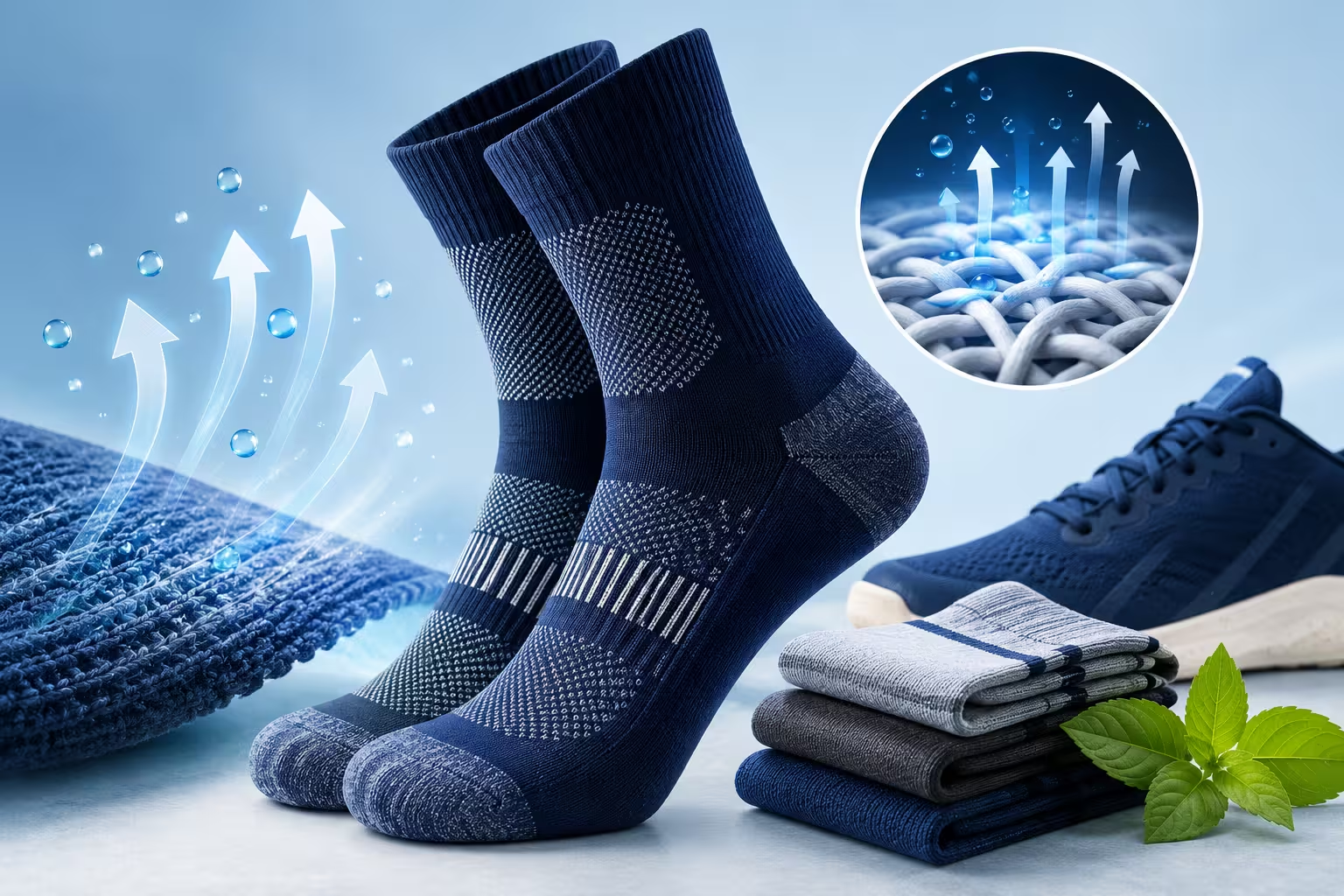
- Sport and performance. Runners, cyclists, and footballers replace socks often and care about fit. Cycling socks and grip socks both sell on function, not decoration.
- Health and comfort. Nurses, pilots, and frequent flyers buy compression socks for a specific problem. Buyers in this niche research and stay loyal.
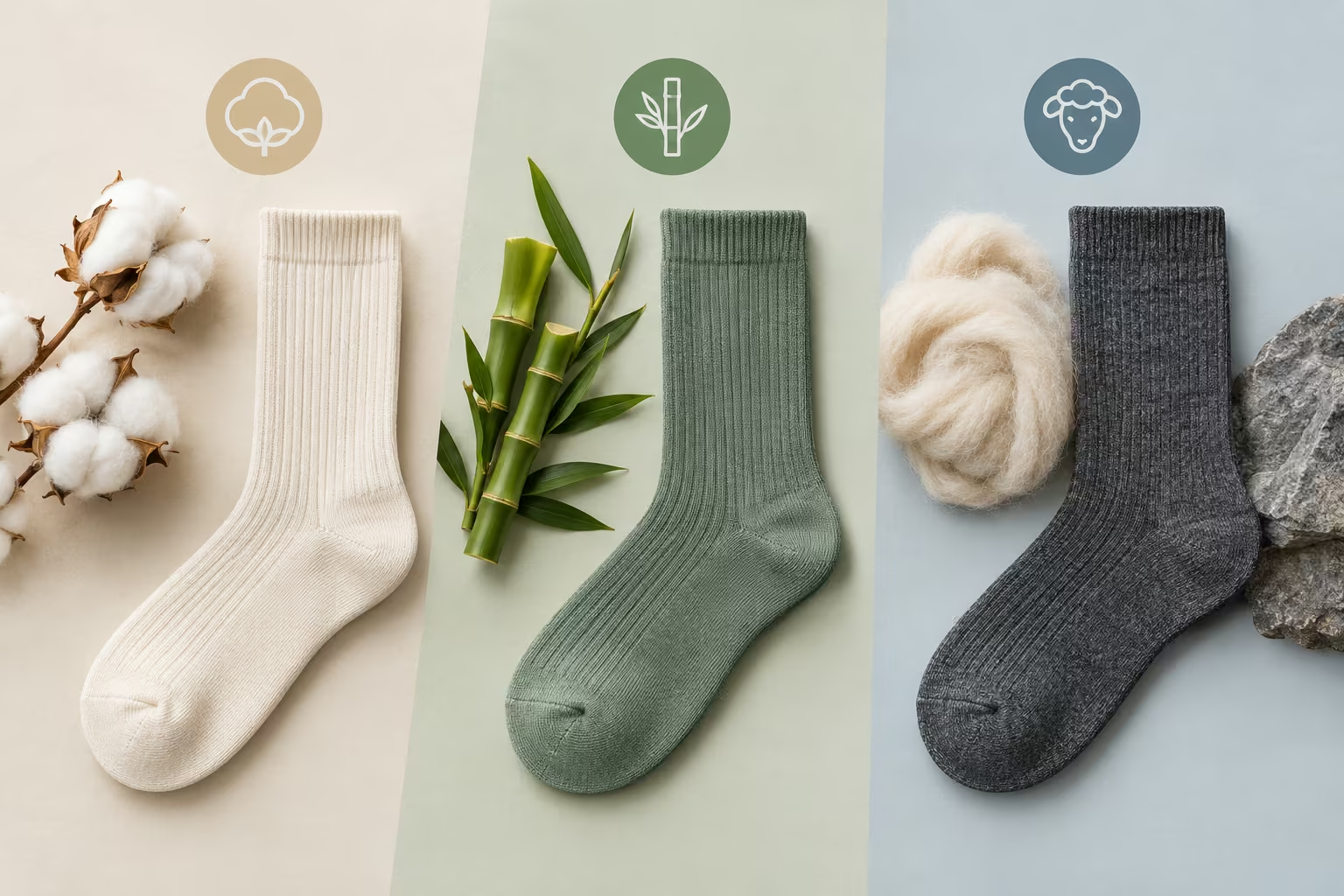
- Sustainability. Organic cotton and wool buyers accept higher prices when materials are genuinely traceable.
- Novelty and gifting. Funny socks sell hardest around holidays, weddings, and birthdays.
Now the niche most guides skip entirely. Businesses buy socks in bulk, and they buy them repeatedly.
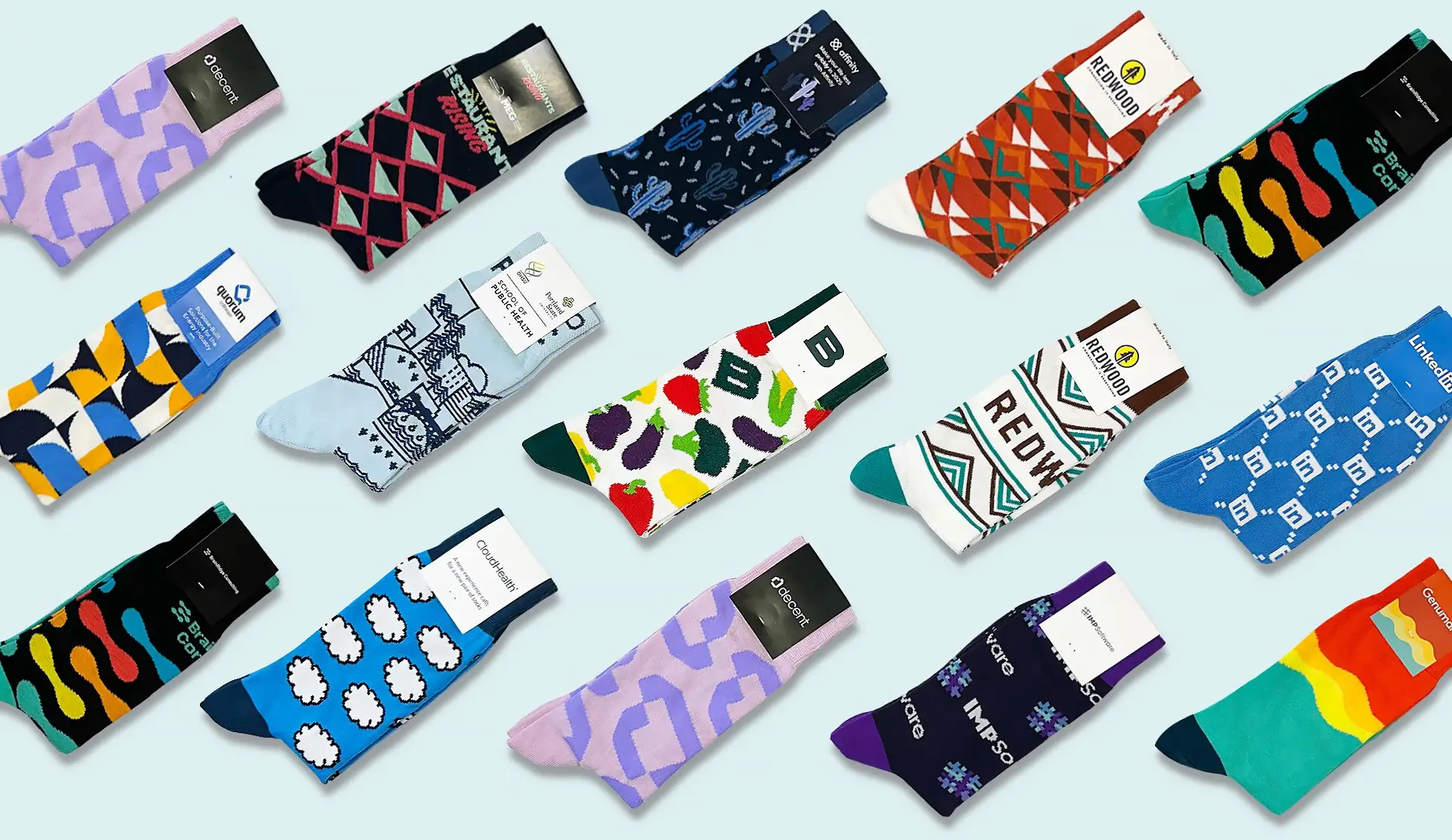
Corporate gifting, employee appreciation, event merch, trade shows, and branded promo socks form a large and steady market. Purchase orders are bigger than consumer orders, and buyers come back each year.
Three concrete examples of how that works in practice:
- A software company orders 500 pairs of dress socks in brand colours for its onboarding kits, then reorders every quarter as it hires.
- A Pilates or barre studio orders 150 pairs of branded grip socks and resells them at the front desk at retail margin.
- A charity run orders 300 pairs as finisher gifts, which participants photograph and post far more than a medal.
If you want predictable revenue rather than seasonal spikes, B2B is worth serious attention.
Design Your Socks and Create a Tech Pack
Design starts loose. Sketch the sock flat, decide the length, and pick two or three colours that work as knitted yarn rather than as screen pixels. Fine gradients and photographic detail rarely survive a knitting machine, so simplify early. Most suppliers offer free sock templates built for Illustrator or Photoshop, with safe zones marked out.
Then you write a tech pack. This is the document that turns your idea into instructions a factory can follow without guessing.
A usable sock tech pack includes:
- Sock length and style, such as no show, ankle, crew, or knee high
- Size range and the fit you expect
- Full material composition, for example 80% mercerised cotton, 17% polyamide, 3% spandex
- Exact Pantone colour codes for every yarn used
- The artwork as a vector file, positioned on a sock template
- Cuff, heel, and toe construction notes
- Labelling, care instructions, and packaging requirements
- Quantity per size and per colourway
Why a Tech Pack Protects Your Business
Without written specs, every unclear detail gets decided by someone else. A factory quoting on price will choose the cheaper yarn, the thinner cuff, and the closest available colour to your logo blue.
The practical result is inconsistency. Your second run comes back a slightly different shade, the ribbing feels looser, and returning customers notice. Fixing that after production means either accepting the stock or paying to redo it.
A tech pack also gives you something to point at. When a delivery does not match the spec, the conversation is about a document rather than a memory. That matters on a 100 pair order just as much as a 5,000 pair one, because a small founder can less afford to eat a bad batch.
Woven or Printed: Choosing How Your Socks Are Made
Two methods dominate custom socks, and they suit different products.
Woven socks are knitted from coloured yarn, so the design is part of the fabric. Because there is no ink on the surface, woven designs will not fade, peel, or crack. The texture is richer, the sock stays soft, and quality woven pairs last for years. The tradeoffs are cost and a slightly longer lead time, plus limits on very fine detail.
Printed socks use sublimation or direct to garment printing to apply ink to a blank sock. Printing handles photographs, gradients, and busy detail that yarn cannot reproduce. It is cheaper per pair at low volumes and faster to produce. Ink can stiffen the fabric though, and prints wear down with washing.
Match the method to the job. If people will wear your socks for years, or your logo colours have to be exact, woven is the safer choice. If you need a photo print, a one day novelty, or a very cheap giveaway, printing does the job. A brand built on quality should not lead with a print that cracks after ten washes.
How to Start a Custom Sock Business: Manufacturing Options
If you want your own product rather than a resale line, sourcing is the whole game. There are two genuinely different ways to get custom socks made, and they suit different ambitions.
Finding a factory yourself: means researching mills, requesting quotes, negotiating minimums, arranging samples, and managing shipping and customs. You get maximum control and the lowest unit cost at scale. You also take on months of back and forth, sample rounds, and the risk of a partner who overpromises. This route makes sense when you plan to run large repeat volumes and can afford the learning curve.
Ordering from an established custom sock supplier: means a company already runs those relationships for you. You send a logo, approve a design, and receive finished socks. Unit costs are higher than dealing direct with a mill at volume, but there is no sourcing project, no sampling marathon, and no customs paperwork. For a first order, an event, or a corporate gift run, this is usually the faster and cheaper path in total.
Finding and Vetting a Sock Manufacturer
Whichever route you choose, ask the same questions before you send money. Treat this as a checklist.
- What is the minimum order per design, per colour, and per size?
- How long does a sample take, and what does it cost?
- Where are the socks actually knitted, and is that the same site that quoted you?
- How do you match colours, and are there extra fees per colour?
- Can you knit to a specific Pantone reference, or only to your nearest stock yarn?
- Is quality audited by a third party, and can you share the certificates?
- What is the real production lead time, excluding shipping?
- What happens if a batch arrives off spec, and who pays?
- Are there setup, artwork, or rush fees not shown in the quote?
Vague answers are an answer. A supplier who will not confirm where socks are made, or who quotes a price that keeps changing, is telling you what the working relationship will feel like.
Understanding Minimum Order Quantities
A minimum order quantity is the smallest run a supplier will produce. Machines have to be set up and yarn has to be sourced, so very small runs cost more per pair to make.
MOQs move with materials and customisation. Standard cotton in one colourway sits at the low end. Merino wool, compression knits, multiple sizes, or six brand colours push it up. Extra colourways usually count separately, so 300 pairs across three designs is not the same as 300 pairs of one.
Across the industry, minimums commonly run from a few hundred pairs to over a thousand. Some suppliers work from 100 pairs per design, which is worth knowing before you assume a first order has to be large. Ask about the minimum per design rather than the total, because that is the number that decides how many ideas you can test.
Custom Branded Socks for Corporate and Promotional Use
Businesses order custom socks for a longer list of reasons than most people expect:
- Employee gifts and holiday hampers
- Client thank you gifts
- Uniforms for staff, schools, and sports teams
- Trade show giveaways and booth swag
- Team building and onboarding kits
- Charity and awareness campaigns
- Retail resale in shops, studios, and taprooms
The appeal is that socks get worn instead of binned. Branded apparel also performs unusually well as advertising. ASI's Global Ad Impressions research found that 85% of consumers remember the advertiser behind a promotional item, with recall highest for apparel.
If placing an order is the task in front of you, Sockrates Custom supplies bulk custom socks across all of these occasions. Free design mockups arrive within 24 hours, full Pantone matching is included with no per colour fees, and most orders are produced and shipped within seven days.
How Much Does It Cost to Start a Sock Business
Costs depend far more on your order size than on anything else. Here is a realistic planning range for a first launch, assuming one or two designs.
A lean first launch lands around $1,500 to $3,000. That is roughly 100 to 200 pairs, a simple store, and modest marketing.
A serious brand launch runs $8,000 to $20,000. That covers several designs, larger volume, proper packaging, and a real ad budget.
For sanity checking quotes, premium bulk custom socks generally cost between $7.75 and $18.75 a pair depending on quantity and materials. Anything far below that range usually signals a thinner sock, a printed design, or costs added later as shipping and setup fees. Ask whether design, labels, and delivery are included before you compare two numbers.
Register Your Business and Handle the Legal Basics
Keep this part simple and get it done.
Pick a structure first. A sole proprietorship is quick and cheap, while an LLC or limited company separates your personal assets from business debts. Most founders holding inventory choose the second.
Then register the business name with the relevant authority and get your tax identification number. Add a sales tax or VAT registration if your turnover or location requires it. Open a separate business bank account from day one, because mixed finances become painful at tax time.
Two more worth handling early. Check that your brand name is not already trademarked in your category, then consider registering it once you have traction. If you make health claims about compression or medical socks, verify the labelling rules in each market you sell into. Requirements differ by country, so confirm specifics with a local accountant or advisor.
Build Your Brand and Online Store
Your name should be short, easy to spell, and not already taken on your platform of choice. Check domain and social handles before falling in love with it.
For the logo, remember where it ends up. Sock knitting reproduces bold shapes far better than thin lines or fine text, so a design that works at small scale in yarn is worth more than a clever one that does not.
Packaging carries more weight than founders expect. A header card or custom sock box makes a pair feel like a gift rather than a commodity, which supports a higher price. Many suppliers include a branded header card as standard.
For the store, Shopify remains the default for a standalone brand, Etsy suits novelty and gift designs, and WooCommerce works if you already run WordPress. Whichever you choose, spend your effort on clear product photography, honest sizing information, and a simple returns policy. Those three fix more lost sales than a redesign will.
Price Your Socks for Profit
Start from landed cost, meaning the pair price plus shipping, duties, and packaging. Then work up.
A workable method for direct to consumer is to multiply landed cost by 2.5 to 3. A pair landing at $9 supports a retail price near $23 to $27. That multiple is not greed. It absorbs payment fees, returns, free shipping, and customer acquisition, which together often consume more than the product itself.
For wholesale, price at roughly double landed cost and expect retailers to double again. Build multipacks too, since three pair bundles lift average order value without lifting shipping cost much.
So what is a good price for socks? Mass market pairs sell for $2 to $6, mid range brands sit around $10 to $16, and premium or performance socks run $16 to $30. If you are selling custom made quality, the top two brackets are where you belong. Undercutting a supermarket price is a losing strategy when your unit cost is ten times theirs.
Market and Sell Your Socks
Marketing splits sharply depending on who you are selling to. Reaching individual shoppers is a volume game built on content and ads. Reaching businesses is a relationship game built on outreach and follow up. Most sock founders try only the first and wonder why growth stalls, so it is worth understanding both.
Direct to Consumer Marketing Channels
Social media: Show the sock on feet, in motion, in the context people wear it. A ten second clip of grip socks during a Pilates class outperforms a flat lay every time.
SEO: Target buying intent rather than broad terms. Pages built around specific queries like best socks for sweaty feet or wool socks for hiking bring in people already looking to purchase.
Email: Add a size and style quiz to your homepage to collect addresses, then send a genuinely useful first email. Sock buyers reorder, so a simple replenishment reminder at 90 days converts well.
Influencers: Skip follower counts and send free pairs to micro creators inside your niche, such as run club organisers or studio instructors. Their audiences already care about the exact problem your sock solves.
Selling to Businesses and Bulk Buyers
Corporate gifting programs: Build a simple one page offer aimed at HR and marketing teams, with clear pricing tiers and lead times. Buyers here need certainty about dates far more than they need a discount.
Trade shows: Exhibit where your buyers already gather, whether that is HR, promotional products, or your end industry. Bring finished samples, because a sock people can hold closes better than a catalogue.
Direct outreach: Identify HR managers, office managers, and events coordinators, then approach them with a mockup of their own logo on a sock. That single visual turns a cold email into a conversation. Time it against their calendar, since gifting budgets get spent before the holidays and onboarding runs all year.
Wholesale and distributor partnerships: Promotional products distributors and swag agencies place repeat bulk orders on behalf of their own clients. Many suppliers run a distributor program with trade pricing for exactly this.
Businesses source bulk socks on lead time, colour accuracy, and reliability. Show all three plainly and you will beat competitors who only show a price.
Common Mistakes That Sink New Sock Businesses

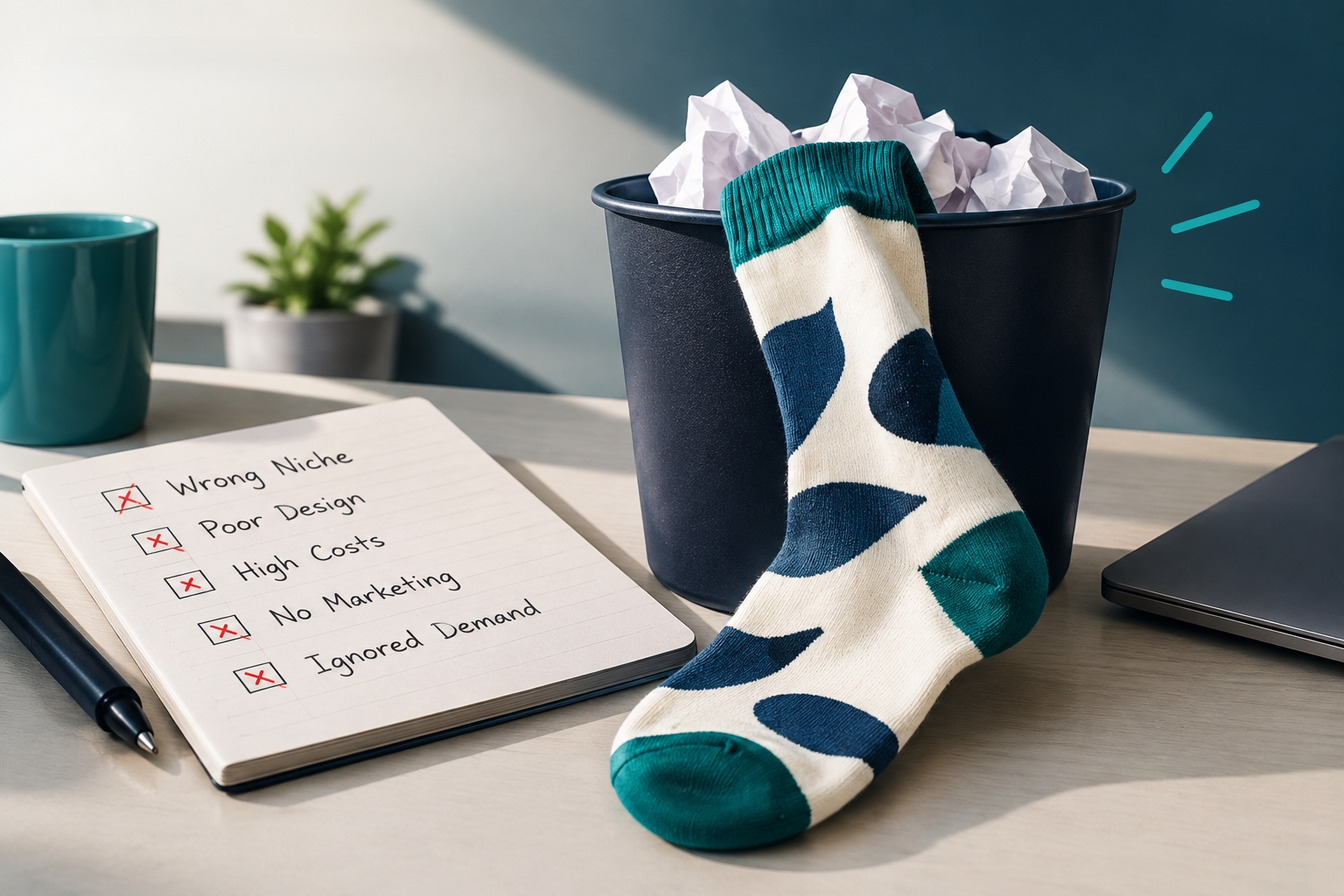
Buying inventory before validating demand: The most expensive mistake by a wide margin. Sell 20 pairs before you order 2,000.
Skipping the tech pack: Without written specs you get whatever the factory finds convenient. Reorders then come back looking different from your originals.
Underestimating marketing spend: Founders budget for socks and forget that reaching customers costs real money. Reserve at least a quarter of your launch budget for it.
Choosing a manufacturer on price alone: The cheapest quote often excludes shipping, colour matching, and labels. Compare total landed cost per pair, then compare quality.
Launching with too many designs: Five colourways at low volume raises your cost per pair and splits your inventory. Start with one or two strong designs.
Ignoring the B2B route. Consumer sales are seasonal and ad dependent. One corporate client can outspend a hundred individual shoppers and reorder next year.
Ready to Launch Your Custom Sock Brand
Whether you are building a brand or ordering socks for one occasion, the first run is the step that teaches you the most. Sockrates Custom supplies bulk custom socks for businesses and occasions, from employee and client gifts to uniforms, trade shows, and retail resale. Orders start at 100 pairs per design, design mockups are free, and most orders ship within seven days. Send a logo and see what your socks could look like before you commit to anything.
Frequently Asked Questions
Create socks your team will actually be proud to give away