
The Quick Verdict
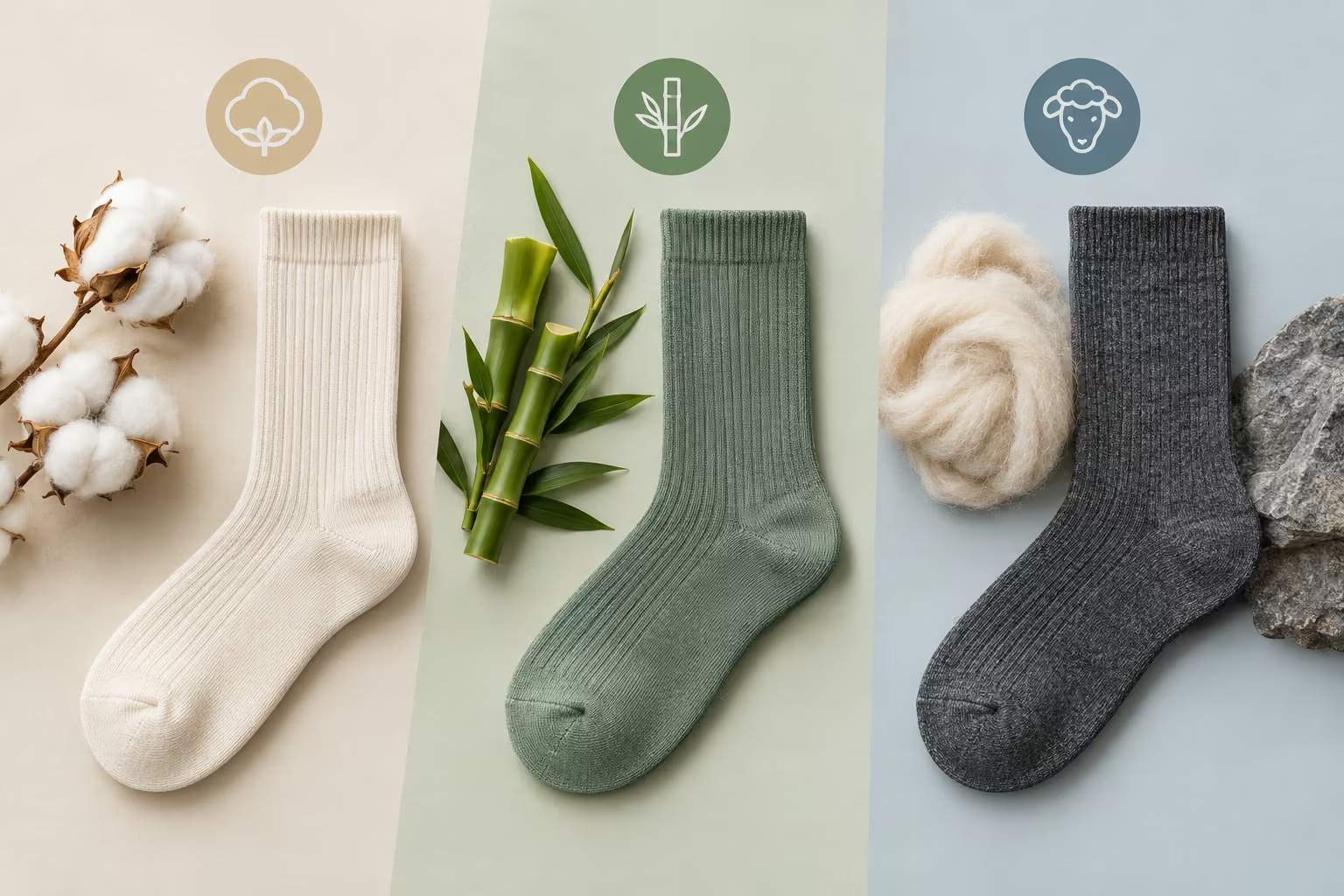
Merino wool is the best all-round sock material for warmth, odor control and damp conditions. Bamboo viscose feels the softest and coolest. Cotton is the cheapest and easiest to care for. Most good socks are blends. The first fiber on the label tells you the sock's character. The nylon and elastane after it mostly add strength and fit.
Side-by-Side Comparison Table
Moisture regain figures are the standard commercial values from ASTM D1909, the textile industry's reference table. Other rows use plain ratings, backed by the research cited further down.
How Each Material Is Made (and Why It Matters)
Cotton
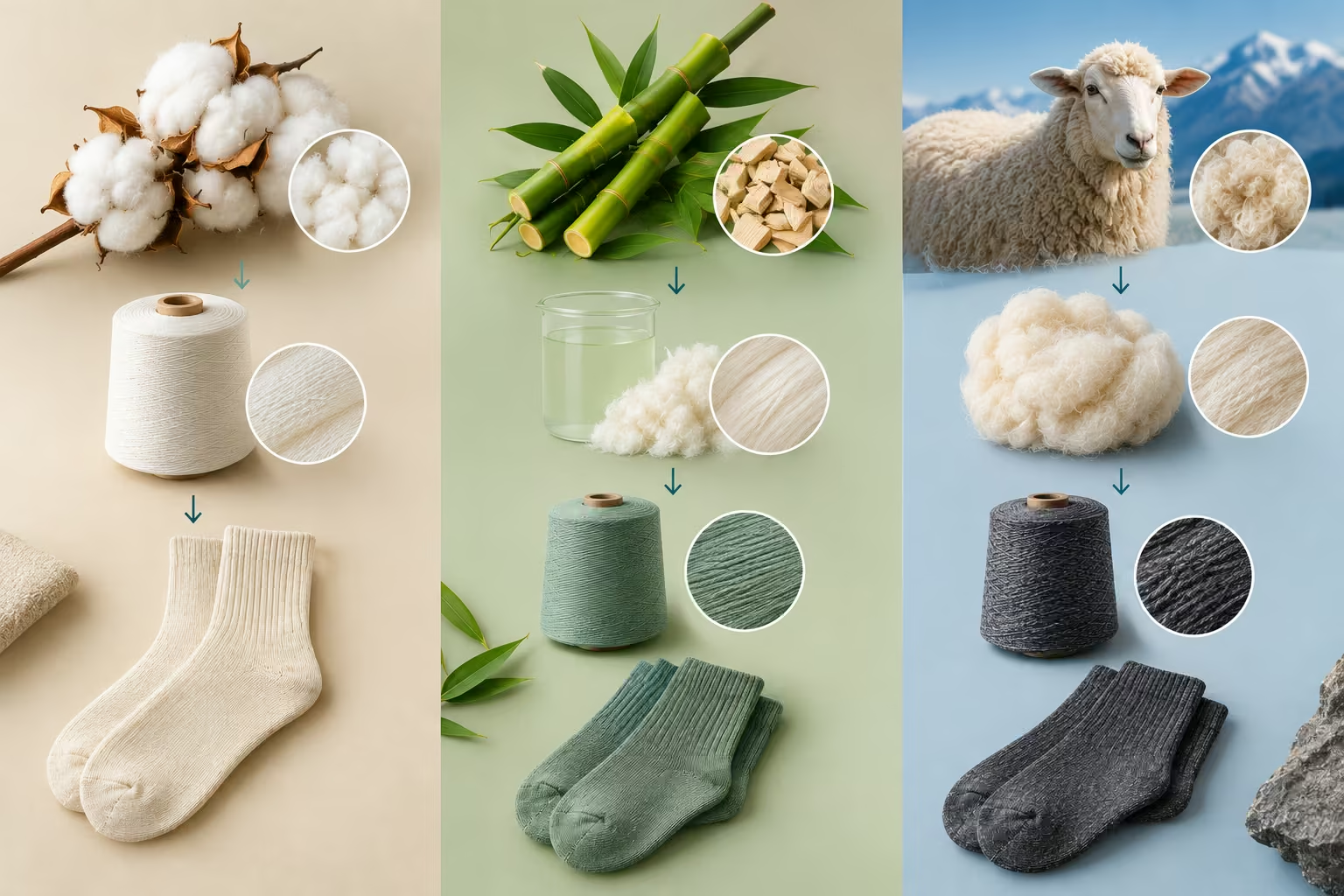
Cotton is a plant fiber that grows around the seeds of the cotton plant. It is soft, cheap and easy to wash. Sock labels often add a word in front of it. Here is what those words mean.
- Combed cotton: The fiber is brushed to pull out short strands before spinning. The yarn comes out smoother and stronger.
- Mercerized cotton: The yarn is dipped briefly in caustic soda. Britannica notes this adds strength, luster and better dye uptake.
- Organic cotton: This describes how the cotton was farmed, not its fiber quality. CottonWorks, run by Cotton Incorporated, points out that any cotton species can be grown organically.
- Pima cotton: An extra-long staple cotton with fibers at least 1 3/8 inches long. Common Upland cotton runs about 1 to 1 1/4 inches.
- Egyptian cotton: This names where it grew, not how good it is. Egypt grows both Upland and Pima types.
Treat premium cotton names with some caution. In DNA tests reported by Textile World, 83% of products labeled 100% Pima were partly or fully made of other cotton. For how cotton compares with synthetics, see this polyester vs cotton socks breakdown.
Bamboo
Most socks sold as "bamboo" are bamboo viscose, also called rayon. Bamboo pulp is dissolved in chemicals, then pushed through tiny holes and set into fiber. The result is regenerated cellulose, much like any other rayon.
The FTC states that no trace of the original plant remains in finished rayon. That is why US labels should read "rayon made from bamboo" or "viscose from bamboo."
Lyocell takes a different route. It dissolves the pulp in a reusable solvent inside a closed loop. WRAP reports that more than 99.7% of that solvent is recovered, and the solvent itself is non-toxic. Bamboo lyocell exists, but the FTC says most bamboo textiles on sale are still rayon.
A third type, mechanically processed bamboo, skips chemical dissolving altogether. The FTC has cautioned sellers that it is highly unlikely they are selling true bamboo fiber.
Merino Wool
Merino wool comes from Merino sheep, a breed known for very fine fleece. Wool fineness is measured in microns, or thousandths of a millimeter. A lower number means a finer, softer fiber.
Itch is mostly about thickness. Fibers thicker than about 30 microns stay rigid and press into the skin, per the Montana State University Wool Lab. Finer fibers simply bend, so you don't feel them.
Merino fleece typically measures about 17 to 22 microns, according to Cornell Cooperative Extension. Woolmark only allows the "Merino Extrafine" label at a mean of 19.5 microns or finer.
You may read that lanolin makes merino antibacterial. That doesn't hold up for sock yarn. Scouring, the first industrial wash, strips out the wool grease, and Woolmark notes lanolin is the basis of that grease. One EU scouring project measured only about 0.6% to 1.2% grease left afterward. Merino's real strengths come from its fiber structure, not leftover lanolin.
How They Perform
Softness and Comfort
On day one, bamboo viscose usually feels the smoothest. Combed or Pima cotton comes close behind. Merino feels soft only when the micron count is low.
After many washes, hard data gets thin. Most "still soft after 500 washes" claims don't name a test method, so treat them as marketing.
What research does show is worth knowing. In runner studies summarized by the American Academy of Podiatric Sports Medicine, cotton socks stretched when wet and bunched inside the shoe. After repeated wash and wear, they also turned abrasive. The same review notes 100% wool socks can feel abrasive, which is why wool usually gets blended.
Moisture: Absorbing vs Wicking
Absorbing means sweat soaks into the fiber and stays there. Wicking means sweat moves through the fabric to evaporate somewhere else. A good sock does a bit of both.
Moisture regain shows how much water a dry fiber pulls from the air. A peer-reviewed fiber study lists the ASTM values of 8.5% for cotton and 13.6% for wool. The same standard sets rayon, including bamboo viscose, at 11%.
So why does merino feel dry when it's holding water? Wool takes in sweat as vapor and holds it inside the fiber, not on the surface. The Woolmark Company says wool can absorb up to 35% of its weight before it feels wet. Keep in mind that Woolmark is the wool industry's own body.
Liquid sweat is a different story. The AAPSM review ranks synthetics like acrylic ahead of wool and cotton for wicking. When wet, cotton fibers swell about 45% and wool about 35%. That swelling squeezes out the air gaps that move moisture. Acrylic swells under 5%.
The takeaway: for hard, sweaty activity, a merino blend with plenty of nylon often beats any pure natural fiber.
Odor Resistance
Wool has the strongest evidence here. In University of Otago research led by Rachel McQueen, wool fabrics carried low odor after wear. Cotton landed in the mid to low range, and polyester carried high odor. Odor dropped as the fiber's ability to absorb moisture rose. The tests used underarm fabrics, not socks, but the fibers behave the same way.
Bamboo is where claims run ahead of proof. The FTC warns sellers against claiming rayon keeps the bamboo plant's antimicrobial properties. One Iowa State conference paper did find antibacterial activity in commercial bamboo viscose. But the authors tied it to leftover processing compounds like sulfur, not to bamboo itself. Whether that effect survives repeated washing hasn't been well tested.
Cotton sits in the middle. It doesn't fight odor, but it doesn't trap it the way polyester does. There's more on this matchup in the bamboo vs cotton socks guide.
Warmth and Temperature Control
Dry warmth depends mostly on thickness and loft. A thick cotton sock can feel perfectly warm in a dry boot.
Wet warmth is where the fibers split apart. Wool releases heat as it absorbs vapor, a process called heat of sorption. Woolmark says one kilogram of dry wool can release as much heat as an electric blanket running for eight hours. The AAPSM review also notes wool keeps its warmth when wet, which is why outdoor brands still rely on it.
Cotton fails here. Its fibers fill with liquid, swell and flatten, so the trapped air that keeps you warm disappears. Bamboo viscose does release some heat as it takes in vapor, close to wool in one 2023 lab study. Still, it soaks up liquid sweat readily, so it's not the pick for wet winter boots.
Durability
Most socks fail at the heel and toe while the rest still looks fine. A sock reinforcement patent describes exactly that problem. A related patent notes that adding nylon to heels and toes was a major step forward. Nylon is about twice as durable as cotton, per the Museum of Fine Arts Boston's CAMEO database.
Bamboo viscose has a clear weak spot. Regular viscose loses about half its strength when wet, and socks spend much of their life damp with sweat.
Merino depends heavily on construction. Major merino brands put 35% to 43% nylon into hiking socks for exactly this reason. So check for reinforced heels and toes and a real nylon share before trusting any durability claim.
Head-to-Head Matchups
Merino vs Bamboo Socks
This is the closest fight of the three, so here it is point by point.
- Moisture: Wool's regain is 13.6% against 11% for rayon. Merino also handles vapor better and still feels dry when damp.
- Odor: Merino has published lab evidence for low odor. Bamboo's antibacterial claims are the ones the FTC has warned sellers about.
- Warmth: Merino keeps working when wet. Bamboo viscose loses its edge once liquid sweat builds up.
- Softness: Bamboo is usually silkier on day one. Superfine merino comes close, while coarse wool doesn't.
- Durability: Viscose loses about half its strength when wet. Well-built merino socks carry more nylon, so merino usually lasts longer.
- Price: Merino socks generally cost more. Bamboo is the cheaper way to get a soft, smooth feel.
- Sustainability: Merino can be verified through RWS or ZQ certification. Bamboo viscose is hard to verify, and retailers have paid millions over misleading bamboo claims.
Verdict by use case:
- Hiking and cold weather: merino.
- Office and warm days: bamboo, or a light merino blend if odor matters.
- Travel and multi-day wear: merino.
- Sensitive skin: bamboo or superfine merino, so test both.
- Tight budget: bamboo.
Merino vs Cotton Socks
Merino wins on warmth, odor control and wet weather. Cotton wins on price and easy washing. Pick merino for hiking, winter and long days on your feet. For casual, dry, mild days, cotton does the job. The full breakdown is in this wool vs cotton socks comparison.
Bamboo vs Cotton Socks
Bamboo viscose feels silkier and absorbs a little more moisture. Cotton holds its strength when wet, costs less and is easier to verify as organic. For soft office socks, bamboo edges ahead. For hard-wearing everyday socks, cotton is the safer bet. See the detail in bamboo vs cotton socks.
The Downsides of Each Material
Cotton
- Holds sweat and dries slowly, so feet stay damp.
- Loses its warmth when wet, which makes it a poor cold-weather choice.
- Can stretch, bunch and turn rough over time, per the AAPSM review.
Bamboo
- Made with chemical processing that the FTC links to toxic chemicals and hazardous air pollutants.
- Weaker when wet, so it can wear out faster.
- Eco and antibacterial claims are hard to verify.
Merino
- Costs more than cotton or bamboo.
- Needs gentler care, since heat and agitation can shrink untreated wool.
- Some people react to wool, especially coarser grades. Animal welfare is also a concern unless the wool is certified.
Materials and constructions to avoid for specific needs:
- Pure cotton for hiking, running or cold, wet days.
- Pure polyester if odor is your main problem. It held the most odor in the Otago tests.
- Unlabeled or coarse wool if wool usually makes you itch.
- Very thick socks in shoes sized for thin ones. In an AAPSM fit study, adding a thick padded sock required a longer shoe 77% of the time.
- Socks with bulky toe seams if you have diabetes or poor circulation.
Which Material Is Healthiest for Your Feet?
No sock fiber is a medical treatment. Still, some choices clearly help, and the research mostly points the same way.
Sweaty feet: Skip 100% cotton. The AAPSM review found cotton holds three times the moisture of acrylic and stays wet ten times longer. Choose a merino blend or a synthetic-rich performance sock, and change socks midday on long days. This guide to the best socks for sweaty feet goes deeper.
Sensitive skin or eczema: Smooth, fine fibers matter most. Bamboo viscose and organic cotton are gentle options. Superfine merino is worth a look too. In a 2017 randomized trial of 39 young children, superfine merino clothing reduced eczema severity compared with cotton. Australian Wool Innovation funded the study, and it tested clothing, not socks. Treat it as promising, not proof.
Blister prevention: Blisters come from rubbing, pressure and moisture together. In the Herring and Richie studies, thick padded acrylic socks caused fewer and smaller blisters than identical cotton ones. With thinner socks, that difference disappeared. Liners help too. In a study of 357 Marine recruits, adding a liner cut blister rates from 69% to 40%.
Diabetes and other medical needs: General guidance only here. The American Podiatric Medical Association advises thick, soft socks and avoiding socks with seams that could rub. It also recommends at least two podiatrist visits a year. Ask your podiatrist before choosing therapeutic or compression socks.
Allergic or sensitive to wool: Woolmark points to a scientific paper, Debunking the Myth of Wool Allergy, which links itch to coarse fibers rather than wool itself. If wool still bothers you, try organic cotton, bamboo viscose, lyocell or a synthetic performance blend. With a diagnosed allergy, follow your doctor's advice first.
Why Almost Every Sock Is a Blend
Pure natural-fiber socks are rare for good reason. Natural fibers bring comfort and moisture handling. Synthetics bring strength, stretch and shape.
Common Blend Ratios and What They Do
These are real ratios taken from published sock labels:
- Merino, nylon, elastane: Icebreaker's merino hiking socks run 55% to 63% merino, 35% to 43% nylon and 2% LYCRA. The high nylon share is there for wear resistance.
- Mercerized cotton, nylon, spandex: A common dress crew blend is 80% mercerized cotton, 17% polyamide and 3% spandex. It's the same blend used in these custom dress socks.
- Bamboo viscose, nylon, elastane: A BAM sock held by the Museum of Design in Plastics is 76% bamboo viscose, 23% polyamide and 1% elastane.
- Bamboo viscose, polyester, elastane, nylon: Work socks like Hard Yakka's bamboo crew use 80% bamboo viscose, 15% polyester, 3% elastane and 2% nylon.
- Cotton and wool: The standard US military sock was a 50% cotton, 50% wool cushion-sole design, per the AAPSM review.
Nylon, often listed as polyamide, adds strength and abrasion resistance. Elastane, also sold as spandex or LYCRA, adds stretch so the sock keeps its shape and stays up. A few percent is usually enough.
How to Read a Sock Label
- Read the order: FTC rules require fibers listed by weight, largest first. Fibers under 5% can be grouped as "other fiber."
- Look for "viscose," "rayon" or "lyocell" after "bamboo.": Lyocell is the cleaner process. A label that only says "bamboo" is a red flag.
- Check the merino micron count if it's listed: Extrafine merino is 19.5 microns or finer. No number usually means the brand isn't bragging about it.
- Check the nylon share: A sock with almost no nylon is likely to wear through at the heel fast.
- Look for certifications you can verify: GOTS or OCS for organic cotton, RWS or ZQ for wool, and GRS for recycled content.
Sustainability: What Each Label Really Means
Bamboo: The plant grows fast, but the fiber process is the problem. The FTC says turning bamboo into rayon typically uses toxic chemicals and releases hazardous air pollutants. In 2022, Kohl's and Walmart paid $5.5 million combined, $2.5 million and $3 million, over rayon sold as bamboo. An earlier FTC action against four retailers totaled $1.3 million, and the products named included men's bamboo socks. Lyocell from bamboo is the cleaner option, thanks to its closed-loop solvent recovery.
Cotton: Conventional cotton is grown with standard farm inputs, while organic cotton skips synthetic pesticides and fertilizers. The certification tells you how much was actually checked. GOTS adds processing rules on top of organic content and requires at least 70% organic fiber. OCS verifies only the organic content and does not cover chemicals used in processing.
Merino: Mulesing is the removal of skin strips from a sheep's rear to prevent flystrike, a maggot infestation. The Responsible Wool Standard bans it and certifies farms on animal welfare and land management. ZQ, run by The New Zealand Merino Company, also requires non-mulesed sheep and traceability back to the farm.
Blends: Synthetic fibers shed microplastics in the wash. A University of Plymouth study estimated a 6 kg load of acrylic fabric releases almost 729,000 fibers. A polyester-cotton blend released about 138,000. Socks carry far less synthetic content than fleece, but it adds up over years. The polyester vs cotton socks guide covers this in more depth.
For how audits, dyes and materials are handled at the Italian mill, see the Sockrates sustainability page.
What Matters as Much as the Material
- Sock weight and thickness: Light socks suit summer and dress shoes, while heavier cushioned socks suit winter boots. Thickness changes shoe fit, so try shoes on with the socks you'll wear.
- Footwear: A sock can only wick if moisture has somewhere to go. The AAPSM review notes breathable uppers like nylon mesh help sweat evaporate, so sealed shoes keep any sock damp.
- Rotating pairs: Give socks and shoes time to dry fully between wears. Starting the day in a damp pair undoes the fiber's advantages.
- Liner socks: A thin liner under a thicker sock moves rubbing away from your skin. Military studies found liners cut blisters noticeably on long marches.
Best Material for Every Situation
- Summer: Bamboo viscose or a lightweight merino blend.
- Winter: A midweight or heavy merino blend.
- Hiking: A merino and nylon blend, plus a liner on long days.
- Office and dress wear: Mercerized cotton or fine merino.
- The gym: A synthetic-rich performance sock or a light merino blend.
- Travel: A merino blend, since it handles rewearing best.
- Sweaty feet: A merino blend or a synthetic-rich sock, never 100% cotton.
- Sensitive skin: Organic cotton, bamboo viscose or superfine merino.
Choosing a Material for Custom Branded Socks
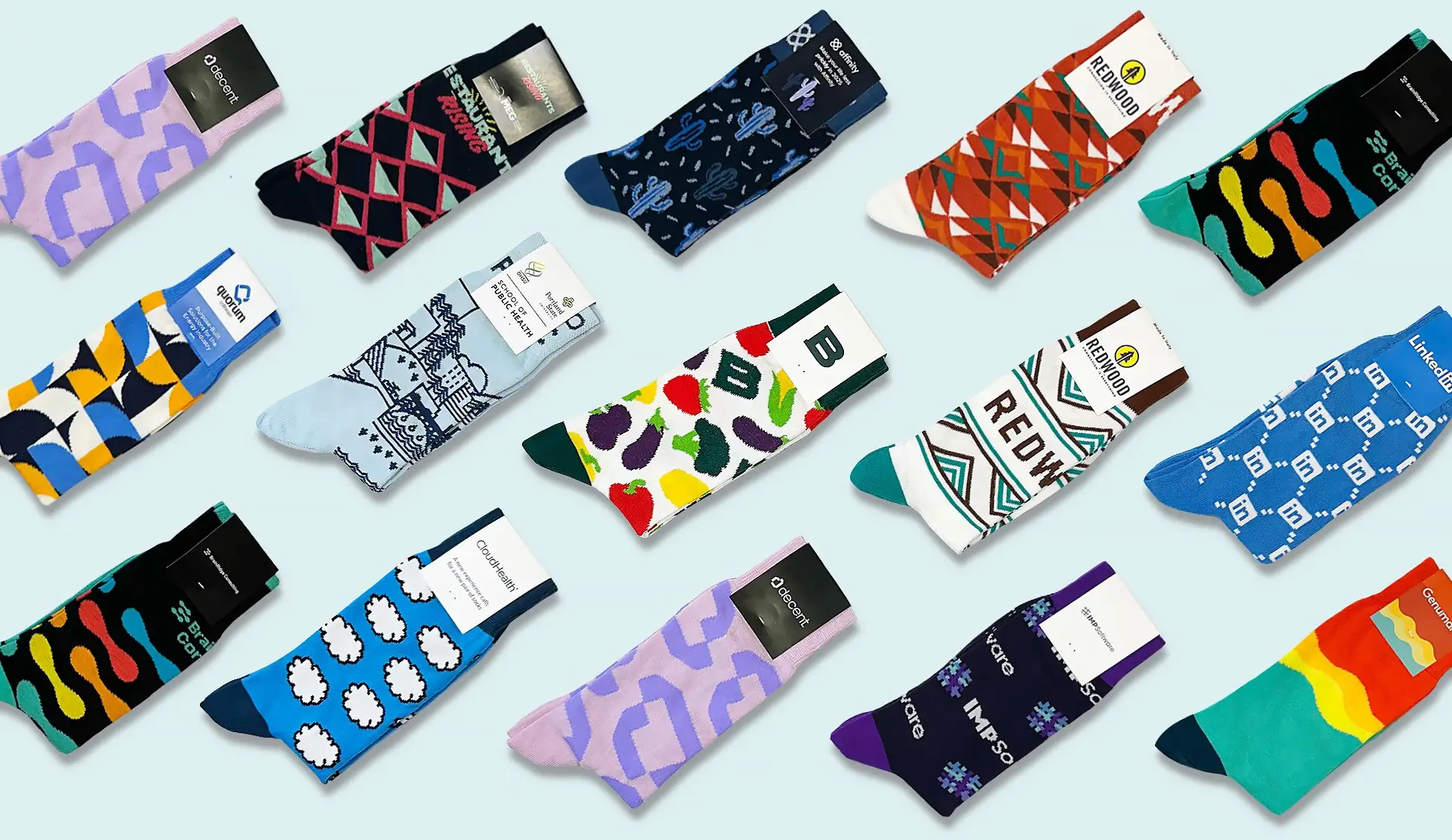
Picking a fiber for a branded sock is a different question. You're choosing for hundreds of feet, a per-pair budget and a logo that has to look right. Here is how the materials Sockrates knits line up: mercerized cotton, GOTS-certified organic cotton and two wool options.
Cost per pair by material. Pricing is all-in, covering design, labels and delivery. Across styles it generally runs $7.75 to $18.75 per pair, depending on quantity. Current starting prices by material:
- Mercerized cotton dress and athletic: from about $7.75 per pair at high volume.
- Organic cotton: from $8.50 per pair, plus $1 for the athletic style.
- Wool cabin: from $10.50 per pair, with a 100-pair minimum.
- Eco-Luxe wool: from $16.50 per pair, with a 250-pair minimum.
How each fiber affects color and design detail:
- Mercerized cotton is knit on a fine gauge, so small logos and thin text stay legible. The mercerized finish also deepens brand colors.
- Wool favors bold, clean designs over fine detail. Designers adapt intricate artwork into shapes the fiber shows well.
- Every design is knit into the yarn, not printed. Colors are Pantone-matched with test stitches before production. Organic socks use GOTS-approved, non-toxic dyes, so the logo doesn't break the certification.
How to Care for Each Material
Cotton
- Warm or cold washes suit most cotton blends, but check the label.
- Tumble dry on low to go easy on the elastane.
- Any standard detergent works; skip bleach on colors.
Bamboo viscose
- Wash cool on a gentle cycle, since viscose is weaker when wet.
- Avoid high dryer heat. Air dry, or tumble on low.
- Use a mild detergent.
Merino wool
- Machine wash only if the label allows it. Woolmark advises a wool, delicate or cold cycle.
- Use a mild, neutral detergent.
- Skip the dryer unless the label says tumble dry.
Can merino go in the dryer? Only if the care label says tumble dry. Then Woolmark recommends a low heat or wool setting. Otherwise, dry it flat. The step-by-step version is in how to wash wool socks.
Frequently Asked Questions
Create socks your team will actually be proud to give away