
What you’ll learn in 30 seconds
This guide gives you 17 sock packaging ideas, sorted from low-cost belly bands at about $0.15 a pair to premium rigid boxes. It also shows you the best format for welcome kits, client gifts, trade shows, retail and online orders. You’ll see what US rules say must go on the label, the eco claims that can get you in trouble, and how to make socks feel premium without overspending.
Packaging also shapes how people see your brand. In a 2026 Adobe Express survey of 703 online shoppers, 73% said premium packaging improves their view of a brand. More than half had kept packaging because it was too nice to throw away.
This guide covers 17 sock packaging ideas, from simple paper bands to gift-ready tins. Each one comes with a cost estimate, a best use, and a practical tip.
What Is the Best Packaging for Socks?
There is no single best packaging for socks. Belly bands and paper sleeves suit most budgets and large orders. Boxes and tins suit gifting, where the unboxing is part of the present. Pick the format that matches your recipient, your delivery method, and your budget per pair.
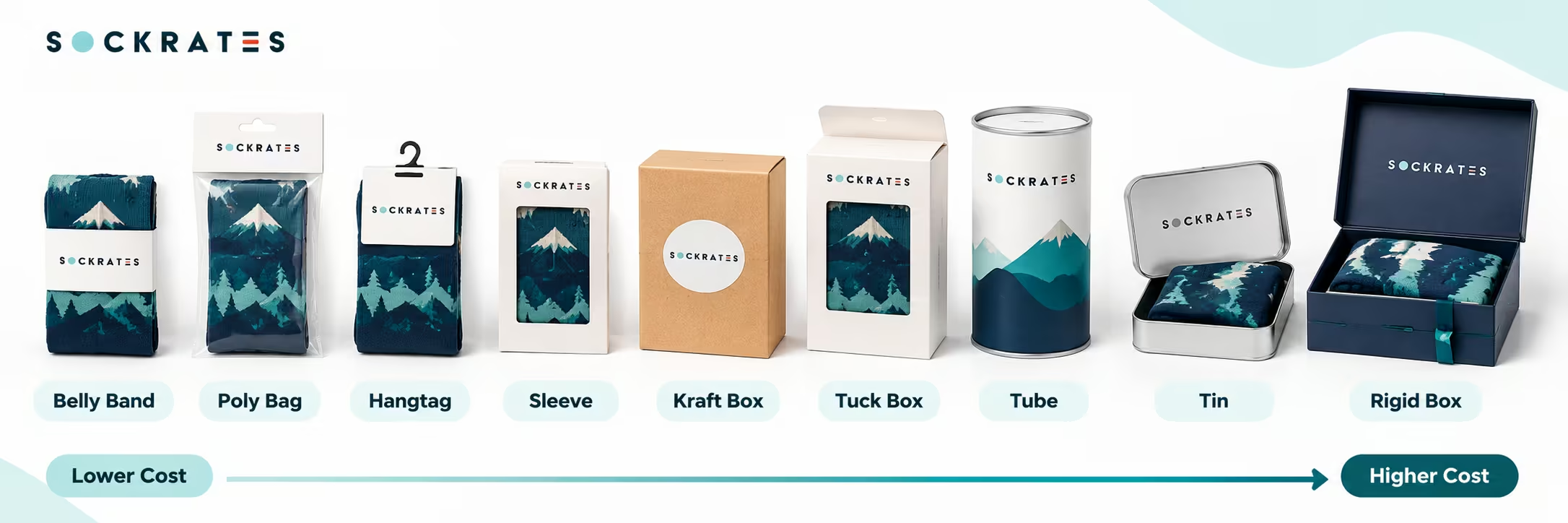
The table below compares the main formats. Costs are rough market estimates per unit. They change with quantity, print method, and supplier.
Low-Cost Sock Packaging Ideas
These formats suit large orders, giveaways, and tight budgets. They add branding without adding much weight or cost. Each idea below follows the same layout, so you can compare them quickly.
1. Belly Bands
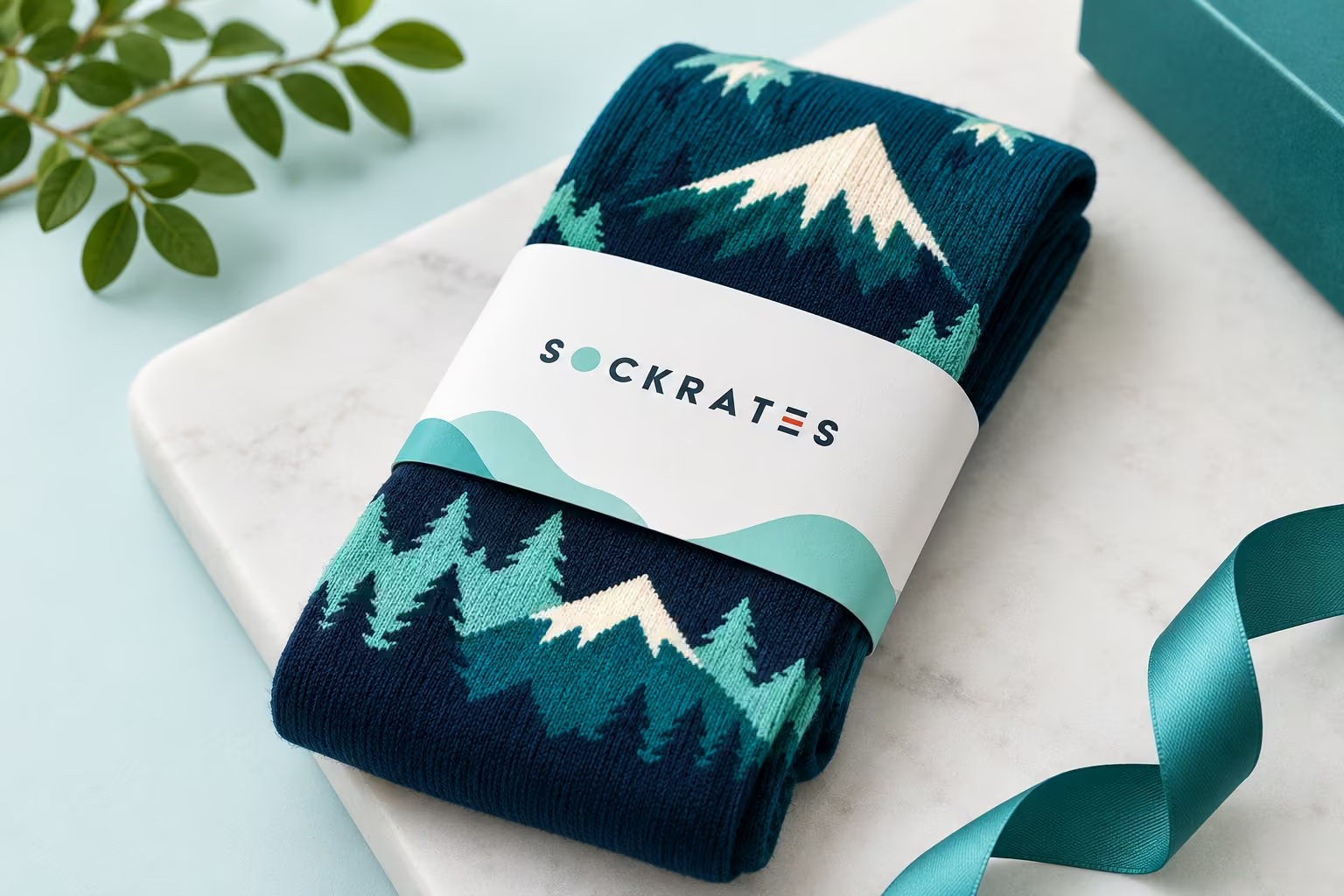
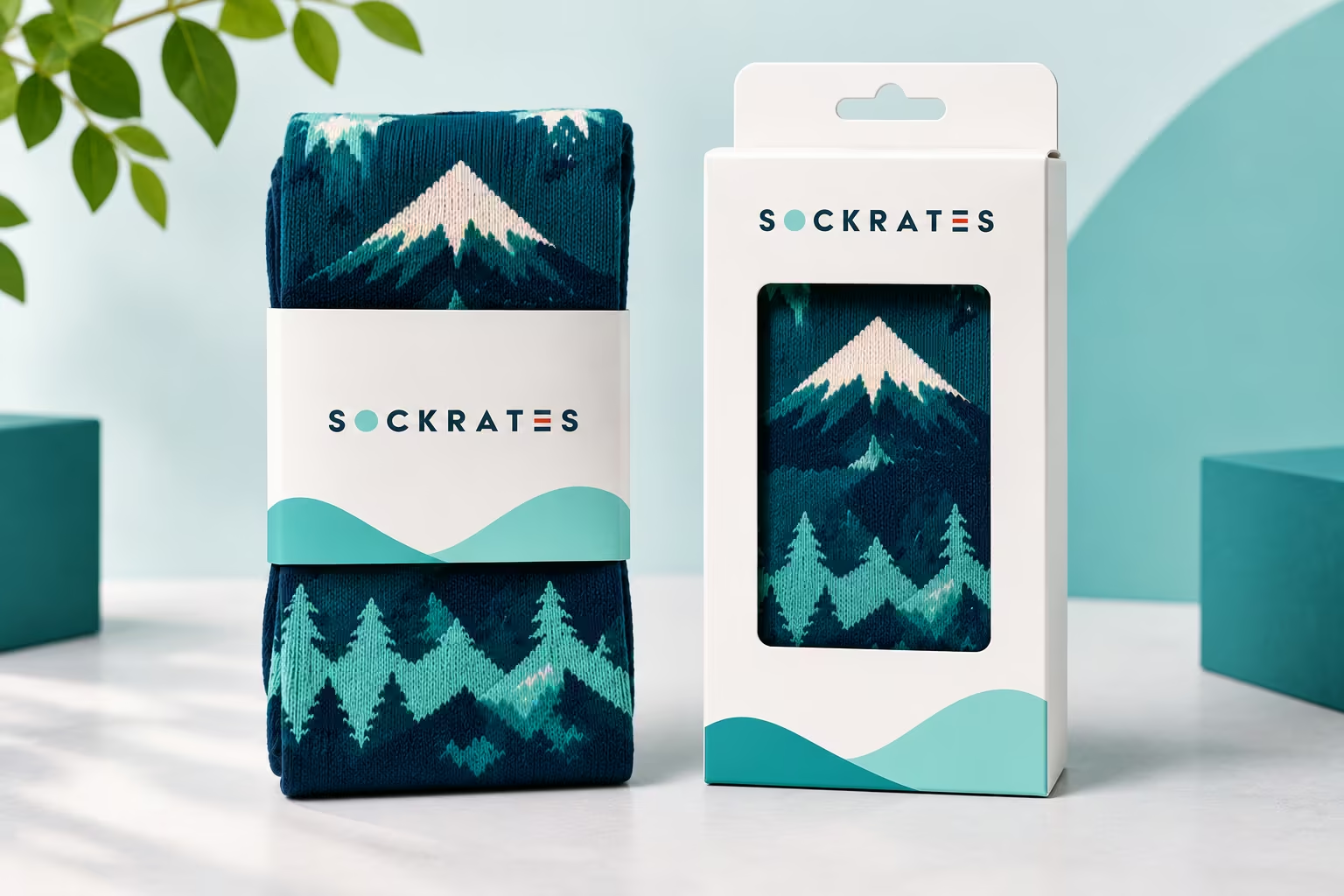
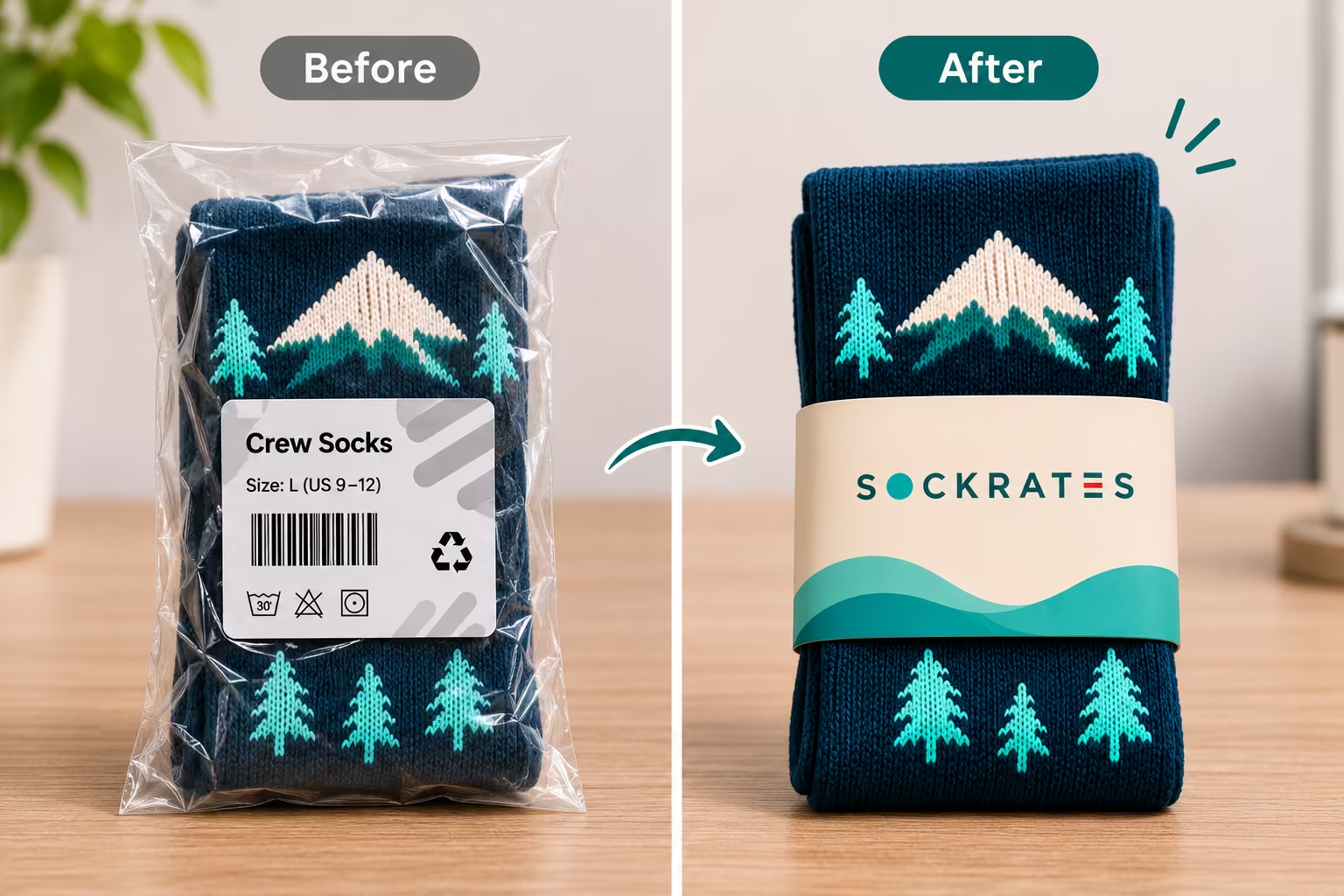
A belly band is a printed paper strip wrapped around a folded pair. The fabric stays visible on both sides. People can see the pattern and feel the knit before opening anything.
It is the lowest-cost way to add branding to socks. A band can also bundle two or three pairs into one neat pack.
- Best for: Events, giveaways, and socks with a strong design or texture.
- Estimated cost: $0.15 to $0.50 per unit.
- Tip: Keep the band narrow. A wide band hides the design you paid for.
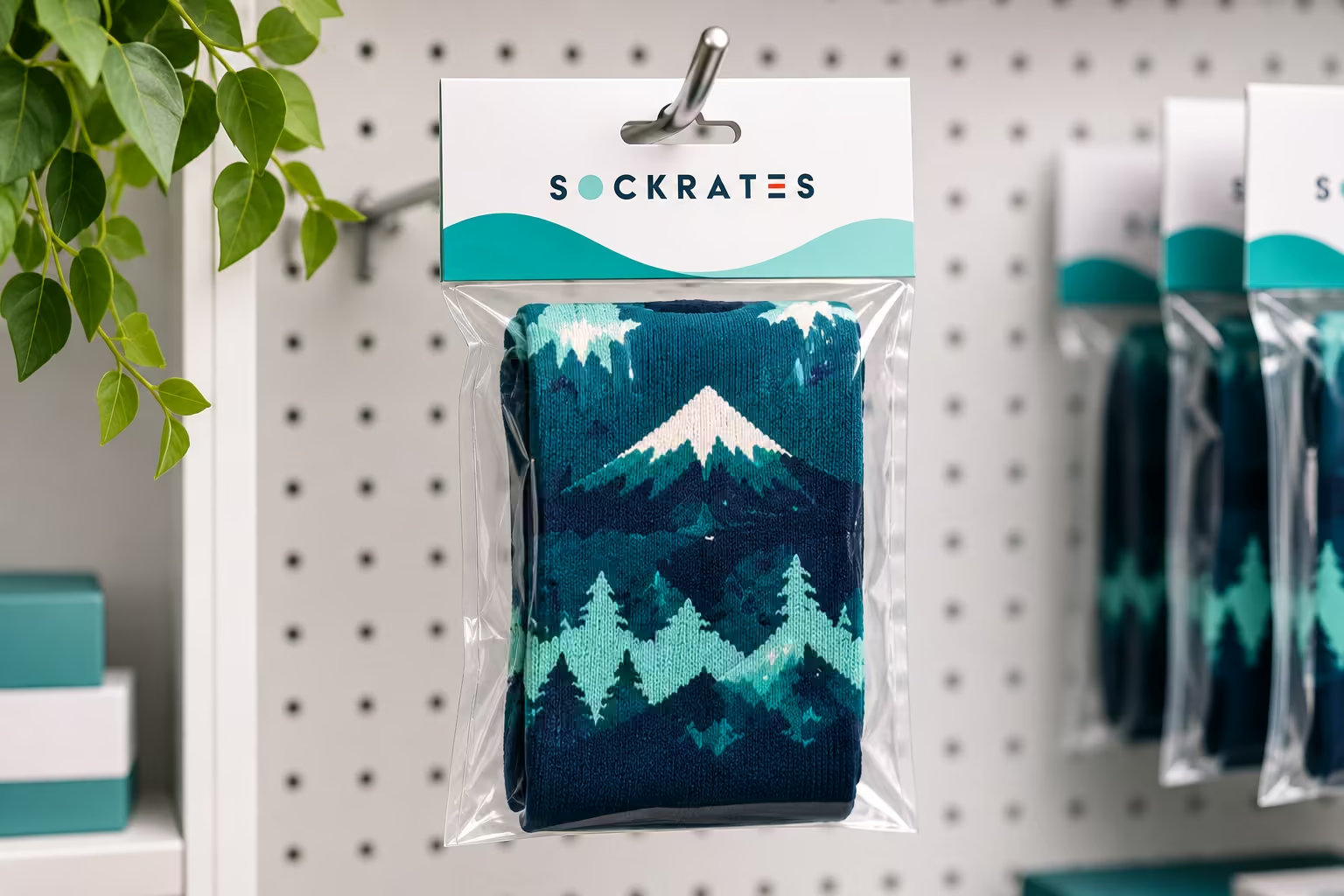
2. Header Cards With Poly Bags
This format pairs a clear bag with a printed card folded over the top. A hang hole in the card lets the pack sit on a retail peg. The bag keeps socks clean through shipping and handling.
One trade-off is the plastic. A poly bag changes what you can say about recyclability. The mistakes section below explains why.
- Best for: Retail and wholesale programs that need hang-ready, protected socks.
- Estimated cost: $0.20 to $0.60 per unit.
- Tip: Print the size on the front of the card, where shoppers look first.
3. Hangtags With Logo Clips
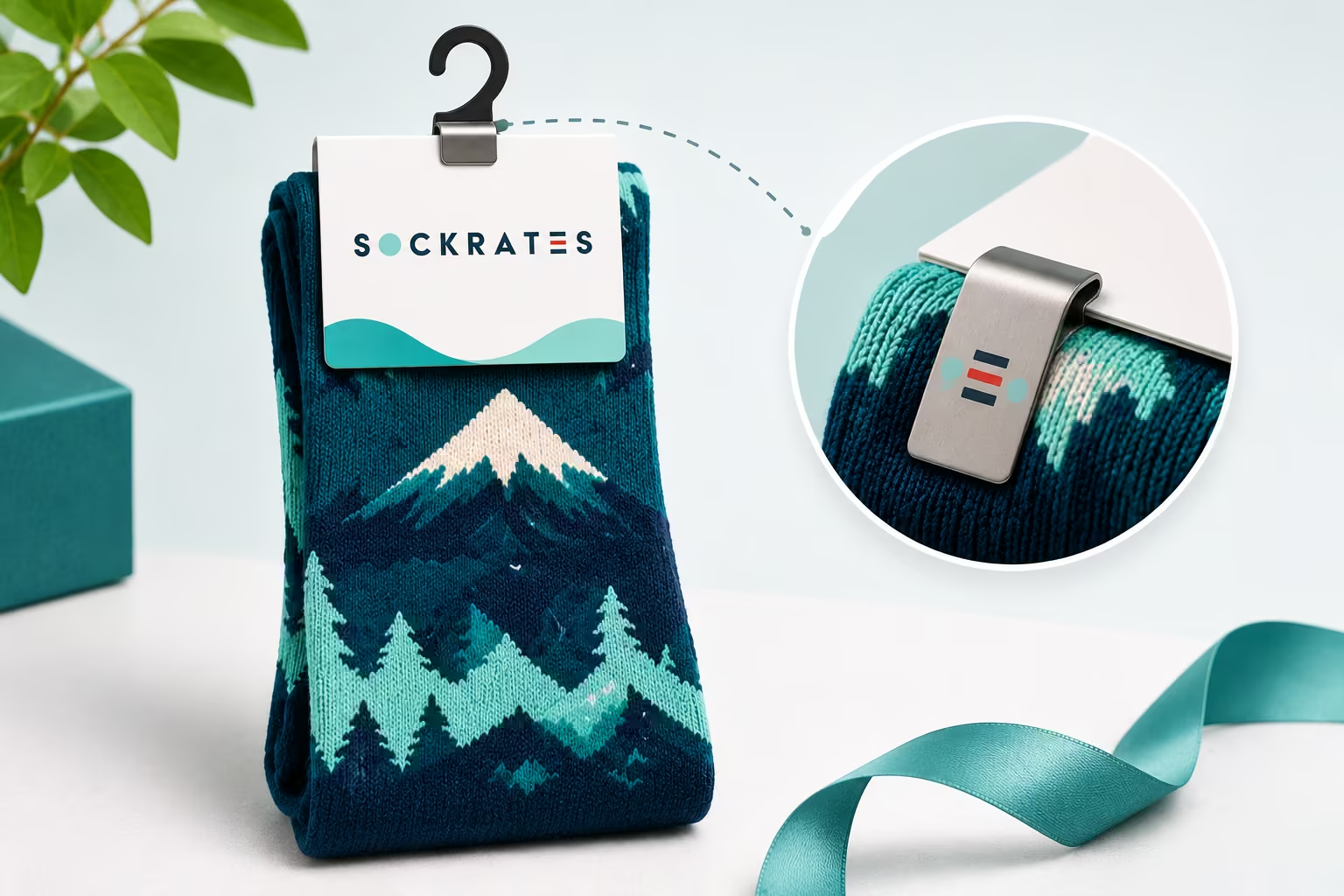
A hangtag shows off patterned socks with almost no cover. A small metal or plastic clip holds the pair together. The tag carries your logo, size, and product details.
The clip itself can do some branding work. A logo stamped on it is a small detail people notice.
Some manufacturers skip the clip and sew the tag on instead. The needle passes between the threads, so it leaves no hole in the knit. Sockrates, for example, includes a sewn custom header tag free with every order.
- Best for: Store displays where the sock design should do the selling.
- Estimated cost: $0.10 to $0.50 per unit.
- Tip: Test the clip on your actual socks. Sharp edges can snag fine knits.
4. Paper Sleeves and Window Sleeves
A sleeve covers more of the sock than a belly band. That gives you extra print space for a message, a size chart, or a QR code. It also protects the fold better in transit.
A die-cut window adds a peek at the pattern. The recipient sees enough to get curious, without a full reveal.
- Best for: Welcome kits, mailed orders, and retail shelves.
- Estimated cost: $0.30 to $0.80 per unit.
- Tip: Choose thicker stock for mailed orders, so the corners stay clean.
5. Stock Kraft Boxes With Custom Stickers
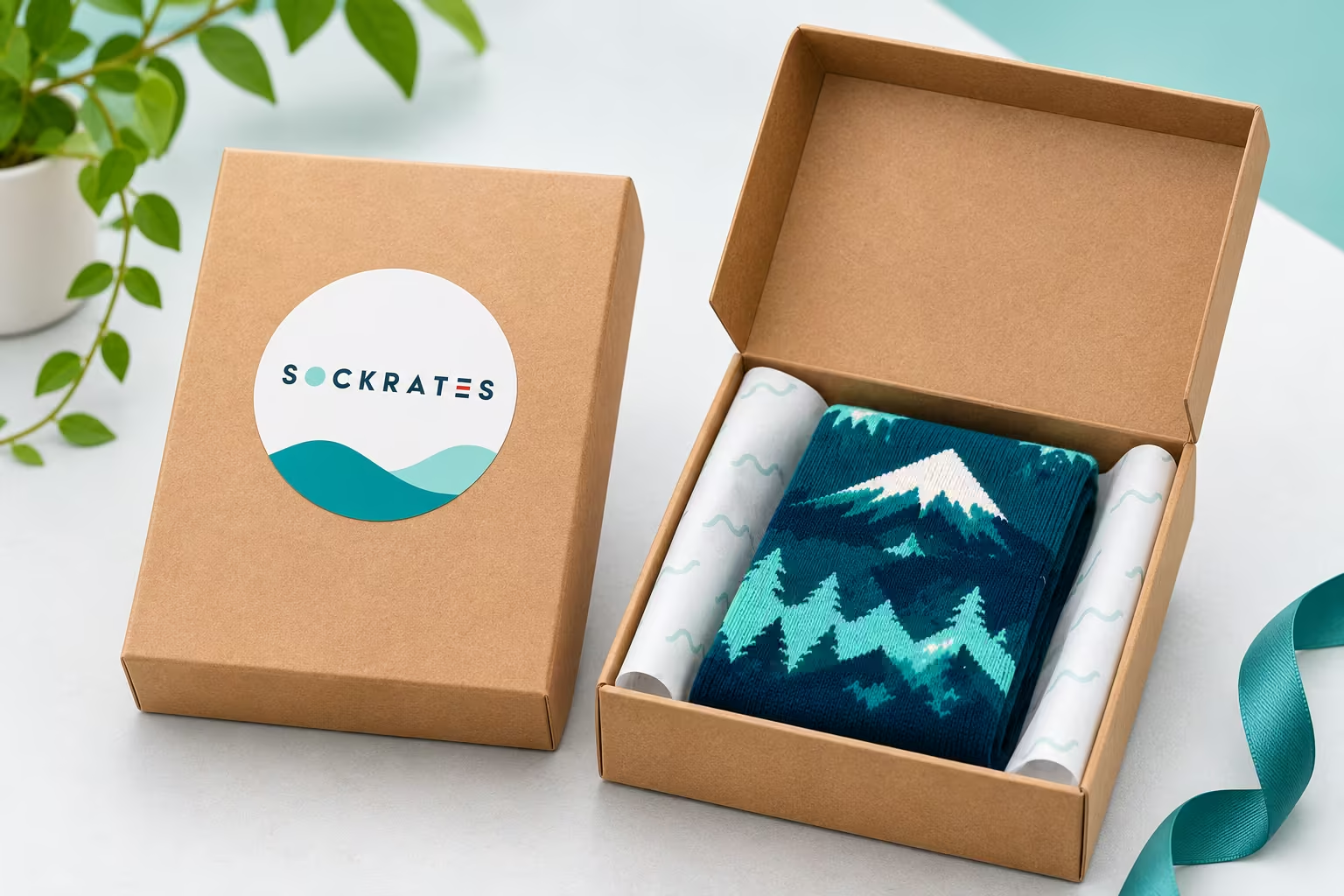
This is the low-risk route to a boxed gift. You buy ready-made kraft boxes and brand them with a sticker or band. Nothing is custom printed except the sticker.
The benefits are practical. Minimums are lower, turnaround is faster, and a rebrand only costs new stickers.
Here is a simple example. A team orders 200 pairs for its first client gift. They buy plain boxes and one roll of logo stickers. If the logo changes next year, the leftover boxes still work.
- Best for: First-time buyers and small gift runs.
- Estimated cost: $0.50 to $1.50 per unit, sticker included.
- Tip: Use the sticker as the seal, so the box looks finished.
Premium Sock Packaging Ideas
These formats suit client gifts, executive gifts, and limited editions. Here the packaging is part of the gift. Save them for smaller, higher-value orders.
Premium formats also weigh more and take up storage space. Check shipping and storage costs alongside the unit price.
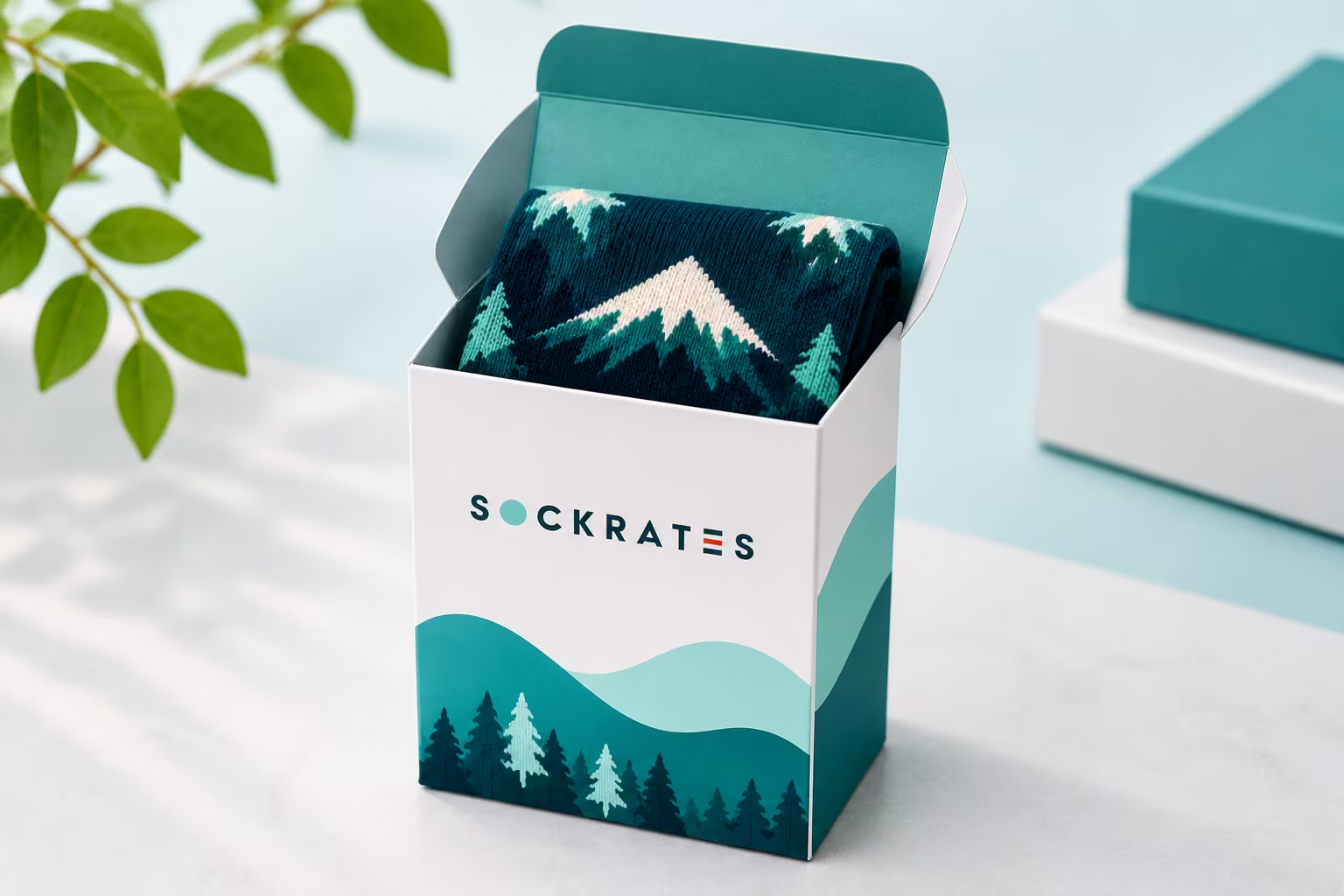
6. Tuck Boxes
A tuck box is a folding cardstock box with a flap that tucks in. It ships flat and assembles in seconds. Every panel can carry print.
It is an affordable step up from a sleeve. The socks are fully enclosed, so the reveal feels more like a gift. Tuck boxes also stack neatly on a shelf or in a kit.
- Best for: Single pairs and multi-pair sets that need a retail-ready look.
- Estimated cost: $0.75 to $2.00 per unit.
- Tip: Match the box size closely to the folded socks. Loose socks slide around and arrive creased.
7. Rigid Boxes With Magnetic Closures
A rigid box feels heavy and solid in the hand. The magnetic flap closes with a soft snap. Together, those details create a strong unboxing moment.
Finishes matter here. Soft-touch coating, foil stamping, and embossing all suit this format. One finish done well beats three done cheaply.
The cost and footprint are high. That makes rigid boxes a poor fit for mass giveaways.
- Best for: Client appreciation gifts and executive gifts.
- Estimated cost: $3.00 to $8.00 per unit.
- Tip: Ask if the box ships flat or assembled. Assembled boxes need far more storage.

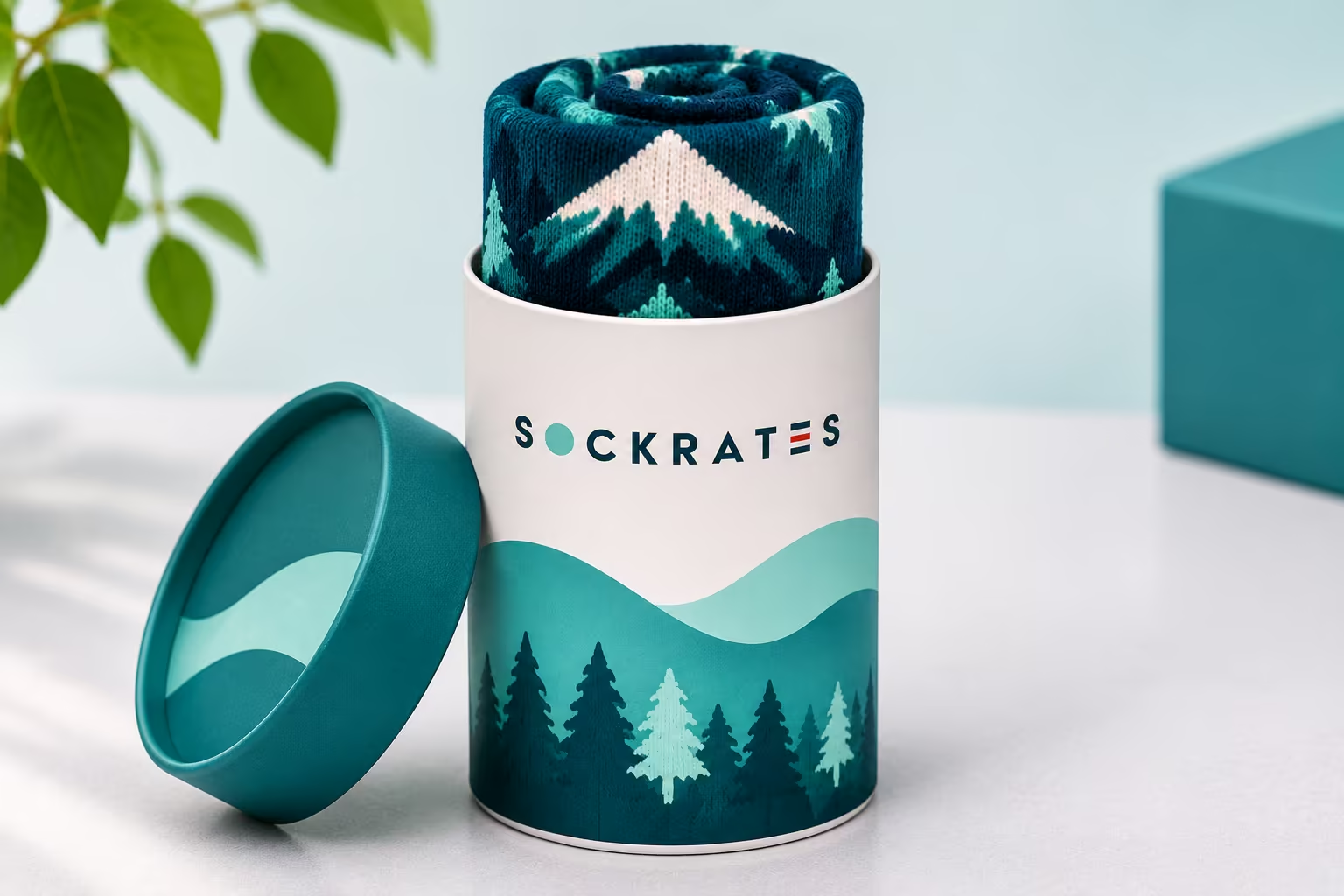
8. Cylinder Tubes
Rolled socks slide neatly into a paperboard tube. A printed wrap covers the outside. The round shape gives you a full 360-degree design area.
Tubes stand out because few brands use them. They also cause practical problems. Round packs are harder to pack, stack, and ship than flat ones.
- Best for: Product launches and gifts that need to look different.
- Estimated cost: $1.50 to $4.00 per unit.
- Tip: Request a sample first. Check how the tubes fit in your shipping carton.
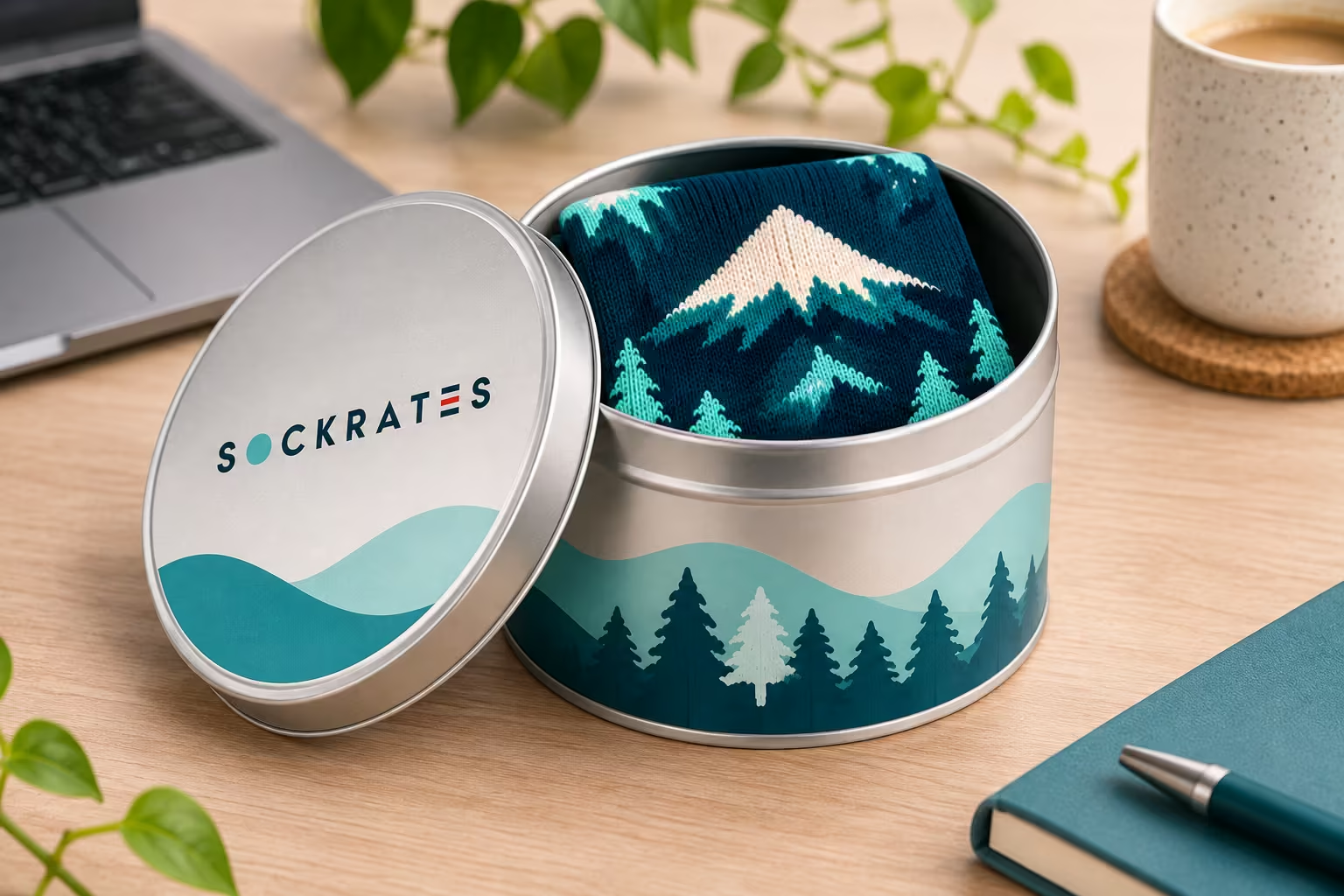
9. Custom Tins
A tin has one big advantage over paper. People keep it. It ends up on a desk or shelf holding pens, cables, or snacks. Your brand stays visible long after the socks are worn.
The trade-offs are unit cost and weight. Both are among the highest on this list.
- Best for: Collectible sets and corporate gifts.
- Estimated cost: $2.50 to $6.00 per unit.
- Tip: Put the logo on the lid or side, where it shows during reuse.
Eco-Friendly Sock Packaging Ideas
Sustainable packaging comes down to two things. Use less material, and choose formats people can actually recycle or reuse. A green label on a wasteful pack helps nobody.
Claims need care too. The mistakes section below covers recycling and label wording in more detail.
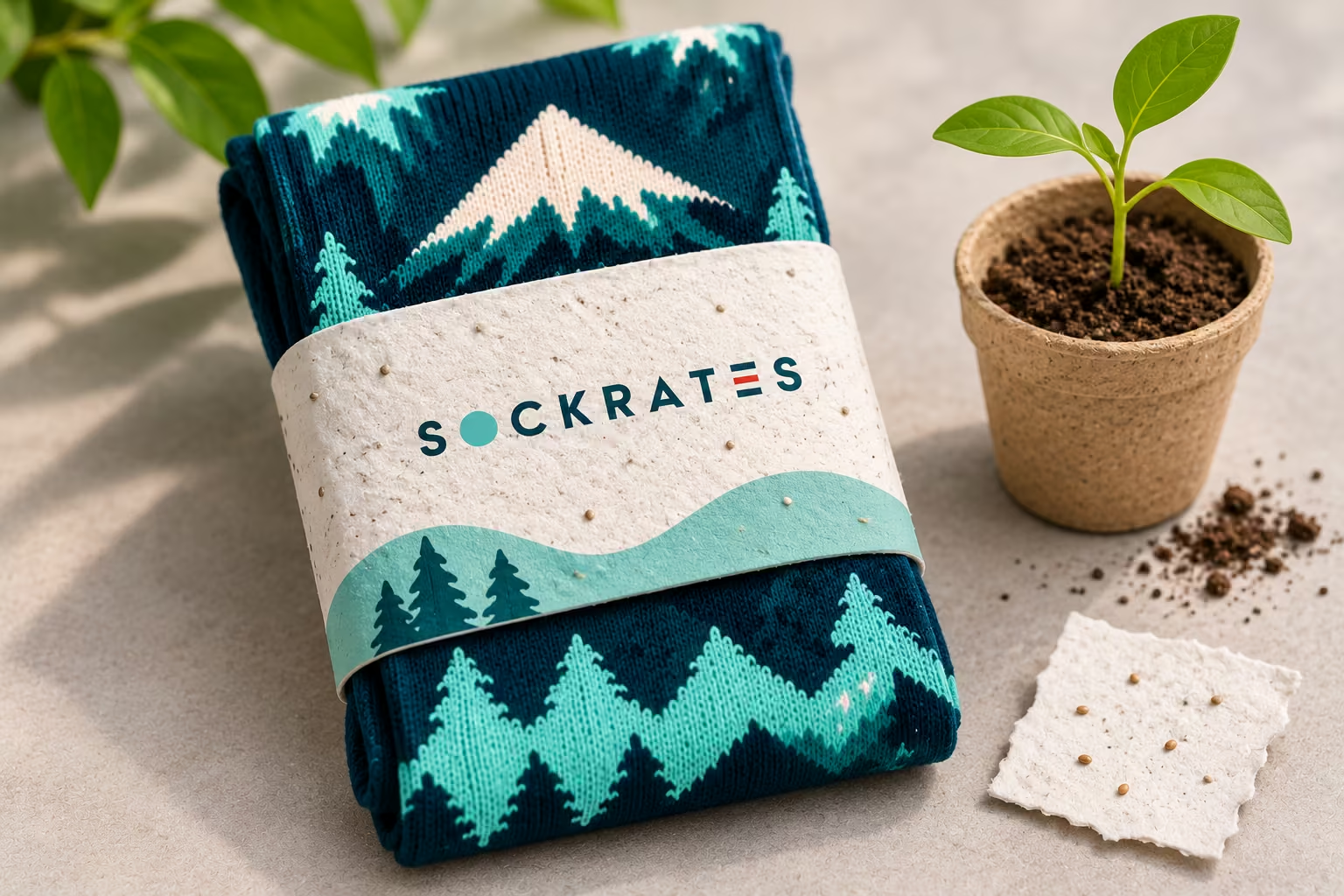
10. Seed Paper Bands
Seed paper is handmade paper with seeds pressed into it. The recipient plants the band and waters it. The packaging becomes a small keepsake instead of waste.
It works best when the idea fits the campaign. A plantable band on organic cotton socks tells one clear story.
- Best for: Sustainability campaigns, Earth Day programs, and employee events.
- Estimated cost: $0.40 to $1.00 per unit.
- Tip: Confirm the seed type and printing limits with the supplier. The textured surface blurs fine detail.
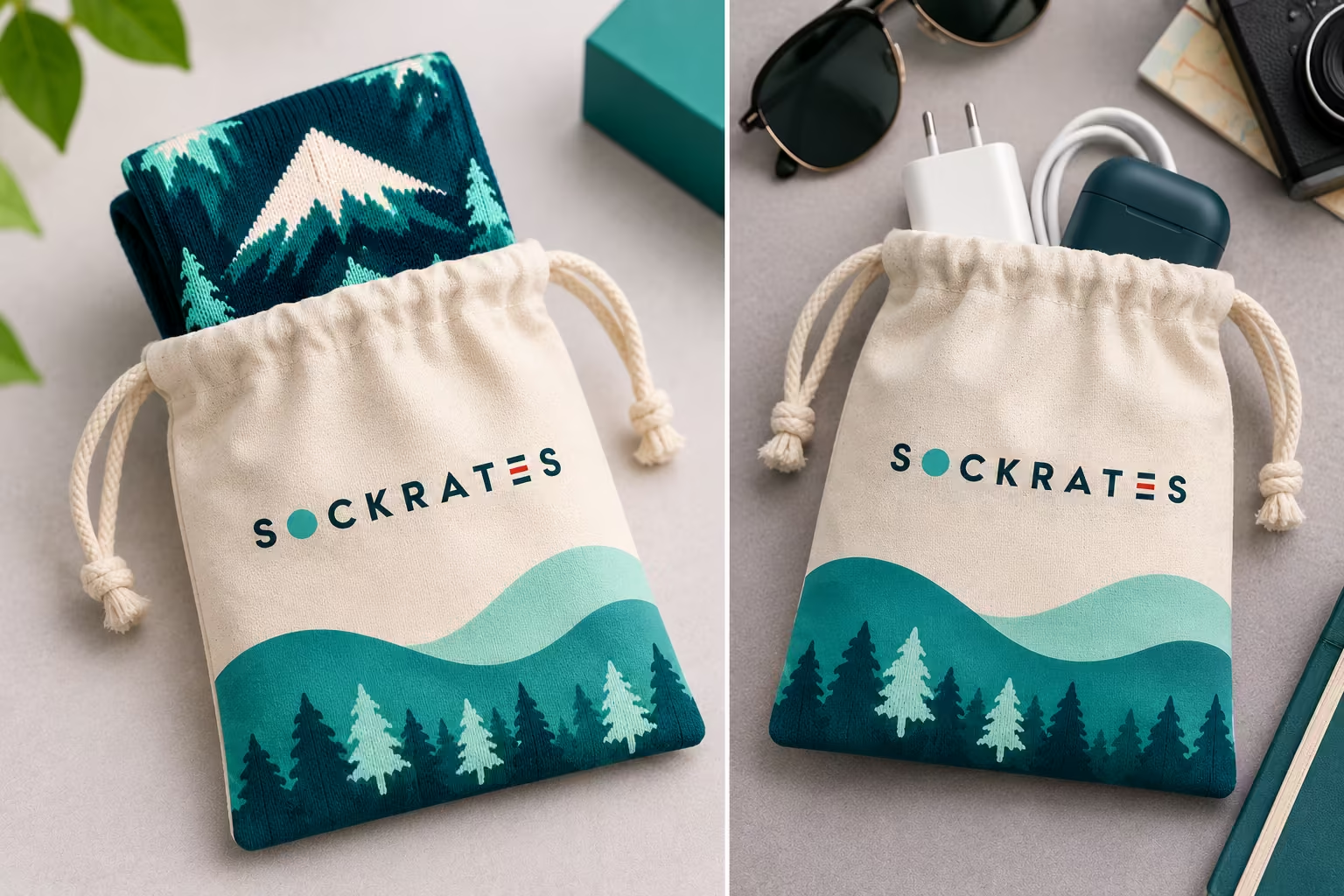
11. Reusable Cotton Pouches
A branded drawstring pouch outlives the gift. Later it holds travel items, cables, or laundry. That second life is the whole point.
The benefit depends on reuse. A thin, scratchy pouch goes straight in the trash. Make it well enough that people want to keep it.
- Best for: Wellness brands and premium gifts.
- Estimated cost: $1.00 to $3.00 per unit.
- Tip: Keep the logo small. People reuse a subtle pouch more than a loud one.
12. A Single Recyclable Mailer-Ready Sleeve
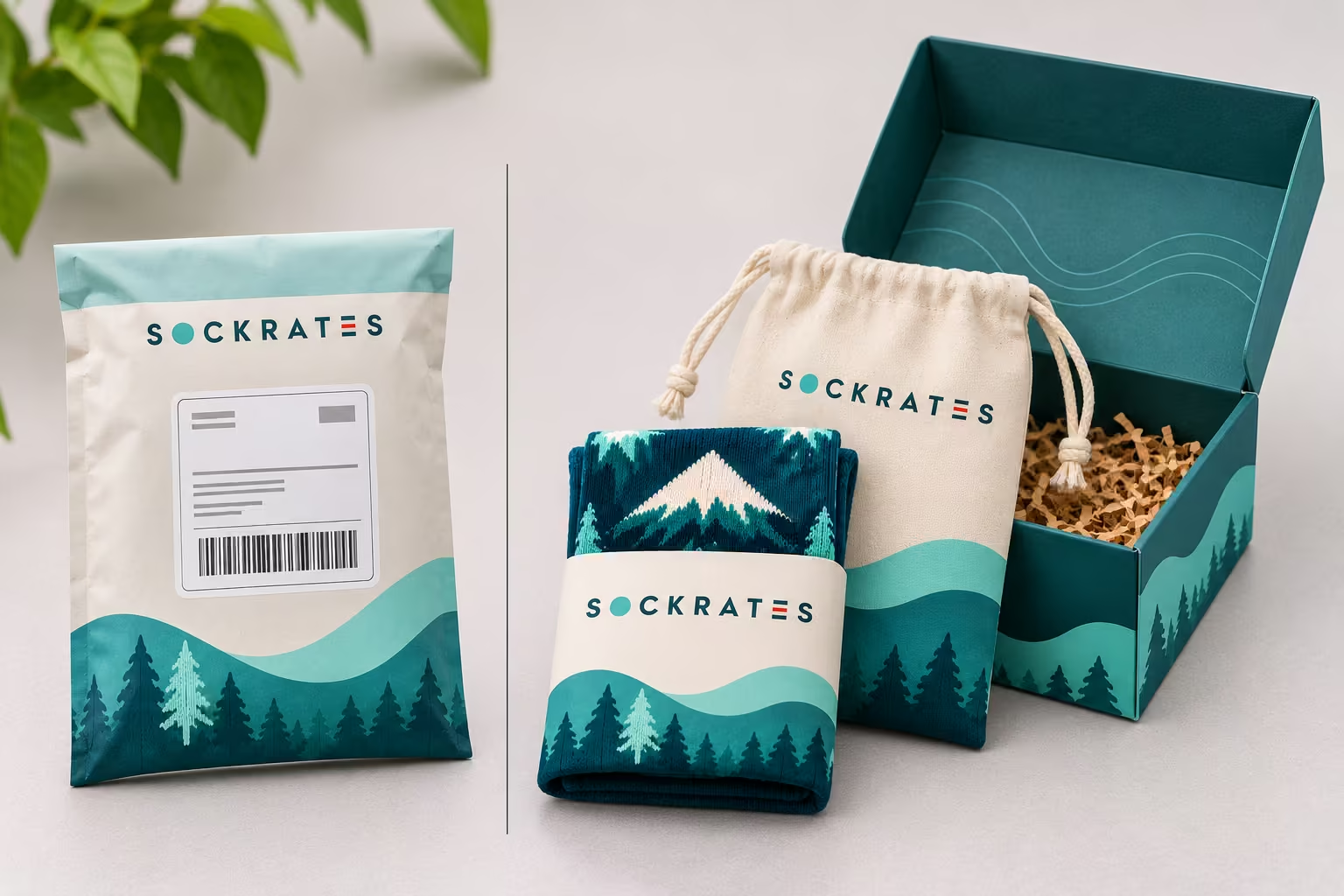
This is a less-is-more idea. One sturdy paper sleeve replaces a sleeve, a bag, and an outer box. It carries the branding and the shipping label together.
Shoppers notice excess layers. In the same Adobe Express survey, 54% said packaging feels gimmicky when it creates unnecessary waste. Layers do have one honest defense, though. They protect socks in transit.
- Best for: Online orders and brands with a low-waste message.
- Estimated cost: $0.40 to $1.00 per unit.
- Tip: Mail a sample to yourself first. Soft paper can tear in postal sorting.
Creative and Gift-Ready Sock Packaging Ideas
These ideas work best when the concept connects to your brand, event, or season. Some are handmade and suit small batches. Others can be produced at scale. Each idea below says which applies.
13. Candy-Style Wraps
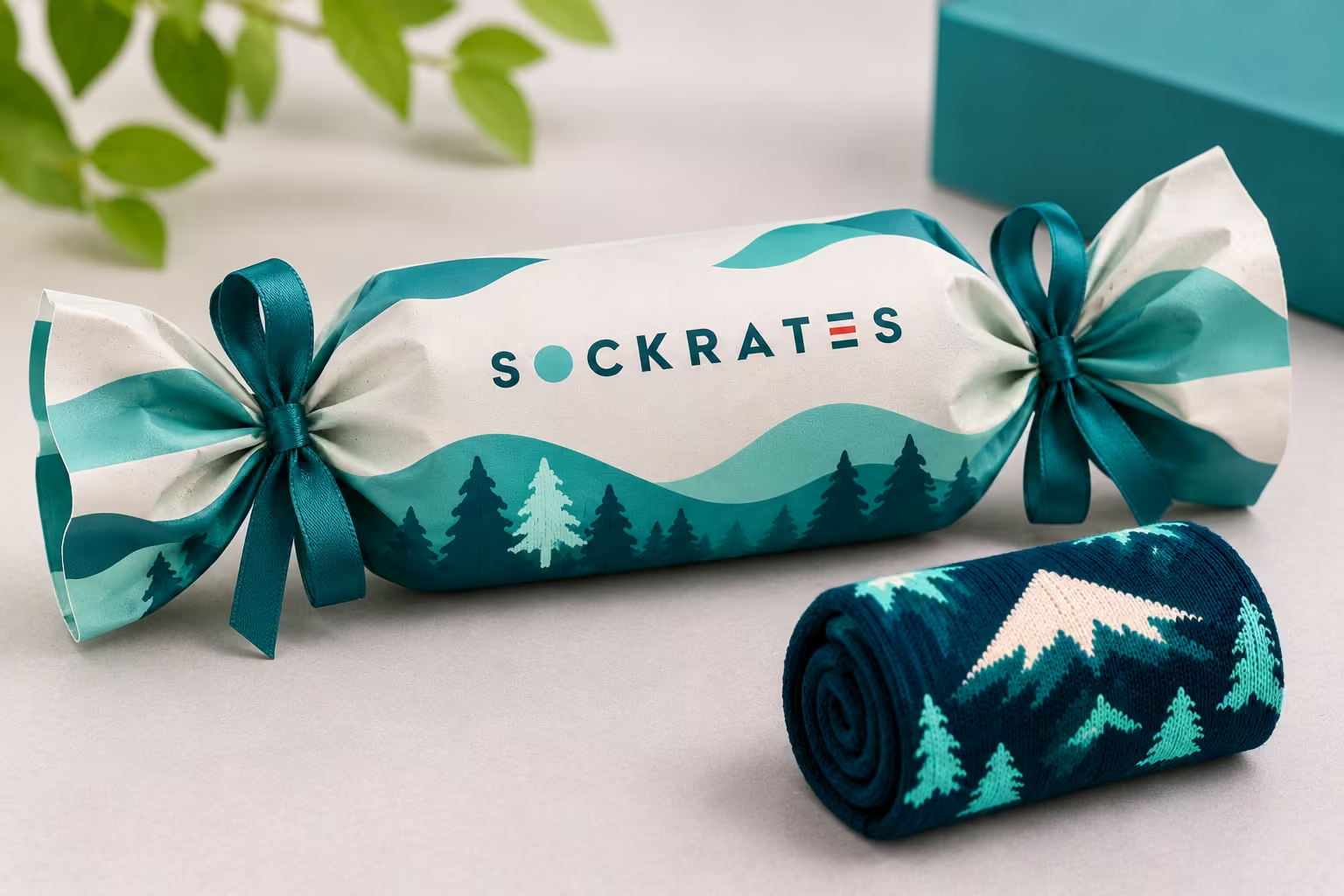
Roll the socks, wrap them in paper, and tie both ends with ribbon. The result looks like a wrapped candy or a Christmas cracker. It is simple, and it looks polished.
This is a handmade method. The gift-wrapping steps further down show how to do it.
- Best for: Small holiday batches and team gifts.
- Estimated cost: Under $1.00 per unit in paper and ribbon, plus your time.
- Tip: Use thicker wrapping paper. Thin paper tears when you twist the ends.
14. Sock Bouquets
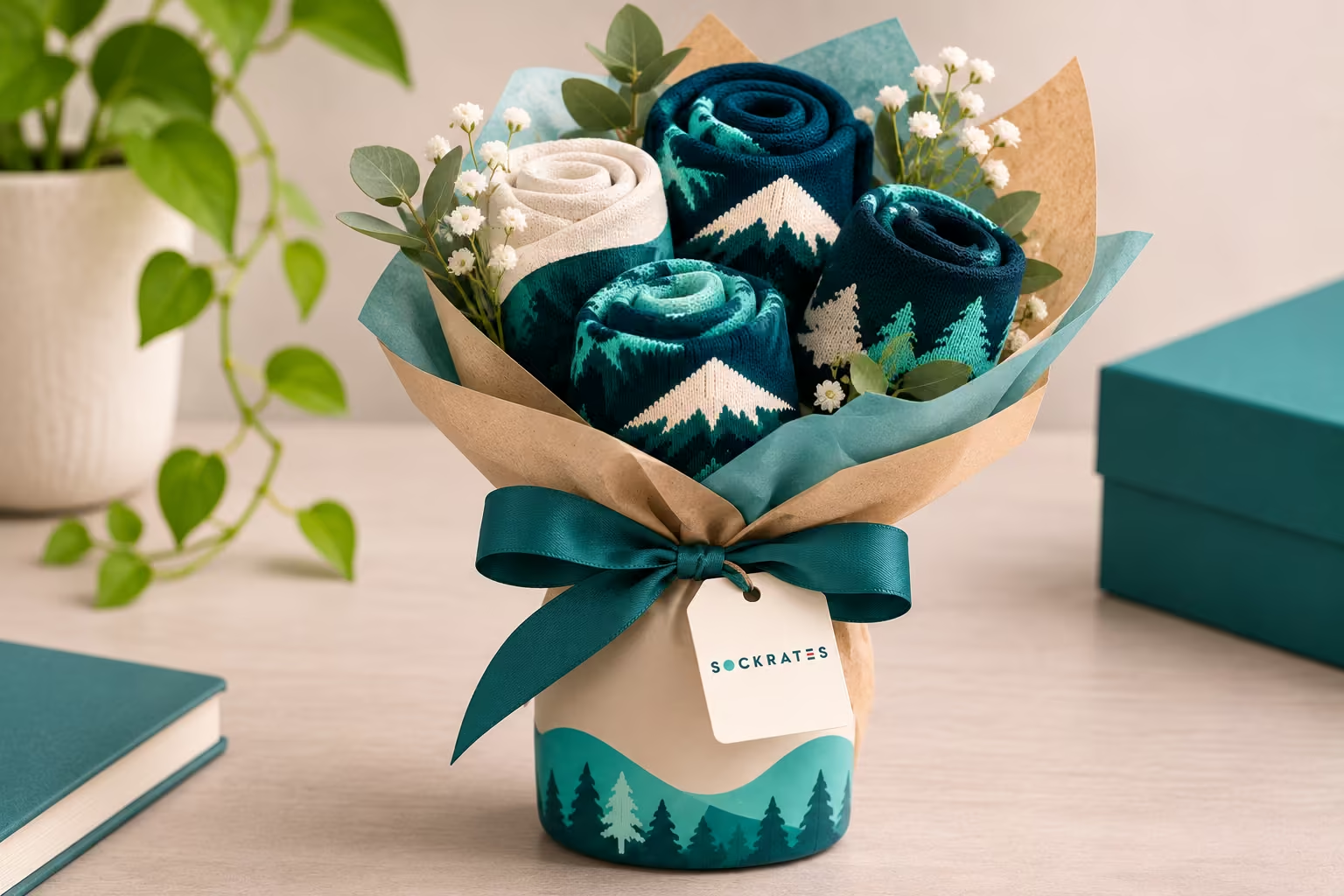
Rolled socks can look like flowers. Arrange several pairs in a small vase, a box, or a wrapped bunch. Bright colors and patterns make the best petals.
This one is handmade and slow. Each bouquet takes several minutes to build. Keep it for small groups.
- Best for: Small team celebrations, Mother's Day, and appreciation events.
- Estimated cost: $2.00 to $5.00 per bouquet in materials, plus labor.
- Tip: Build one test bouquet and time it before you commit.
15. Novelty Cans and Concept Packs
Concept packs make socks look like a different product. Think of socks sealed in a food-style can. Or a solid-color pair packed like a paintbrush dipped in paint.
The best concepts create a moment of surprise. They can be manufactured at scale, but setup costs are higher.
Humor is a risk as well as a hook. A joke that suits a creative agency may fall flat at a law firm.
- Best for: Product launches, creative brands, and campaign tie-ins.
- Estimated cost: $2.00 to $6.00 per unit, depending on the format.
- Tip: Test the concept on a few recipients. Then test how it packs and ships.
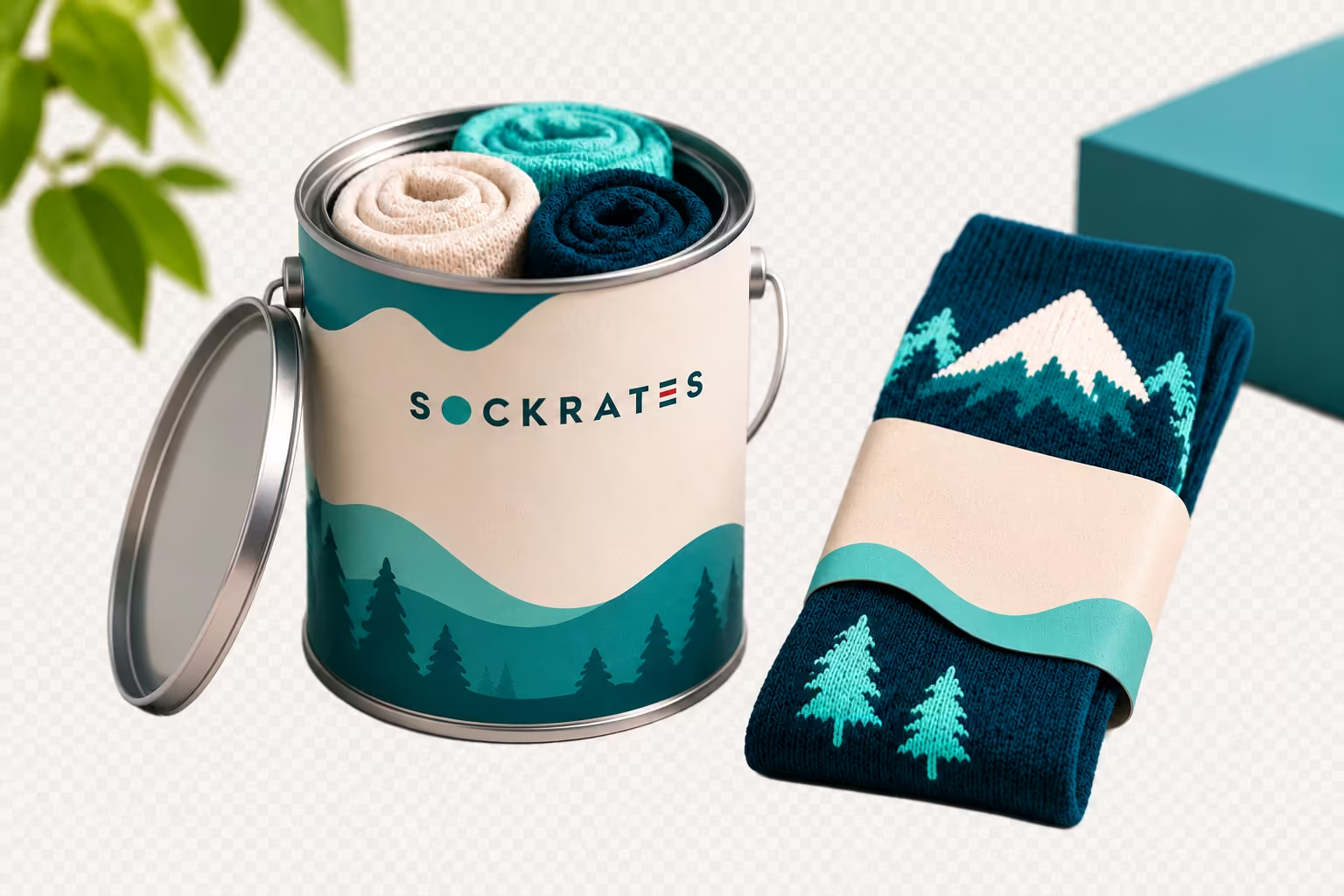
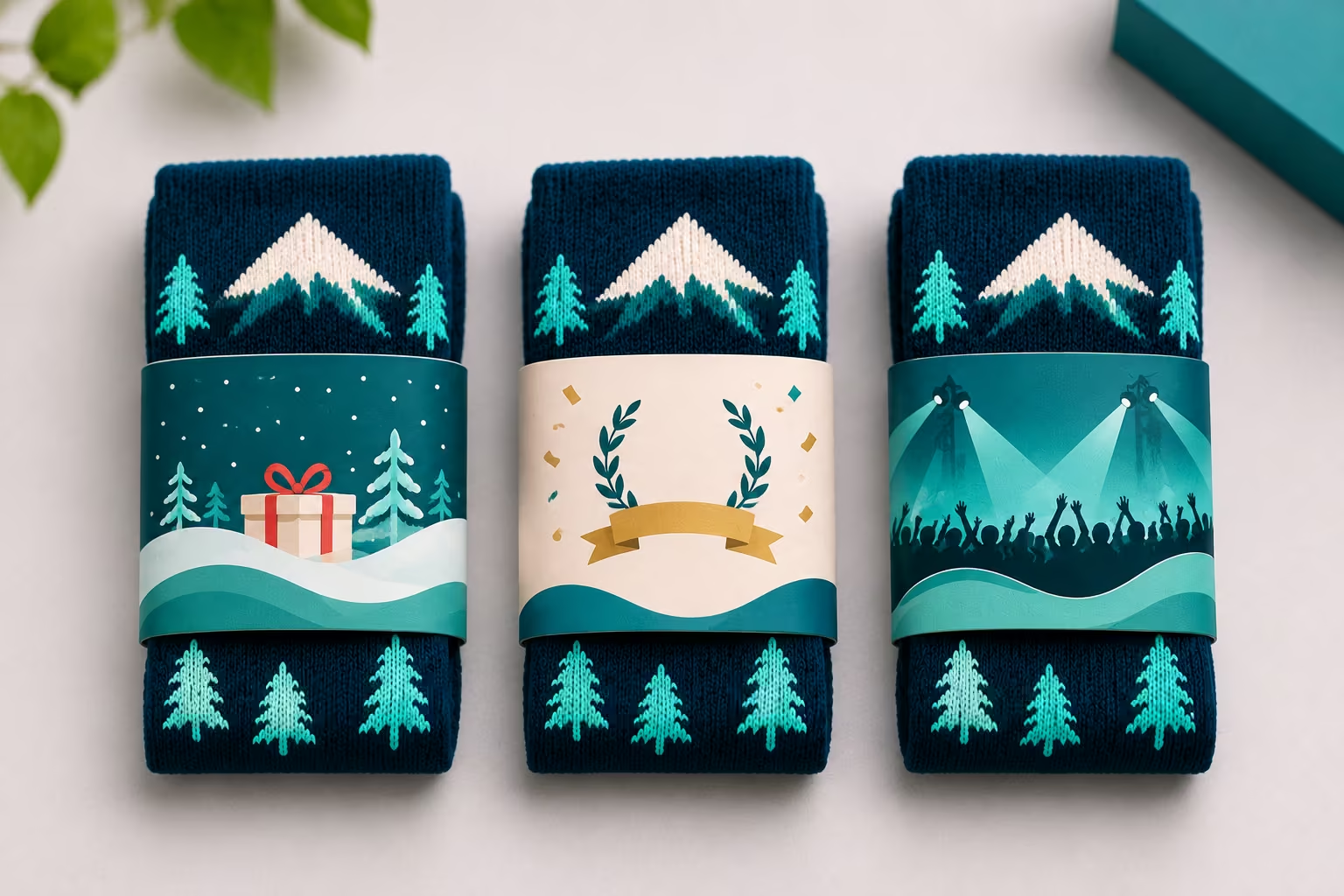
16. Seasonal and Limited-Edition Packaging
Seasonal packaging marks a moment. Common examples are a Christmas client gift, a company anniversary, or an event edition. The sock design can stay the same while the sleeve changes.
That makes it a low-cost refresh. One sock design can carry three campaigns with three sleeves. It scales well, since only the print changes.
- Best for: Holiday gifts, milestones, and annual events.
- Estimated cost: Same as a standard sleeve or box, plus new artwork.
- Tip: Plan Q4 orders early, and skip printed years. Dated artwork turns leftover stock into waste.
If the socks themselves are seasonal, these custom Christmas sock ideas are a good starting point.
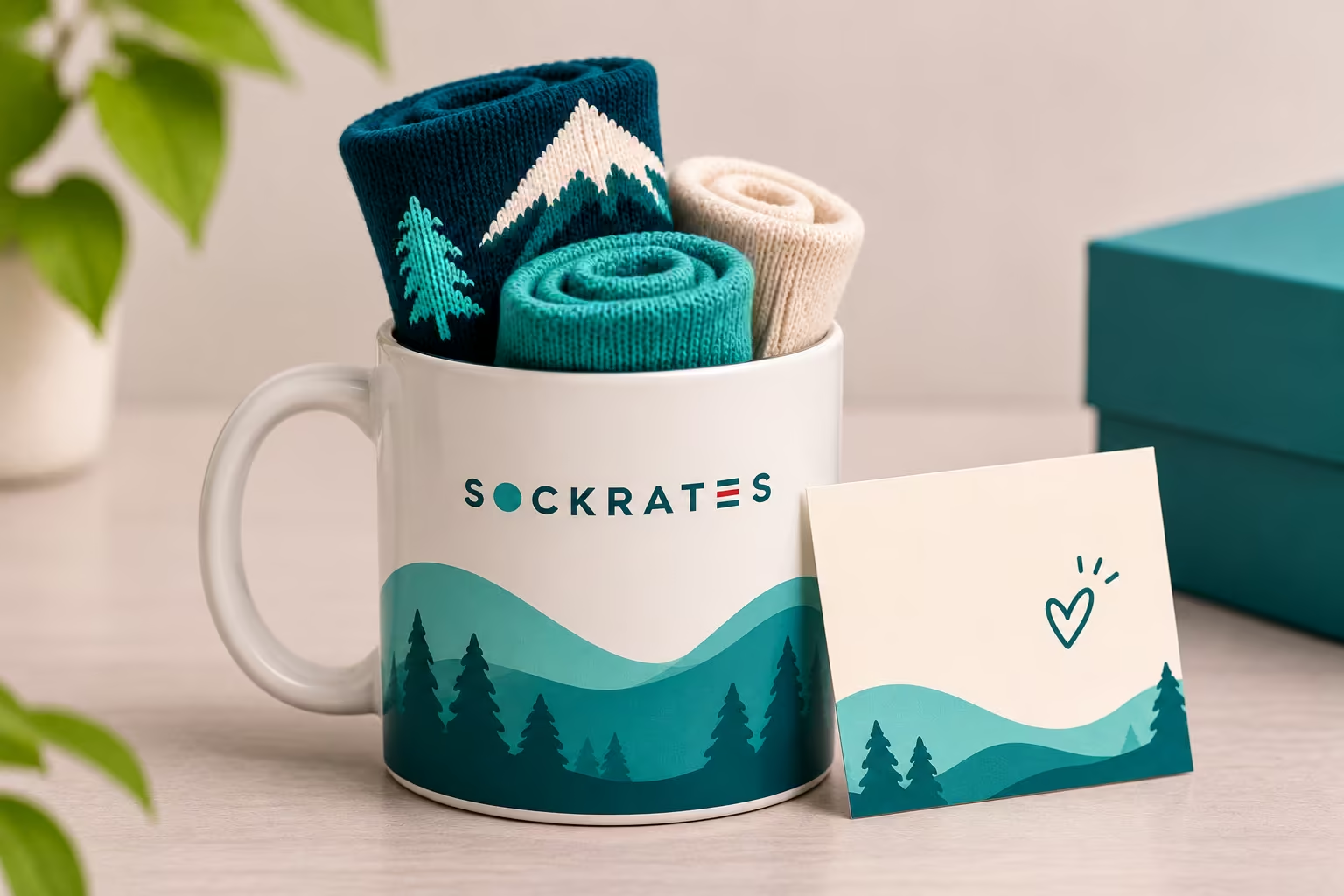
17. Socks Tucked Inside a Mug
Rolled socks fit neatly inside a branded mug. The mug becomes the packaging, and the recipient gets two gifts. It also adds a small surprise when they look inside.
Assembly is by hand, but it is quick. It needs no tools or special skills.
- Best for: Welcome gifts and client gifts.
- Estimated cost: The price of the mug, often $3.00 to $10.00.
- Tip: Ship mugs in a padded outer box. The socks protect the inside only.
The Best Sock Packaging by Use Case
A long list of socks packaging ideas only helps if you can narrow it down. The fastest way is to start with the occasion. Here is what works for the five most common ones.
Employee Welcome Kits
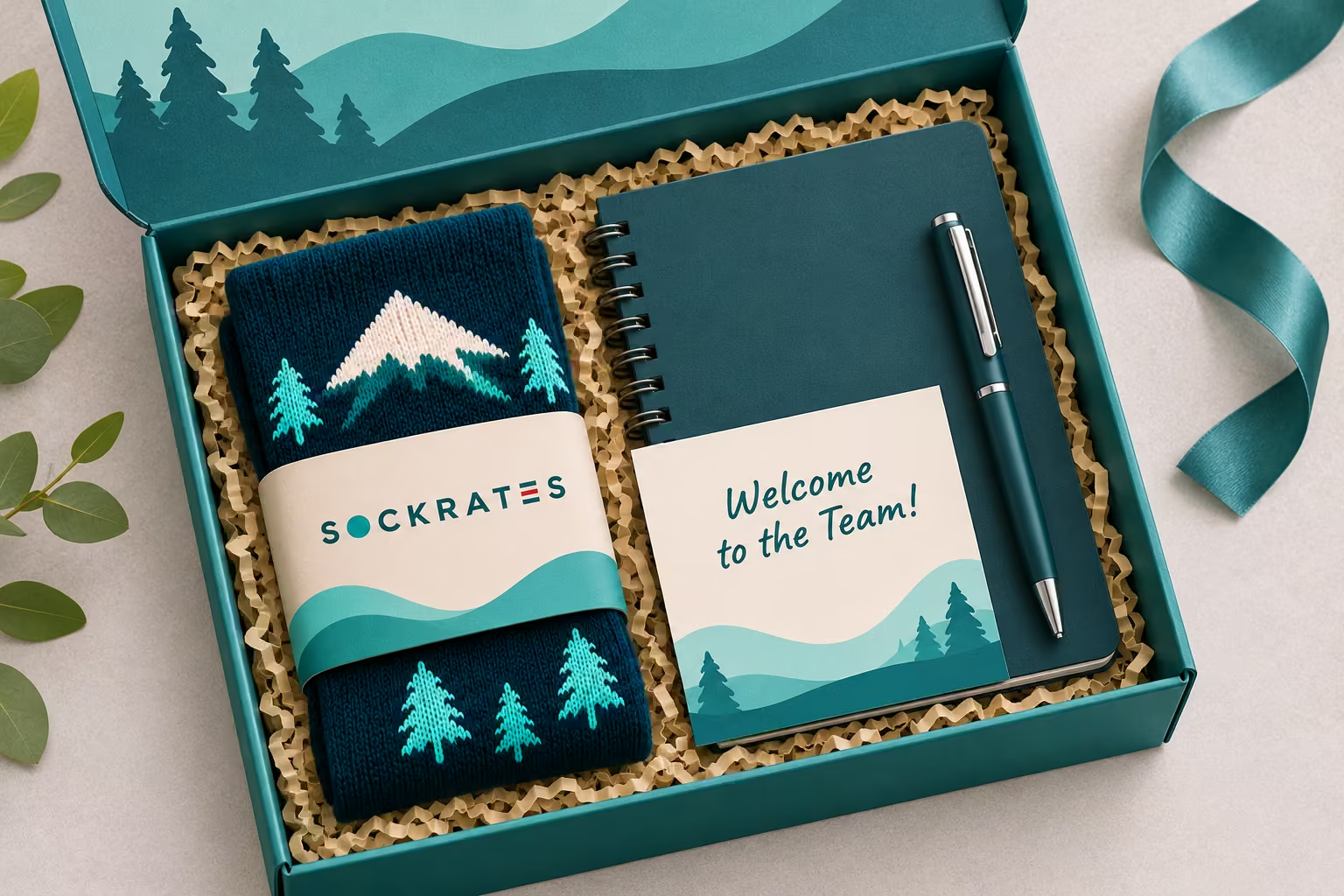
Choose sleeves or tuck boxes. Both are flat and sit neatly inside a larger kit. Let the kit decide the format. Measure the box and the other items first, then size the sock pack to fit.
Remote hires need a different plan. Boxed sock kits can ship straight to each person's home. All it takes is a spreadsheet of names and addresses.
A QR code on the sleeve can link to a welcome message or onboarding page. For the rest of the kit, these new employee welcome gifts pair well with socks.
Client and Executive Gifts
Choose a rigid box, a tin, or a mug pairing. Add a personal note card. For this audience, perceived care matters more than unit cost. A handwritten line often lands better than an expensive finish.
A two-piece box with a slide-out tray gives a similar reveal at a lighter weight. It also holds two or three pairs, which suits a small gift set. Recycled chipboard keeps its shape and costs less to ship than a rigid box.
For a key account, consider a co-branded design. Their colors next to yours shows the gift was made for them. More thank-you gift ideas can round out the box.
Trade Shows and Events
Choose belly bands or sleeves. They are flat, light, and quick to hand out. Attendees already carry bags full of brochures. Few will carry a bulky box around the show floor, or stop to unwrap one.
Print a QR code that leads to a booth offer or lead form. Socks also rank well among trade show giveaway ideas because people actually wear them.
Retail and Merchandise
Choose header cards, hangtags, or sleeves. The store's display method decides which. Pegs need a hang hole. Shelves need a pack that stands or stacks.
Confirm peg, shelf, and barcode requirements with the retailer before printing. Shoppers also need size and product details at a glance. If retail is new to you, start with this guide on how to sell socks online and in stores.
Online Orders and Subscriptions
Choose lightweight sleeves or small mailers. They hold up in transit and keep shipping costs down. The outside can stay plain. The inside can still carry the brand through an insert card or a printed seal.
For subscriptions, rotate the sleeve design. A new look each month keeps repeat deliveries feeling fresh.
How to Make Socks Feel Premium Without Overspending
Premium does not come from the most expensive box. It comes from the sock and its packaging telling the same story. A clean $0.50 sleeve can beat a cluttered $5.00 box.
Shoppers agree. In the Adobe Express survey, half said packaging feels gimmicky when it looks more expensive than the product itself.
These five choices lift perceived quality at low cost:
- Heavier stock. Thicker paper feels more valuable the moment someone picks it up.
- Matte or soft-touch finish. It reads calmer and more refined than high gloss.
- Generous white space. Empty space signals confidence. Crowded layouts look cheap.
- One strong brand color. A single color, matched accurately to your brand, looks more deliberate than five.
- A clean fold. Socks folded the same way every time look cared for.
One warning applies to all of this. Packaging cannot rescue an average sock. If the knit feels thin, the box only raises expectations the sock cannot meet. Get the quality of the sock right first.
What to Print on Sock Packaging
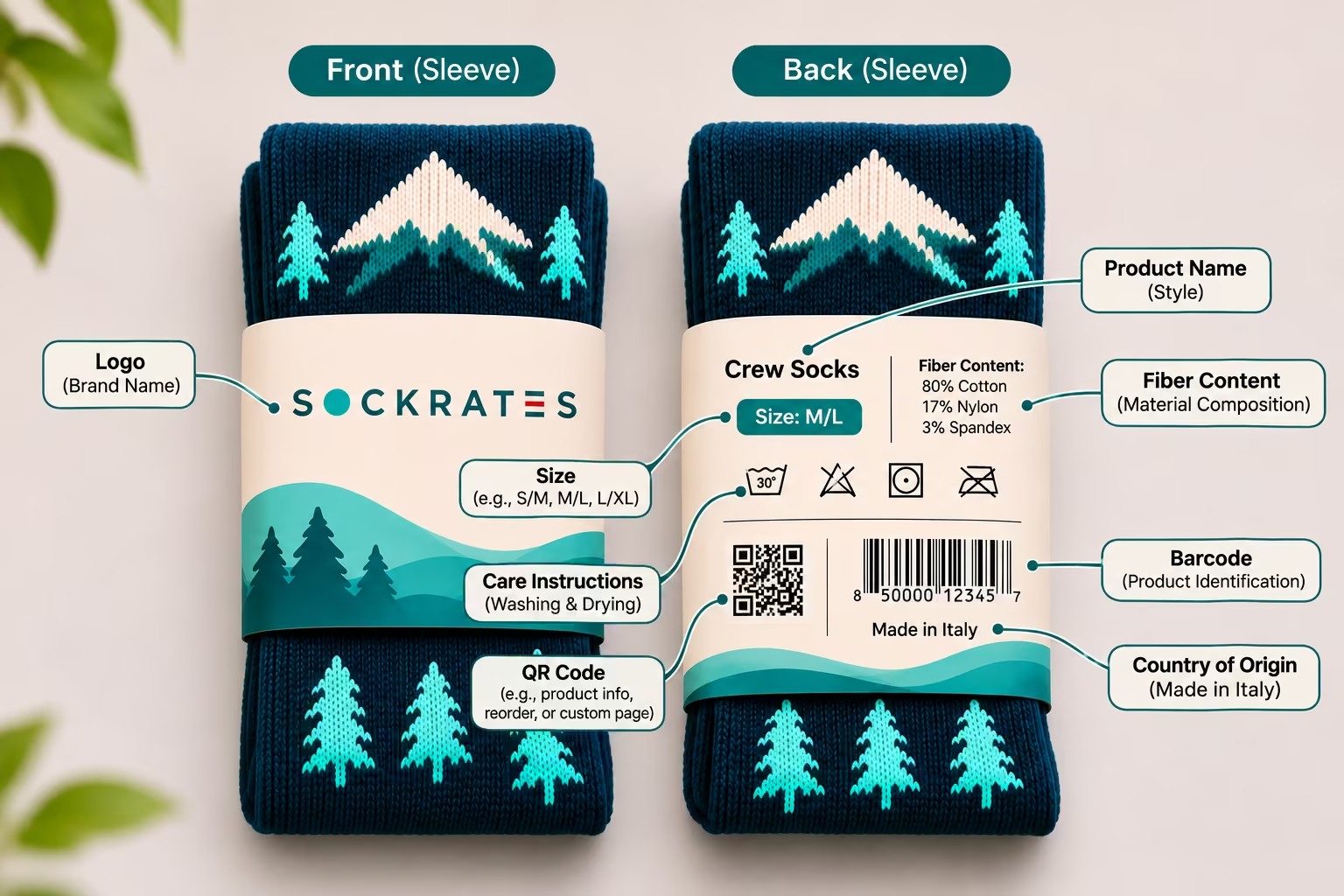
Good packaging answers questions before anyone asks. Split your content into essentials and extras.
Essentials
- Logo or brand name
- Size or size range
- Fiber content, listed by percentage
- Care instructions
- Country of origin
Helpful extras
- Barcode, if the socks will be sold in stores
- QR code linking to a landing page or message
- A short brand story
- A thank-you message
A Note on US Labeling Rules
Socks sold in the US fall under federal textile labeling rules. The FTC requires three disclosures on most textile products. These are fiber content, country of origin, and the identity of the manufacturer or dealer.
Two details matter for packaging:
- Packaged socks do not need a label on every piece. The package label can carry the required details, if they apply to every pair inside.
- For most socks, the country of origin must appear on the front of the package or label. It should sit next to the size.
So your packaging may be doing legal work, not only brand work. Rules can differ for gifts, promotional items, and retail sales. Confirm the requirements with your supplier or legal advisor before printing.
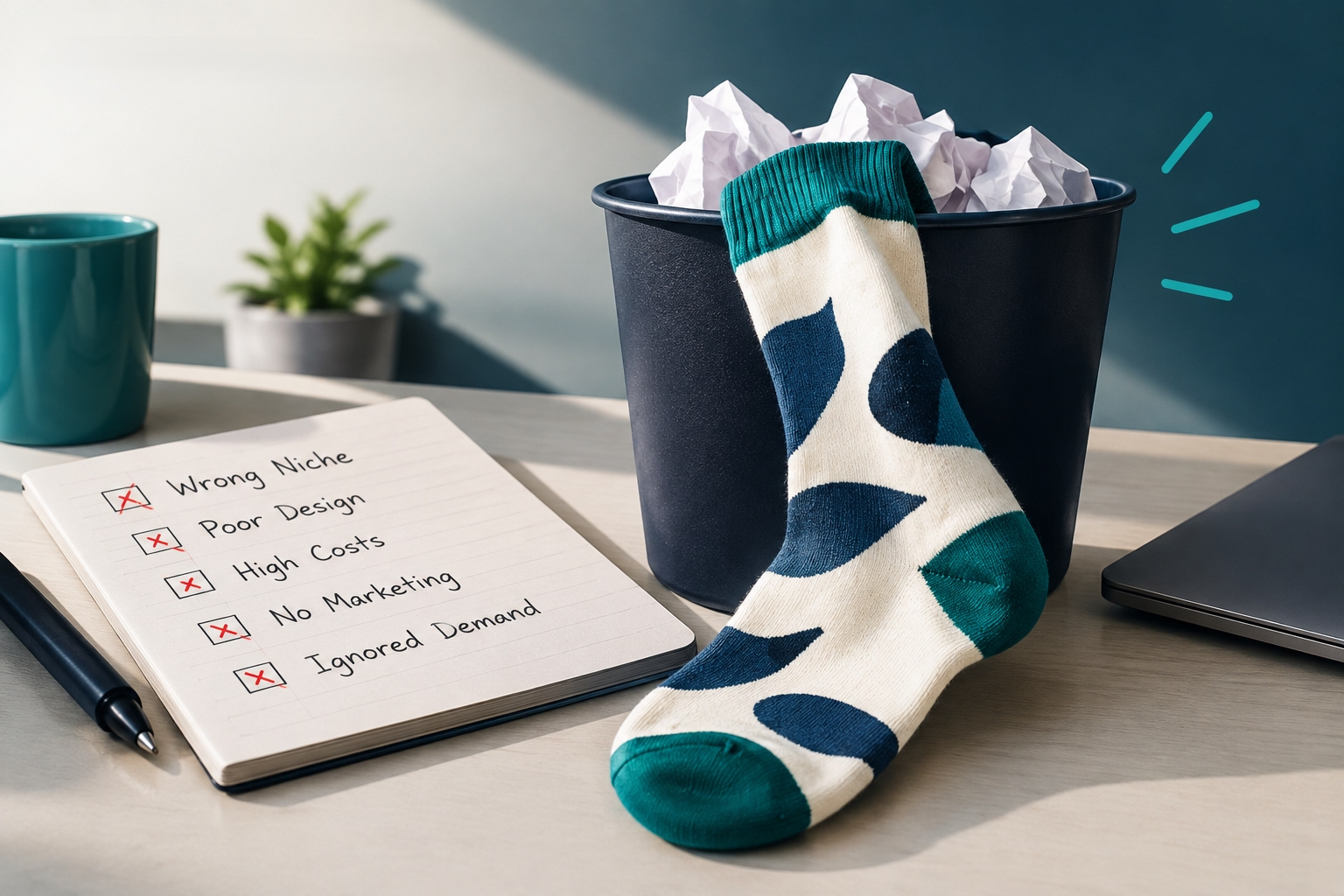
Sock Packaging Mistakes to Avoid
Most packaging problems show up after the order is placed. These five are the most common, and each has a simple fix.
- Oversized boxes. Extra space raises shipping costs and lets socks slide around. Size the box to the folded pair.
- Too many layers. A sleeve inside a bag inside a box reads as waste. Remove any layer that does not protect or inform.
- Packaging too soft for the mail. Thin paper can tear in postal sorting. Mail a test sample before approving the full run.
- Ordering packaging too late. Packaging decided after production starts can delay delivery. Plan it with the sock design.
- Misleading eco claims. Words like "recyclable" and "biodegradable" have specific meanings. Check them before they go to print.
That last mistake deserves detail. In the US, plastic bags and films are not accepted in most curbside programs. A poly bag usually needs store drop-off instead.
The FTC's Green Guides set the bar for claims. Marketers should qualify a "recyclable" claim when recycling facilities are not available to at least 60% of consumers where the product is sold. An unqualified "degradable" claim needs proof of full breakdown within one year. The guides also advise against broad terms like "eco-friendly" with no specifics.
The safer route is to be specific. "Sleeve made from recycled paper" is clearer and easier to prove than "planet-friendly."
How to Plan Custom Sock Packaging With Your Manufacturer
Plan the packaging alongside the sock design, not after production starts. The two affect each other. A window sleeve, for example, should frame the best part of the pattern.
Follow these five steps:
- Define the use case. Decide who receives the socks and how they arrive. A mailed gift and a booth handout need different formats.
- Set a total budget per pair. Include the sock, the packaging, and shipping. A quick price estimate for the socks gives you a starting number.
- Choose the format. Use the comparison table above to shortlist two options.
- Supply artwork and required details. Send your logo files, brand colors, size, fiber content, and country of origin.
- Approve a physical sample. Ask for one with the actual socks inside.
The last step matters most. A flat proof shows colors and layout. It cannot show a box that is too tight or a band that slips off. Only a packed sample reveals fit problems.
Ask about minimums and timing early as well. As a benchmark, Sockrates orders start at 100 pairs per size and take 7 calendar days, with a sewn header tag included. Boxed kits take longer, since each one is packed by hand. Sockrates box sets take 14 to 20 calendar days, kitting included. This walkthrough of what happens from inquiry to delivery shows where packaging fits in.
How to Package Socks as a Gift
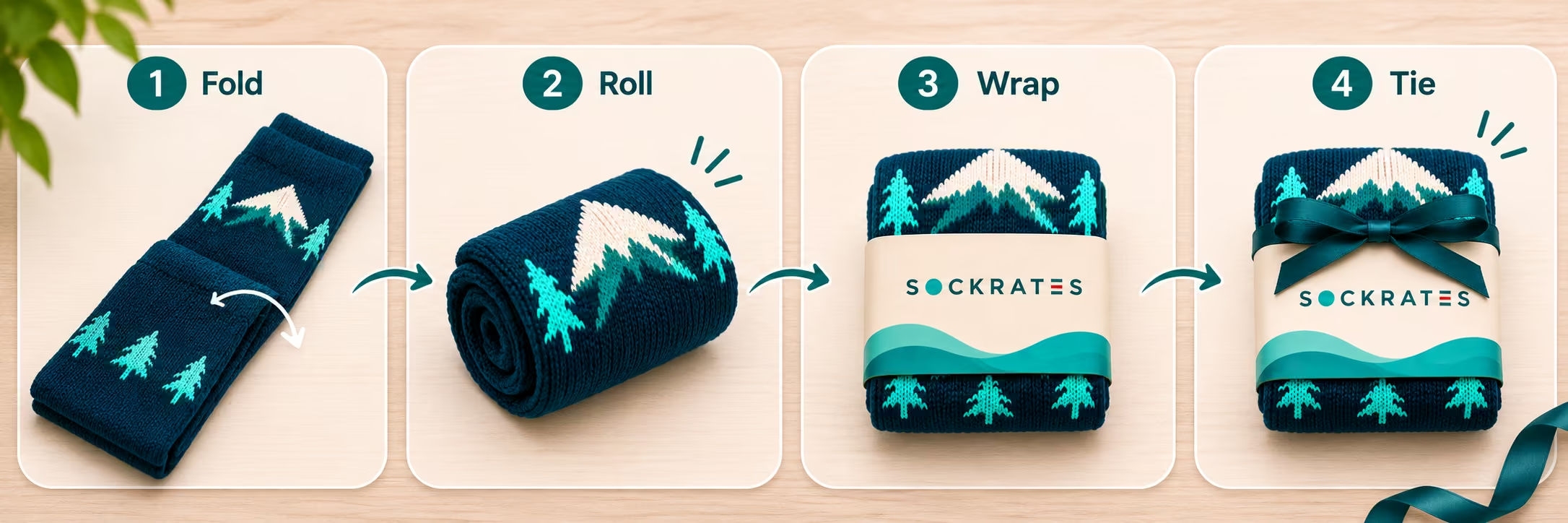
Not every gift needs printed packaging. For a small batch, a neat fold and good paper go a long way. These hand-wrapped packaging ideas for socks take only a few minutes each.
Fold a single pair neatly
- Lay both socks flat, one on top of the other.
- Smooth out the heels so the pair lies even.
- Fold the toes up to meet the cuffs.
- Fold once more if the socks are long.
Make a candy-style wrap
- Roll the folded pair into a tight cylinder.
- Cut wrapping paper about twice as wide as the roll.
- Wrap the paper around the roll and tape the seam.
- Pinch both ends and tie each with ribbon.
Bundle several pairs
- Fold each pair the same way.
- Stack them with the patterns facing out.
- Tie the stack with ribbon, or wrap a paper band around it.
- Tuck a note card under the ribbon.
For more methods, see this step-by-step guide on how to package socks.
Find the Right Packaging for Your Custom Socks
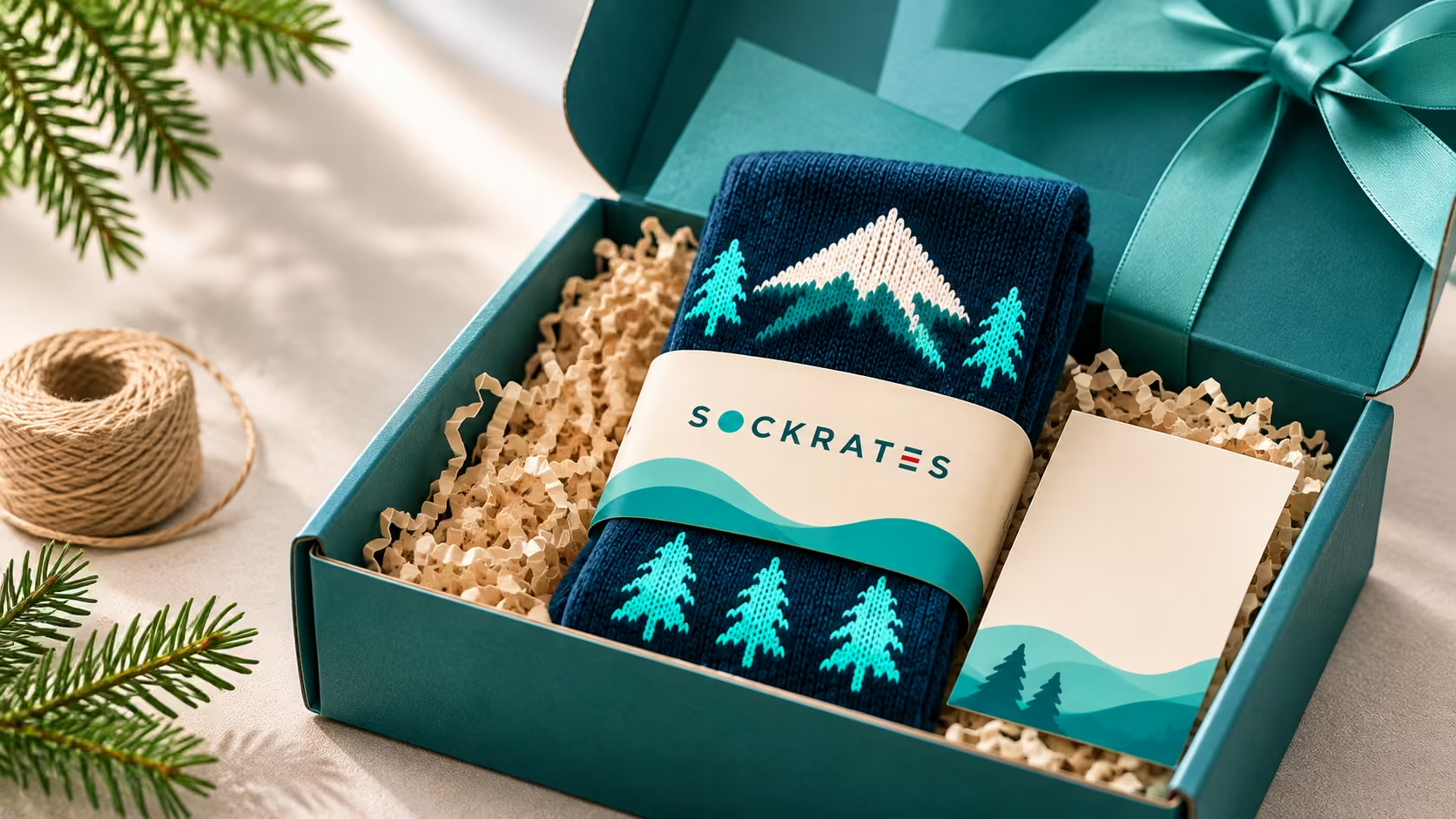
The best packaging fits three things: the recipient, the delivery method, and your budget per pair. A trade show needs a light band. A top client deserves a box worth keeping. Every order of custom socks includes a free custom header tag, and branded gift boxes are there when the occasion calls for more. Request a free mockup to see your design packaged.
Frequently Asked Questions
Create socks your team will actually be proud to give away