
What you'll learn in 30 seconds
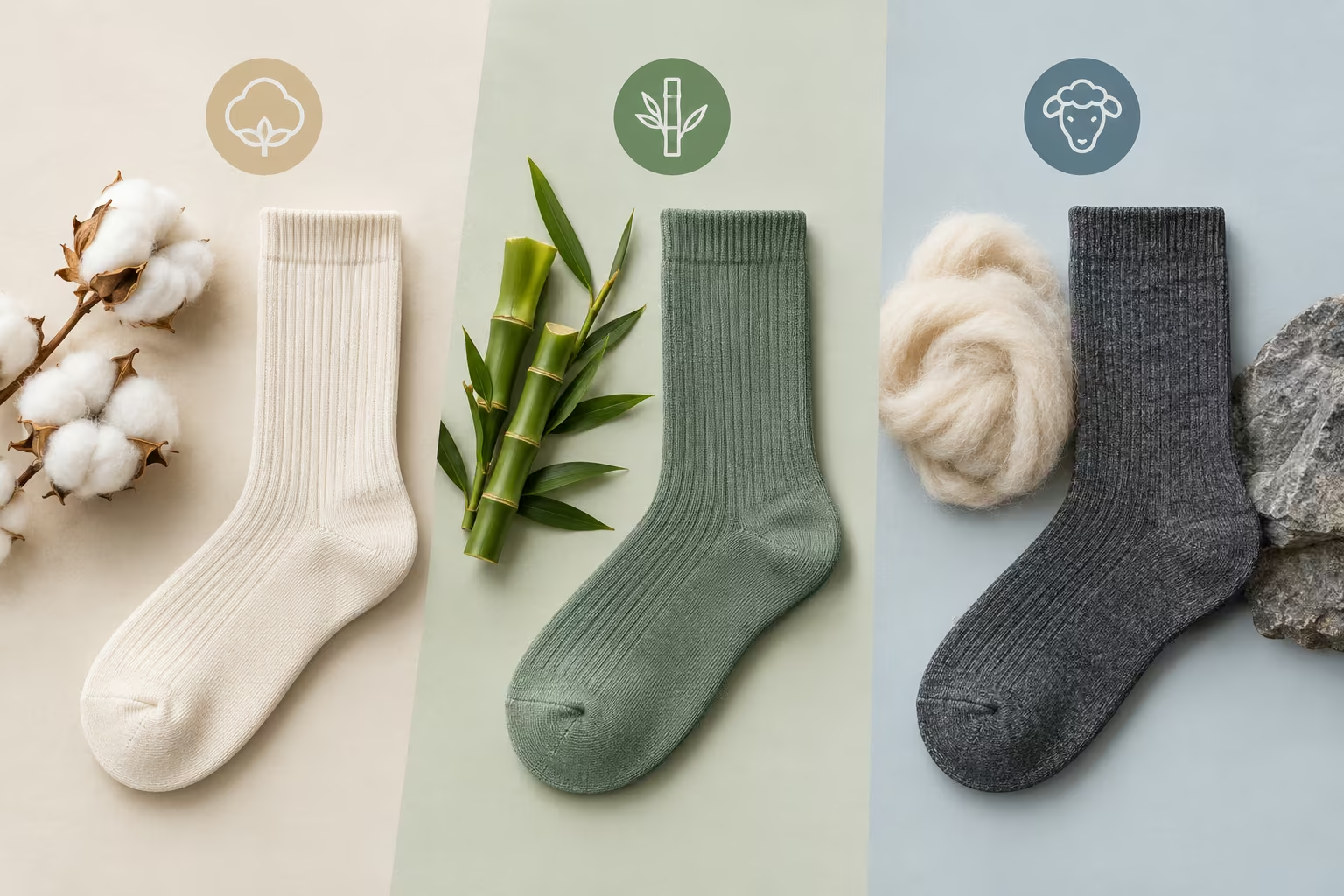
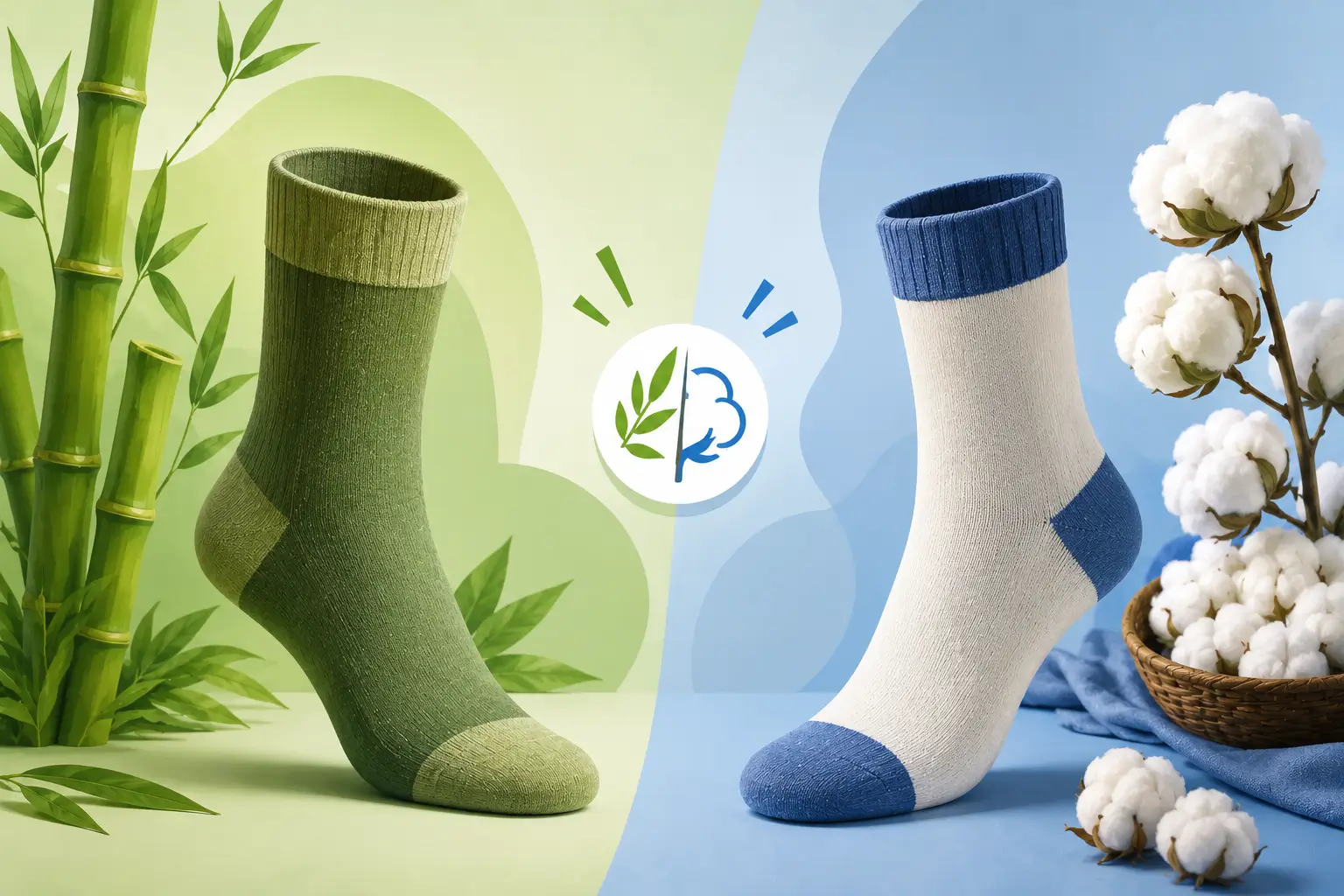
Bamboo socks are softer and wick moisture better, but cotton lasts longer and costs less. This guide compares both materials across comfort, odor control, durability, washing, and price, with a quick comparison table. You will also learn why most bamboo fabric is actually chemically processed viscose, and why certified organic cotton is often the more verifiable sustainable choice.
What Are Bamboo Socks Made Of?
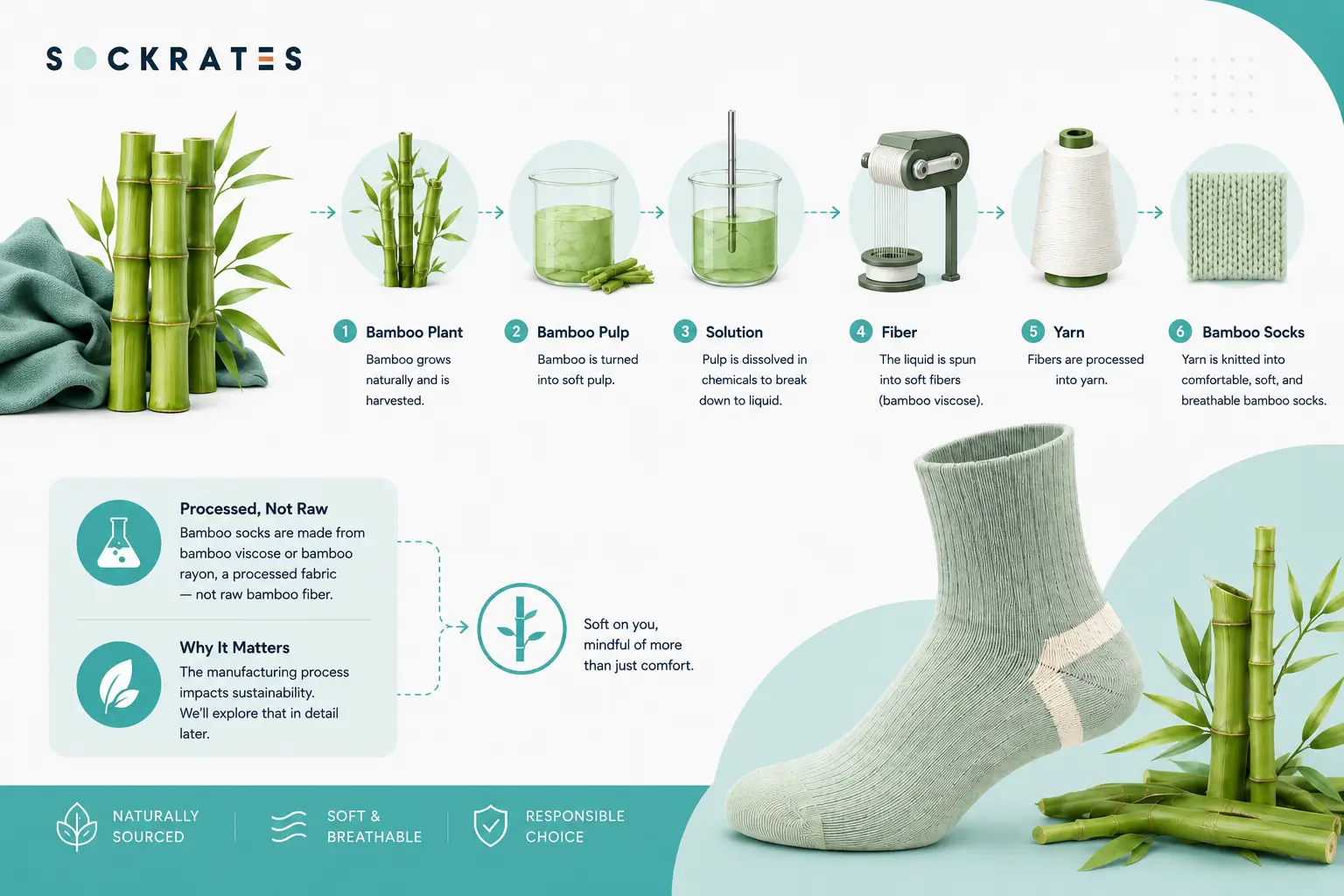
Bamboo socks are not knitted from raw bamboo plant fiber. Almost all of them are made from bamboo viscose or bamboo rayon. Manufacturers dissolve bamboo pulp in chemicals and spin it into soft fiber. So the sock you wear is a processed fabric, not a natural one. That detail matters later when we talk about sustainability.
What Are Cotton Socks Made Of?
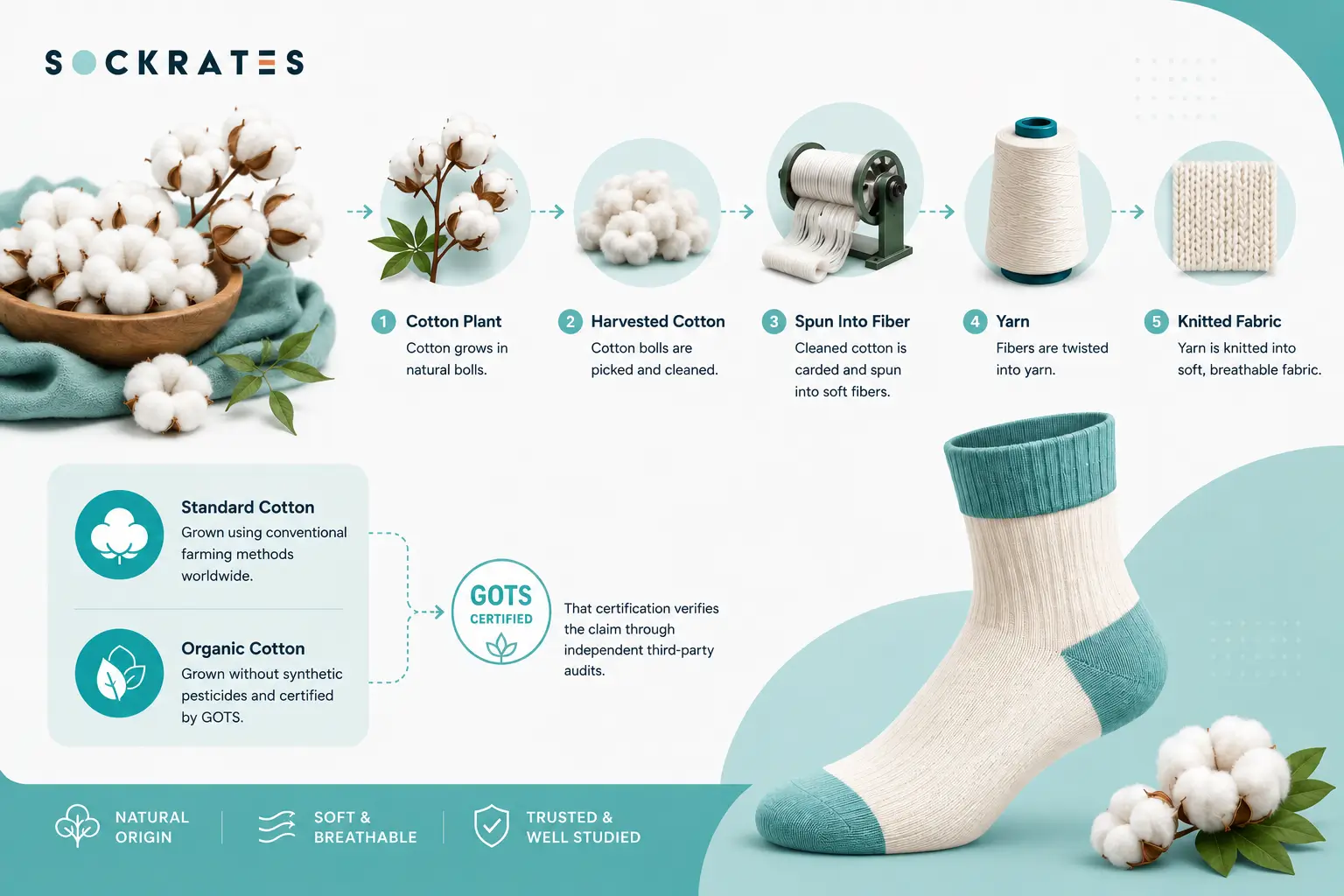
Cotton socks are made from the spun fibers of the cotton plant. Standard cotton is grown with conventional farming methods around the world. Organic cotton is grown without synthetic pesticides and carries GOTS certification. That certification verifies the claim through independent third-party audits. Cotton is also one of the most studied textile fibers in existence. Its strengths and weaknesses are well documented, with few surprises.
Bamboo vs Cotton Socks: How They Compare
Here is how both materials perform on the factors that affect daily wear.
Softness and Comfort
Bamboo wins on softness, and it is not close. Bamboo viscose has a smooth, almost silky feel against the skin. High quality organic cotton is also soft, but the texture differs. Cotton feels matte and natural, while bamboo feels sleek and cool.
Moisture Wicking and Breathability
Bamboo wicks moisture away from the skin faster than cotton does. Cotton absorbs sweat readily but then holds it in the fabric. Damp socks can feel heavy and uncomfortable during long active days. That makes bamboo the better pick for sweaty feet or warm climates. For casual, low-activity wear, cotton breathability is perfectly adequate for most people.
Odor Resistance
Bamboo contains a natural antibacterial agent often called bamboo kun. It slows bacteria growth, which means less odor at day's end. Cotton has no equivalent built-in defense against odor-causing bacteria. One thing most posts skip: bamboo kun can fade after repeated washing.
Durability and Washing
Cotton wins this round clearly. Cotton fibers handle frequent washing and higher temperatures without breaking down quickly. Bamboo viscose is more delicate and prefers cold washes and air drying. Skip that care routine and bamboo socks lose shape and thin out. Mercerized cotton goes a step further than standard cotton here. The mercerizing treatment makes cotton stronger, more lustrous, and better at holding shape. That is why many premium athletic socks are knitted from mercerized cotton.
Price and Availability
Cotton wins on price too. Bamboo socks cost more because the fiber requires extra chemical processing. Cotton socks are available everywhere, at every price point imaginable. Organic cotton sits in the middle: premium quality, but cheaper than most bamboo.
Which Material is More Sustainable?
Bamboo sounds unbeatable on paper. It grows fast and needs no pesticides. But turning bamboo into fabric almost always requires the chemical viscose process. That process can release harmful pollutants, and many bamboo socks carry no eco certification. The claims got so loose that the FTC fined Kohl's and Walmart a combined $5.5 million for marketing rayon products as eco-friendly bamboo.
GOTS certified organic cotton takes the opposite approach. It is grown without synthetic pesticides, and roughly 70 to 80% of organic cotton is rainfed rather than irrigated. OEKO-TEX certification adds verified chemical safety on top. Certified organic cotton is often the more transparent, verifiable sustainable choice than uncertified bamboo.
Bamboo or Cotton Socks: Which One is Right for You?
Choose bamboo if your feet sweat heavily or your skin is sensitive. It also suits people wearing dress shoes all day in warm conditions. Choose cotton, especially organic, if durability and easy care matter most. It offers verified sustainability and better value for everyday casual wear. Many businesses ordering custom dress socks pick organic or mercerized cotton for exactly these reasons. Match the material to your daily routine and you will be happy.
Frequently Asked Questions
Create socks your team will actually be proud to give away