
What You'll Learn in 30 Seconds
Thigh-high socks have moved beyond seasonal fashion, with options designed for everyday wear, formal outfits, sport, and practical layering. Their versatility makes them a useful alternative to tights or shorter socks when you want more coverage without committing to full-leg hosiery. The key is choosing a style that fits the setting and works naturally with the rest of your outfit.
What Are Thigh High Socks?
Most adult thigh highs measure over 20 inches from heel to cuff. The number moves around by brand and by knit. Stretch matters as much as the printed length. A sock with more elastane travels further up the leg.
They come in two broad families.
Knitted thigh highs use cotton, wool, acrylic or blends. These feel like a normal sock, only longer. They add real warmth and visible texture.
Sheer thigh high stockings use nylon and elastane. These behave more like tights without the waistband. They add leg coverage without bulk.
Labels also change from shop to shop, which trips up first-time buyers. The table below sorts out the common ones.
What Is the Purpose of Thigh High Socks?
People reach for thigh highs for a handful of practical reasons.
Warmth is the biggest one. Bare legs under a skirt lose heat fast. A knitted pair covers the whole leg without moving to tights.
Layering comes next. They work over leggings, under long boots, or with a sweater dress. Cold months are when most people buy their first pair.
Boots are another reason. A sock taller than the boot shaft stops the leather rubbing your leg. That single fix saves a lot of discomfort on long days.
Then there is styling. The cuff breaks up the leg line and adds a block of color. That is why they show up so often in fall and winter outfits.
Costumes and cosplay use them heavily too. Uniform-style looks and character outfits usually call for a long sock.
Some people just prefer them to tights. There is no waistband, so nothing digs in when you sit down.
Types of Thigh High Socks
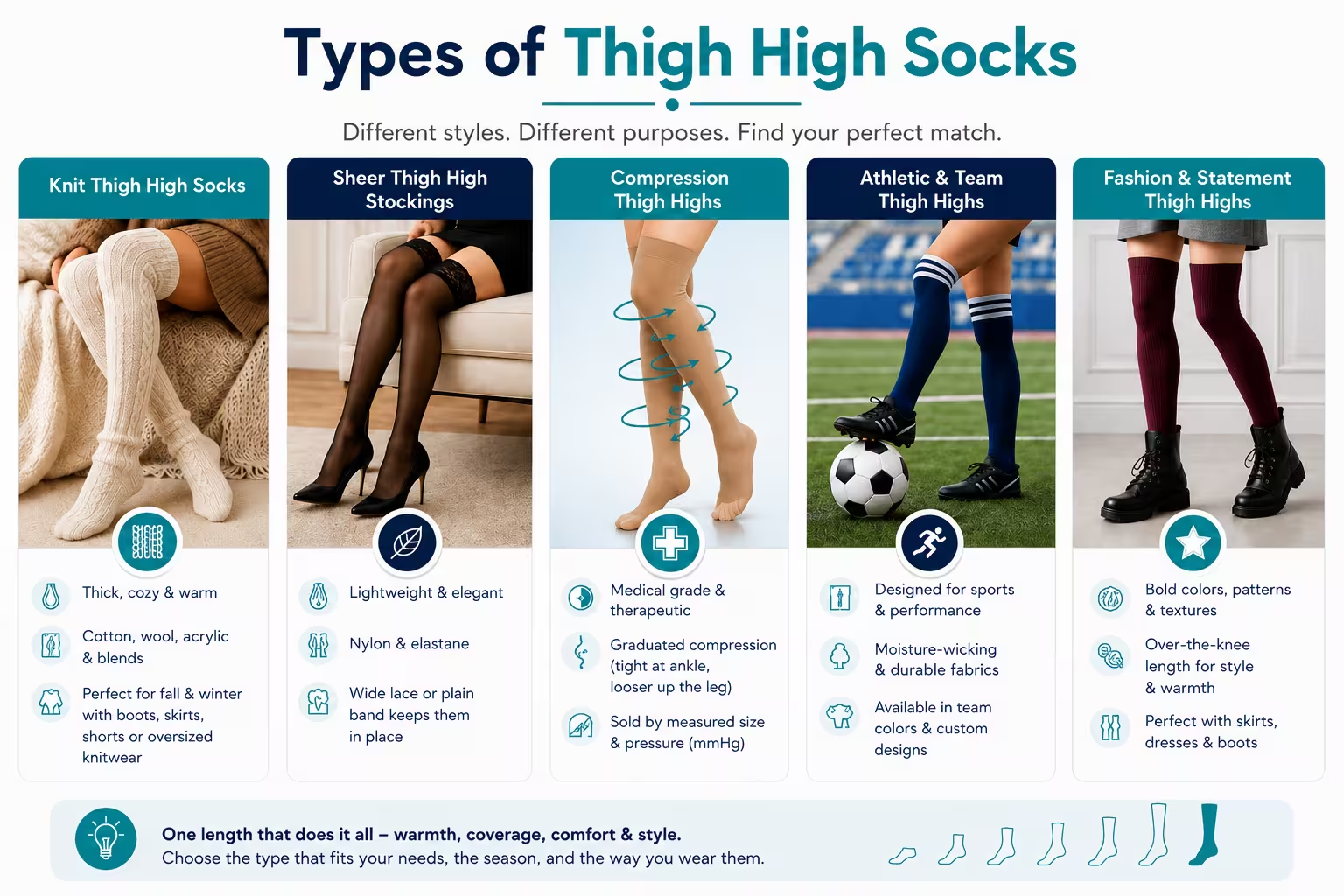
Four types cover nearly everything on sale. They differ by purpose, not only by looks.
Knit Thigh High Socks
These are the thick, cozy ones. Cable knit, ribbed and chunky styles all sit here. Cotton blends suit mild weather. Wool and wool blends handle proper cold.
They are the default choice for fall and winter outfits. Most people wear them with boots, shorts, skirts or oversized knitwear. Boot socks belong in this group as well. Their cuffs are built to peek out over a tall boot.
Opaque styles like these carry the whole legwear category. Non-sheer products made up 85.1% of hosiery revenue in 2024, per Grand View Research. Sheer hosiery gets the attention, but opaque knits get the sales.
Sheer Thigh High Stockings
These are lightweight hosiery, made for dresses, skirts and formal outfits. They give leg coverage without adding warmth or bulk.
Thickness is listed in denier, which is the weight of the yarn. A low denier is very sheer and light. A higher denier is more opaque and warmer. Checking that number tells you far more than a product photo does.
Most sheer pairs finish with a wide band at the top. Lace and plain finishes are both common.
Compression Thigh Highs
Compression thigh highs are a medical product, not a fashion one. They use graduated compression, tightest at the ankle and looser up the leg. Pressure is measured in mmHg and printed on the pack.
The research behind them is solid. A Cochrane review of randomized trials found high-certainty evidence that graduated compression stockings cut symptomless deep vein thrombosis on flights over four hours.
Fit rules here are stricter than for fashion pairs. They are sold by measured size, not one size fits most. Anyone considering them for a health reason should ask a doctor about the right pressure level.
Athletic and Team Thigh Highs
Long sports socks are the fourth group. The extra leg coverage protects against turf burn and sliding scrapes. Fabrics lean on moisture-wicking blends rather than plain cotton.
Color matching matters as much as length here. Clubs usually order a full run in team colors, the same way they do with custom softball socks.
How Do Thigh High Socks Stay Up?
Three mechanisms do the work.
A ribbed or elastic cuff is standard on knitted pairs. The knit grips the thigh through tension alone.
A silicone band is standard on sheer pairs. It grips skin instead of squeezing the leg, so it holds without a tight cuff.
A garter belt is the traditional option. Straps clip to the stocking top and hold it from the waist. Very few modern pairs need one.
Sizing decides more than the mechanism does. Slipping is usually a circumference problem, not a length problem. A cuff that cannot grip your thigh will slide down whatever its height.
Four things to check when a pair keeps rolling down:
- The sock may be too short for your leg. The cuff then lands on the widest part of the thigh and slips.
- The cuff may be stretched past its useful range. Look for a wider stretch rating.
- Lotion or oil under a silicone band cuts grip. Put the pair on before moisturizing.
- Heat weakens elastic over time. Hot washes and tumble drying shorten cuff life.
How High Should Thigh High Socks Go?
A thigh high should clear the knee and end near mid-thigh. That is the design intent for most pairs on sale.
Where it actually lands depends on three things. Sock length, your leg length and fabric stretch all shift the result. The same pair can hit mid-thigh on one person and sit just above the knee on another. Neither outcome is a fault.
Two measurements take the guesswork out before you buy.
First, measure from the top of your heel to the crease behind your knee. Add the distance you want above that point. The guide to sock lengths walks through this measuring method in detail, and it works for every length on the ladder.
Second, measure around your thigh where the cuff will sit. Most listings state a maximum stretch for the cuff. Compare that figure against your own measurement and leave some room. A cuff stretched close to its limit grips less and sits lower than advertised. If a listing gives no stretch figure at all, a ribbed knit is the safer choice.
One more point worth knowing. Pulling a pair as high as it will go often causes bulging at the band. Sliding them down slightly gives a cleaner line and a better fit.
Thigh High Socks vs Over-the-Knee Socks
Treat the stated height as the real answer, not the label. A knee-high is different again, stopping below the kneecap.
How to Style Thigh High Socks

With tall boots, pick a sock taller than the boot shaft. Let a few inches of cuff show above the leather.
With skirts and dresses, decide on the gap. A short stretch of bare skin above the cuff reads as deliberate. A longer hem that meets the sock reads warmer and quieter.
With an oversized sweater or sweater dress, the hem covers the cuff completely. This is the easiest look to get right on a first try.
With shorts, thigh highs lean casual and streetwear. Cuffed denim and bike shorts both work.
Over leggings or tights, they turn into a winter layer. Keeping the colors close makes it look intentional.
On color, one rule helps. Match the sock to your hem or to your boots. Both choices stretch the leg line visually.
How to Choose the Right Thigh High Socks
Start with material. Cotton blends suit everyday wear. Wool handles cold. Nylon and elastane give you sheer finishes. Acrylic is cheap warmth that pills sooner.
Then thickness. Knit weight tells you warmth for socks. Denier tells you the same for hosiery.
Stretch is the part most people skip. Look for a stated stretch range at the cuff and a little elastane in the composition. Both keep a sock in place through a full day.
For sizing, shoe size alone is not enough. Take your thigh measurement too, then check it against the listed range.
For color, black and cream are the safest first pair. Both go with almost everything already in a wardrobe. Exact color matching is a different problem, and it comes up most for teams and brands. That is where making your own socks in a set palette becomes the practical route.
Match the pair to the occasion last. Sheer for formal wear, knit for cold weather, athletic for sport, compression only on medical advice.
Care decides how long they last. Wash cool, skip the tumble dryer and dry them flat. Elastic and heat are a poor mix, and the cuff always fails first.
Frequently Asked Questions
Create socks your team will actually be proud to give away