
What You'll Learn in 30 Seconds
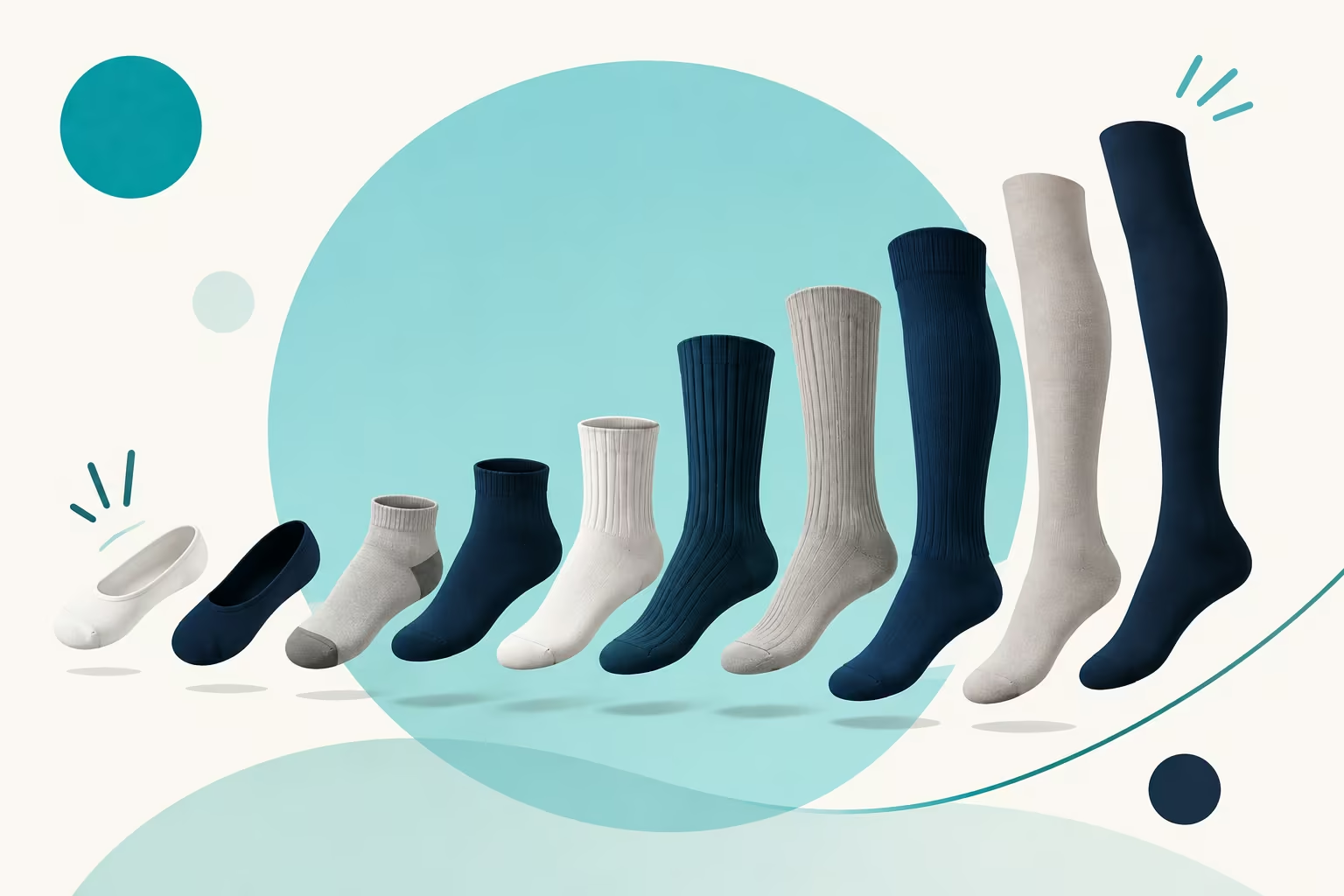
Socks come in nine standard lengths, running from no-show and low-cut up to knee-high and thigh-high. In between sit ankle, quarter, crew, mid-calf, and over-the-knee. Heights range from hidden inside the shoe to 24 inches and above, measured from the heel. Crew is the most common at 6 to 8 inches, and it works with nearly every shoe.
Why Sock Length Matters
Length decides four things: comfort, appearance, protection, and performance.
Comfort and protection come first. A sock that stops below the shoe collar leaves skin exposed to the shoe. That skin rubs with every step. Friction blisters are the result, and they are far more common than most people expect. A systematic review published in Wilderness & Environmental Medicine found blister rates among long distance hikers and backpackers ranging from 54% to 86%.
Appearance matters too. A no-show sock keeps a clean, bare-ankle look with loafers. The same sock under a suit trouser looks wrong the moment you sit down and cross your legs.
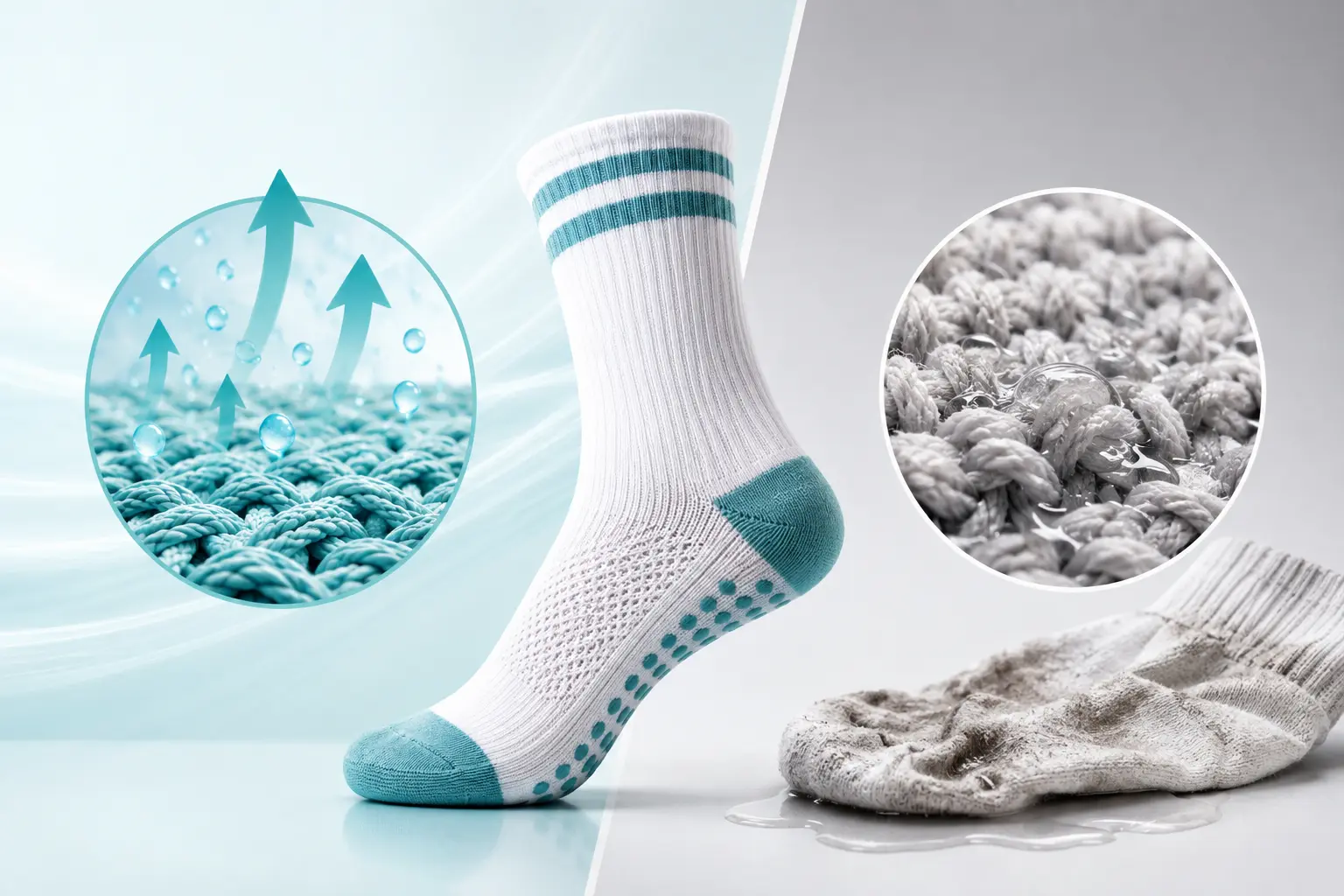
Then there is heat. Your feet carry more sweat glands per inch than anywhere else on your body, with roughly 125,000 on each foot. More sock means more warmth and less airflow. Less sock means the opposite. That trade-off is the whole reason so many lengths exist.
Finally, the shoe sets the rules. Low-profile shoes need short socks. Boots need tall ones. Get that pairing wrong and nothing else you do will fix it.
Types of Socks by Length
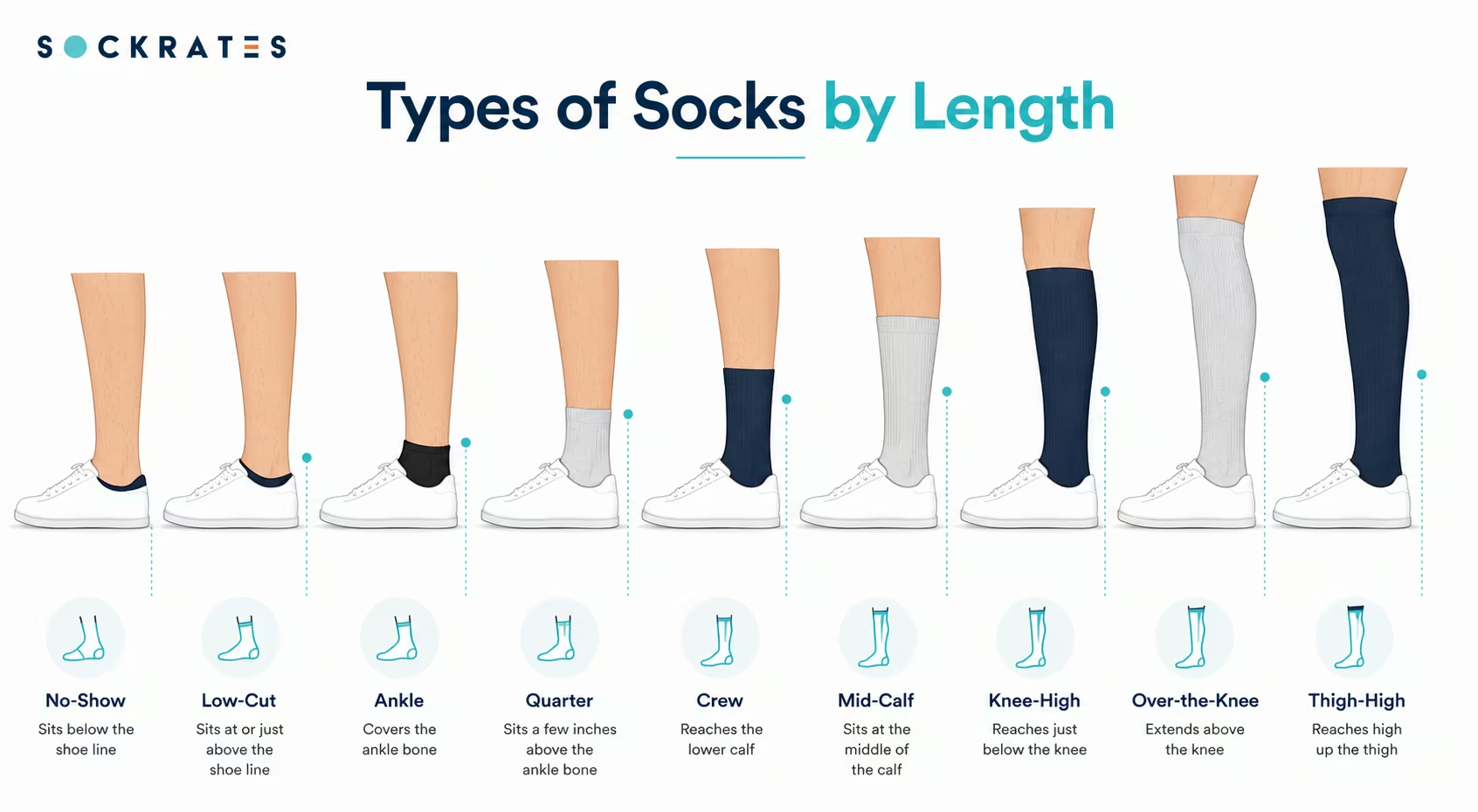
Below are the nine standard lengths, ordered from shortest to tallest. Read them as a ladder. Each step adds a little more coverage than the one before it.
No-Show Socks
No-show socks sit below the shoe line and stay completely hidden. You get the barefoot look without going barefoot inside your shoe.
They work best with low-cut sneakers, loafers, boat shoes, and ballet flats. Warm weather and cropped trousers are their natural home.
They are also the length most likely to slip. Look for a silicone grip or a heel tab at the back. Without one, the sock will work its way down under your heel.
Low-Cut Socks
Low-cut socks sit right at or just above the shoe line. They give you slightly more coverage than a no-show, with a thin edge of fabric visible above the collar.
That small amount of extra height makes a real difference. It keeps the shoe from rubbing the back of your heel directly.
Low-cut socks are popular for casual wear, gym sessions, and running in warm weather.
Ankle Socks
Ankle socks cover the ankle bone. This is the balance point between coverage and breathability, which is why they sell so well.
They suit walking, running, everyday errands, and low-top trainers. They stay up better than no-show socks because the cuff has something to grip.
If you want a closer look at how they compare to taller styles, our guide to crew vs ankle socks breaks the difference down in detail.
Quarter Socks
Quarter socks sit a few inches above the ankle bone. Sockrates measures ours at roughly 2 to 4 inches above the ankle bone.
That extra height does one specific job. It puts fabric between your Achilles tendon and the shoe collar. High-top sneakers, cleats, and low hiking boots all rub in exactly that spot.
Basketball, tennis, trail running, and summer hiking are all common uses. We compare the two most confused athletic lengths in our crew vs quarter socks guide.
Crew Socks
Crew socks reach the lower calf, sitting just below the calf muscle. This is the most versatile length on the list and the one most people already own.
They work for everyday wear, sports, work boots, office trousers, and casual outfits. They also hold their shape better than shorter socks, because the ribbed cuff has more leg to grip.
Crew is the default for branded and corporate socks too. The taller shaft gives a design far more room than an ankle or quarter cut. That is why most of our custom dress socks orders come through in crew.
Mid-Calf Socks
Mid-calf socks land at the middle of the calf, above crew but below the knee. They give you more leg coverage while still feeling like an everyday sock.
Some brands label this length as crew, and some label crew as mid-calf. Check the measurement rather than the name.
They pair well with trousers, work boots, and cooler weather. Runners and hikers often prefer them for the extra calf protection.
Knee-High Socks
Knee-high socks stop just below the knee. They are the tallest length most people wear day to day.
Boots are the main reason to buy them. A knee-high sits above the boot shaft, so leather never touches bare skin. That single detail prevents most boot rub.
They are also standard for school and sports uniforms, formal dress socks, and cold weather layering. Football, field hockey, and rugby all require them.
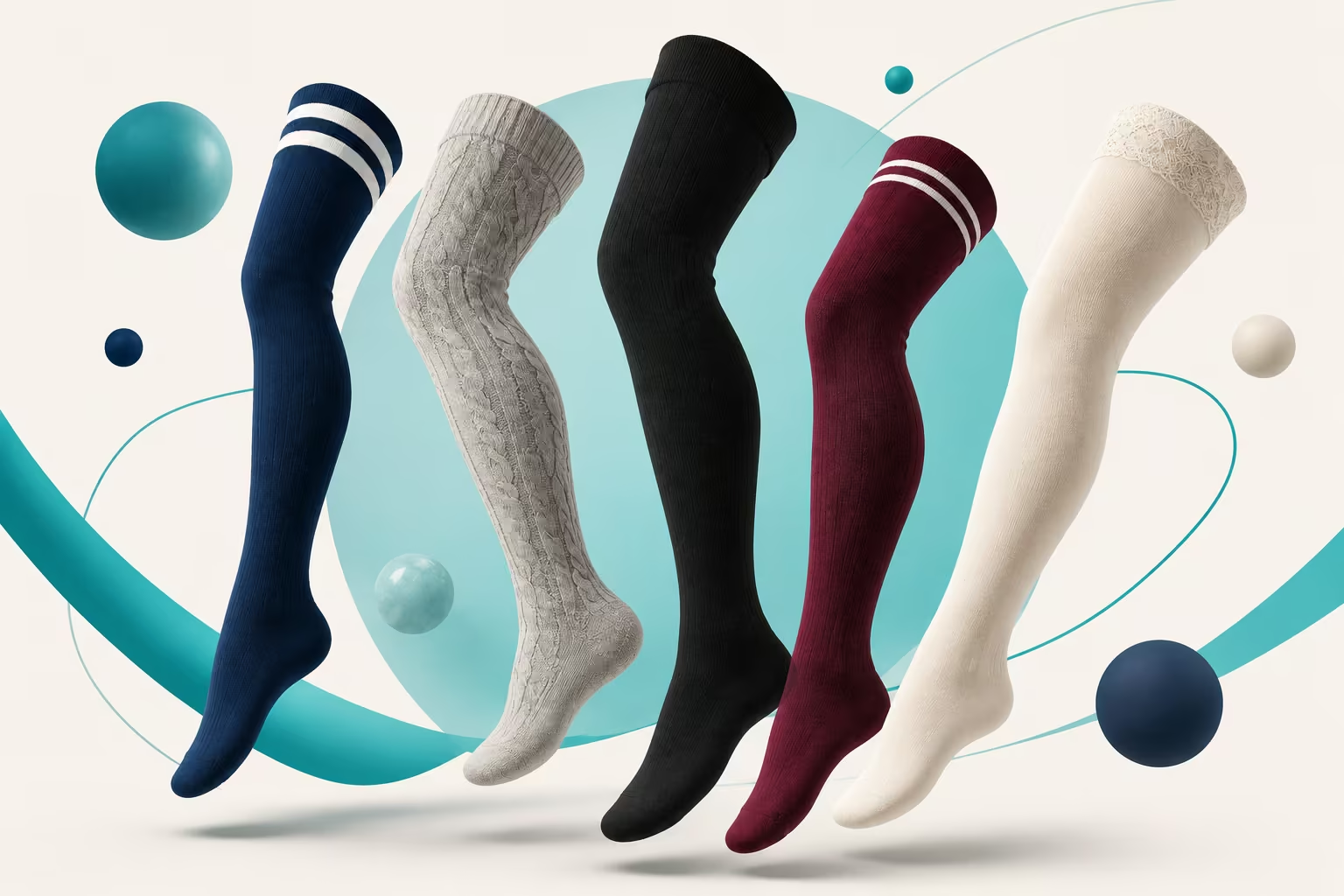
Over-the-Knee Socks
Over-the-knee socks extend past the kneecap. The extra height is about warmth and proportion rather than function.
They pair with skirts, dresses, shorts, and ankle or knee boots. Worn over tights or leggings, they add a warm layer in autumn and winter.
Fit is trickier here than at any shorter length. The sock has to grip the widest part of your calf and still reach past the knee.
Thigh-High Socks
Thigh-high socks reach the mid-thigh and are the longest standard length available. They come in fashion, casual, and specialty versions, including styles with silicone bands to hold them in place.
Because they cover so much leg, fit depends on thigh and calf circumference far more than on your shoe size.
Sock Length Size Chart
Sock heights vary a little between brands, but most follow similar ranges. The chart below is a quick reference for comparing them at a glance.
Before you read it, there is one thing worth understanding. It explains most of the confusion around sock sizing.
Every number needs a starting point
Search for sock heights and you will find the same length listed at four different measurements. Quarter socks turn up as 2 inches, 4 inches, 5.5 inches, and 6 inches on different sites.
None of those sources is lying. They are measuring from different places. Some measure from the heel. Some measure from the ankle bone. Some measure from the top of the shoe.
A height only means something once you know where the tape started.
Serious sock makers state their reference point. Darn Tough publishes its heights measured from the heel to the cuff, and lists its quarter height at 5.5 inches. That figure sounds much taller than the 2 to 4 inches quoted elsewhere. It is not. It is the same sock measured from a lower starting point.
The chart below uses one system throughout: measured from the top of the heel, with the sock laid flat and unstretched.
Treat these as ranges, not fixed rules. If a brand quotes a height without naming its starting point, the number tells you very little on its own.
The same sock sits differently on different legs
Here is the part almost no sock guide mentions. Every height above is a fixed measurement, but your leg is not.
A 7 inch sock sits at true mid-calf on someone with a short lower leg. The same sock barely clears the ankle on someone tall. Both people bought a sock labelled crew. Only one of them got a crew look.
Darn Tough makes the same point in its own guide, noting that results vary based on individual leg length. It is also why the brand cuts its boot height about half an inch taller in men's socks and around 2 inches taller in women's.
So take ten seconds and measure your own leg. Run a tape from the top of your heel up to the crease behind your knee. Most adults land somewhere between 15 and 18 inches. Now check that number against the chart. You will see exactly where each length will sit on you.
This also answers the men's and women's question directly. The lengths themselves are identical. What differs is the leg.
And if your socks slide down, calf circumference is usually the reason, not length. A cuff that cannot grip a wider calf will migrate no matter how tall the sock is. Our sock lengths and sizes page covers the full sizing range if you need to check fit before ordering.
Sock Length Comparison Chart
Which Sock Length Should You Choose?
For everyday wear: crew is the safest single answer. It suits nearly every shoe and every season. If you only stock one length, stock this one.
For sneakers and casual shoes: ankle or low-cut works best. You get coverage without fabric bunching at the collar.
For sports: match the shoe. Low-tops take ankle or low-cut. High-tops and cleats take quarter. Football and field hockey take knee-high, because shin guards need something to sit against. Our custom athletic socks come in the full range for exactly this reason.
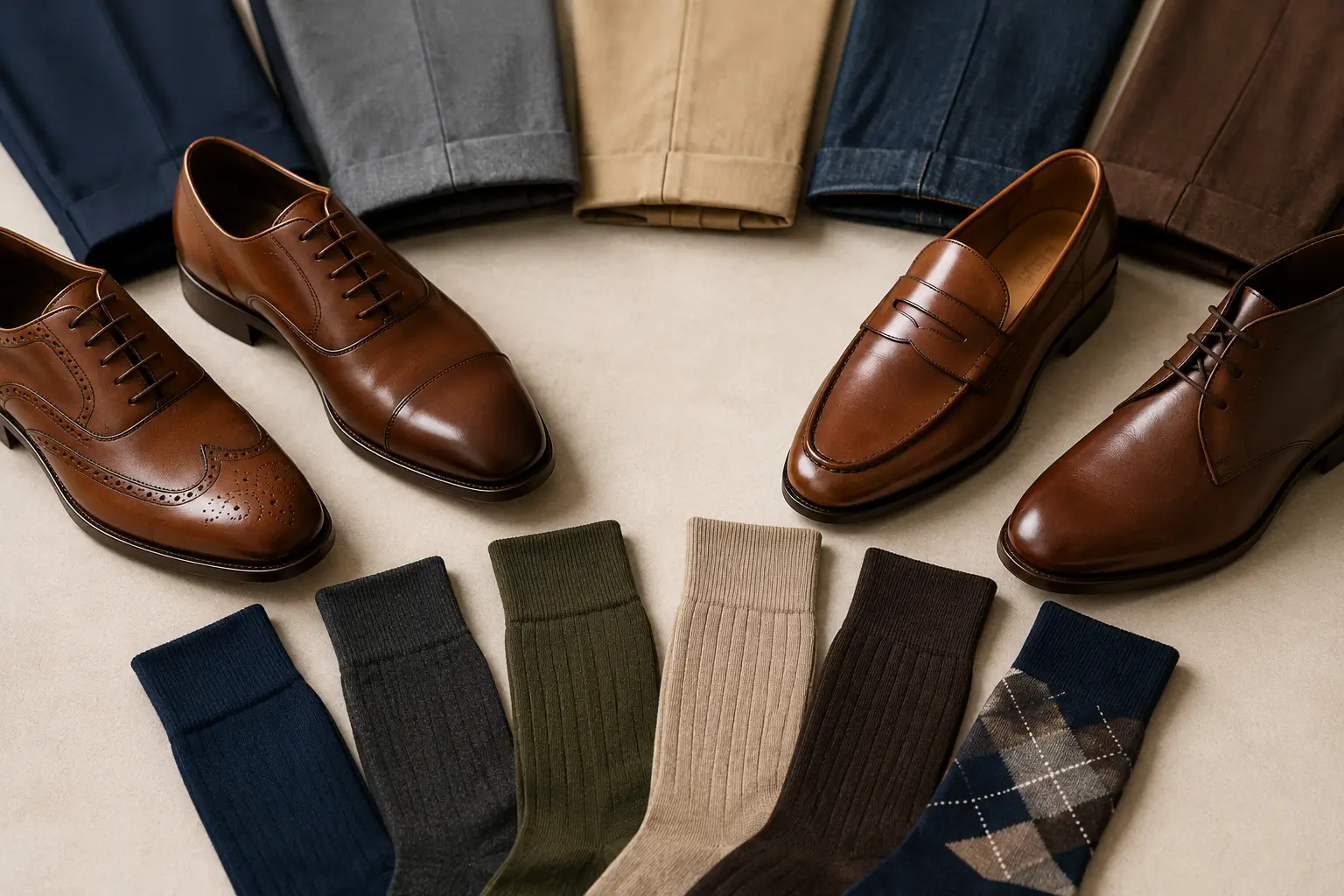
For the office: crew is the minimum. The rule is simple: no bare skin should show when you sit down. Formal suits and black tie call for knee-high.
For boots: always go taller than the boot shaft. Ankle boots take crew. Tall boots take knee-high. This is the single easiest way to avoid boot rub.
For cold weather: move up one length from your usual. Mid-calf, knee-high, and over-the-knee all trap more warmth.
For fashion: over-the-knee and thigh-high give the most visual impact. Crew works well too when you want the sock to show against a shoe.
Common Mistakes When Choosing Sock Lengths
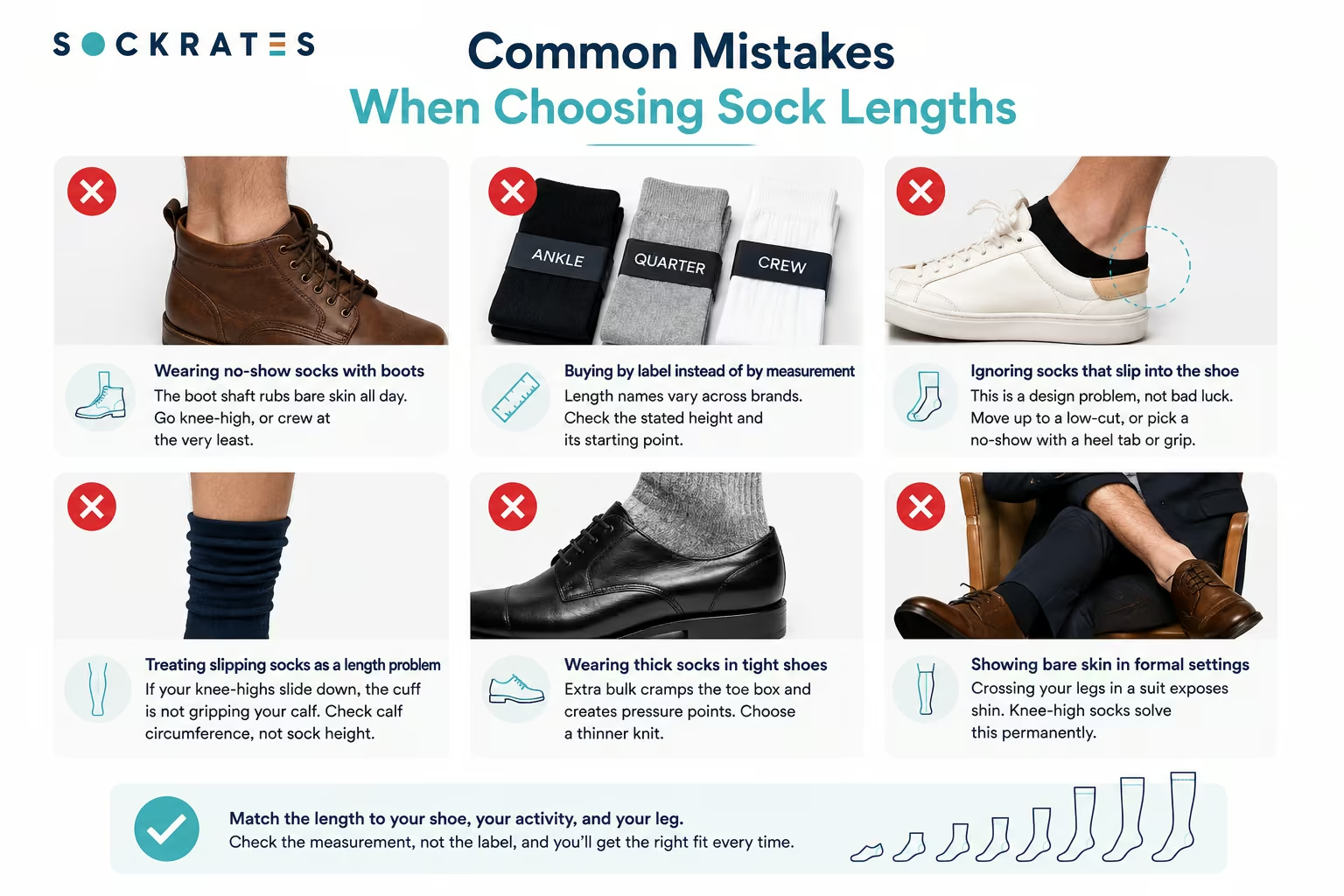
Wearing no-show socks with boots: The boot shaft rubs bare skin all day. Go knee-high, or crew at the very least.
Buying by label instead of by measurement: Length names are not consistent across brands. Check the stated height and its starting point before you order.
Ignoring socks that slip into the shoe: This is a design problem, not bad luck. Move up to a low-cut, or pick a no-show with a heel tab or silicone grip.
Treating slipping socks as a length problem: If your knee-highs slide down, the cuff is not gripping your calf. Check calf circumference, not sock height.
Wearing thick socks in tight shoes: Extra bulk cramps the toe box and creates pressure points. Choose a thinner knit rather than a shorter sock.
Showing bare skin in formal settings: Crossing your legs in a suit exposes shin. Knee-high socks solve this permanently.
Choosing a length gets much easier once you stop reading labels and start reading measurements. Match the height to your shoe, check it against your own leg, and the rest follows.
If you are producing socks for a team, an event, or a brand, length affects both comfort and how much of your design people actually see. Sockrates knits custom socks in Italy across every standard length, with free design work and a 7 day turnaround.
Frequently Asked Questions
Create socks your team will actually be proud to give away