
What you’ll learn in 30 seconds
Dri-FIT will not stop your feet sweating. It only changes where the sweat ends up, and that distinction explains most of what follows. The fiber blend is the surprise, because a Dri-FIT sock is usually mostly cotton. Research on runners does favour synthetics for blister prevention, but only in socks with real padding. Beyond that, the label's fiber percentages tell you far more than any brand name printed on the packaging.
How Does Dri-FIT Actually Work?
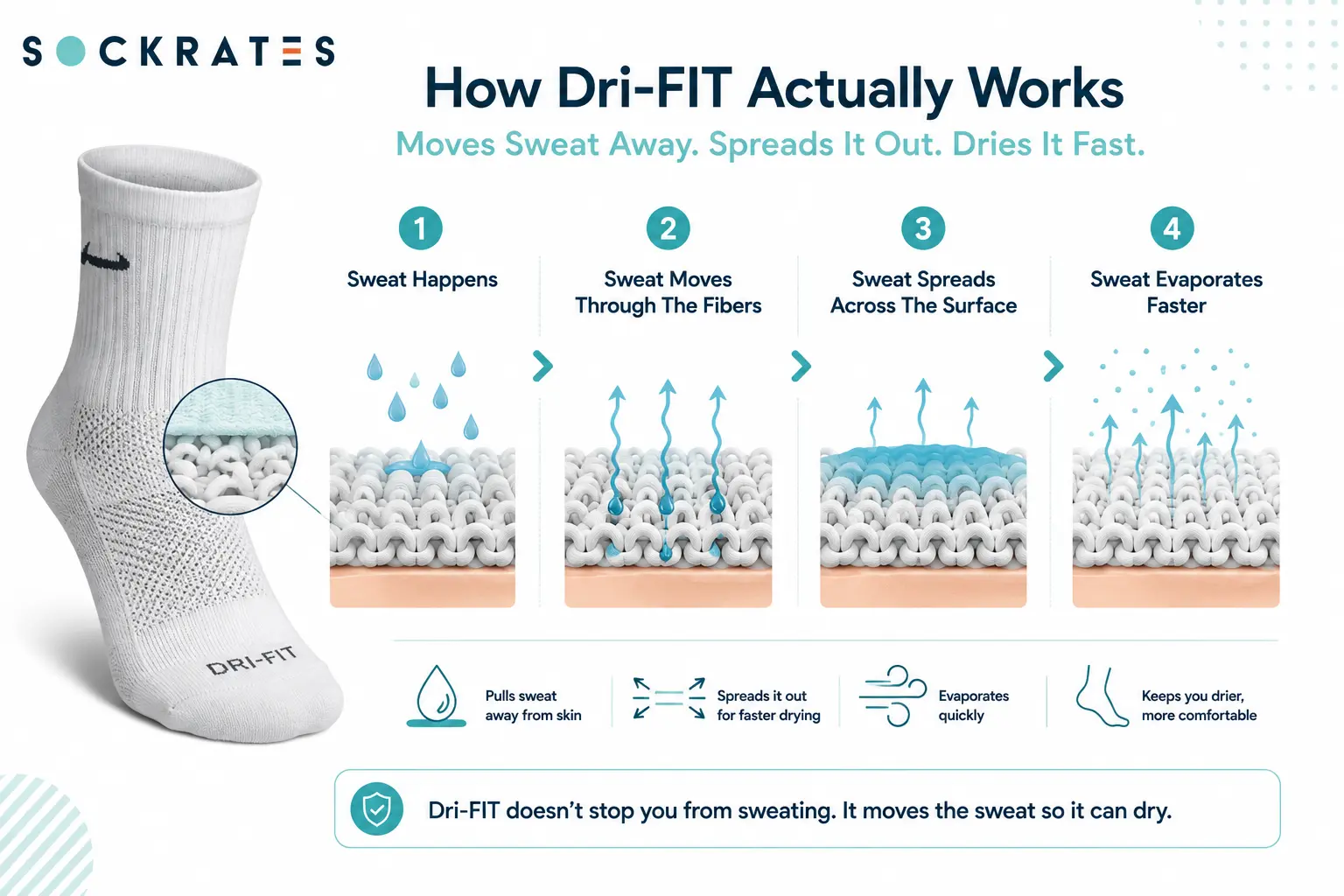
Start with what happens when cotton gets wet. The fiber itself soaks up water and holds onto it. Standard textile reference values put cotton's moisture regain at roughly 8.5% of its own weight. Polyester sits at about 0.4%, which is why it still feels dry to the touch.
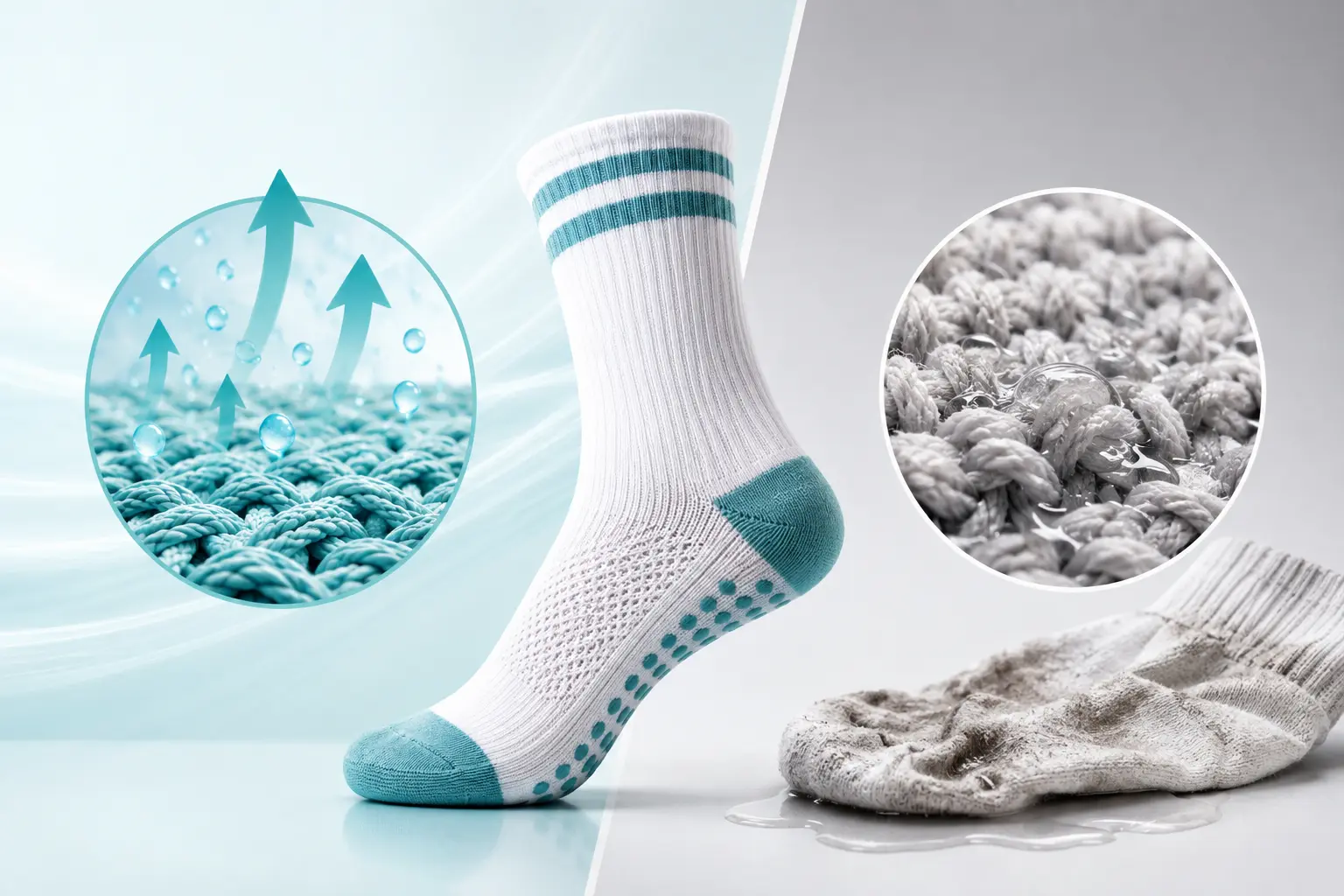
Dri-FIT works with that difference instead of fighting it. Sweat cannot soak into the polyester, so it travels along the narrow gaps between fibers. It is the same pull you see when the corner of a paper towel touches water. The sweat reaches the outside of the sock and spreads into a thin layer. A thin, wide layer evaporates far faster than a soaked patch sitting on your skin.
No spray or coating is doing this work. The effect comes from the fiber itself and the way the sock is knit, which is why Nike says the sweat-managing properties last for the life of the garment. It also means the socks will not stop your feet from sweating. They only change where the sweat ends up.
What Are Dri-Fit Socks Made Of?
Dri-Fit socks are made from a blend of performance synthetic fibers, mainly polyester with nylon and spandex, usually mixed with cotton for softness. No single fiber can do everything a sock needs, so each one is chosen for a specific job.
The fibers and what each one does
- Polyester carries sweat off your skin and out to the surface of the sock.
- Nylon reinforces the heel and toe, the two places socks wear through first.
- Spandex, listed on some labels as elastane, holds the shape and keeps the arch band snug.
- Cotton is there purely for comfort, softening the feel underfoot.
The ratio matters more than the list
Almost every guide stops at the fiber names, but the percentages are what you actually feel. They also vary far more than people expect.
The Everyday Plus Cushioned Crew is one of Nike's best-selling Dri-FIT socks. Nike lists it at roughly 61 to 67% cotton and 30 to 36% polyester, with 2% spandex and 1% nylon. Nike's own help page even calls Dri-FIT a polycotton fabric. Other models shift the balance toward synthetics, so the label is your only reliable guide.
That gives you a simple rule when comparing two pairs. More polyester means faster drying, which suits long runs and heavy sweating. More cotton means a softer feel, which suits everyday wear.
Dri-FIT Socks vs Regular Cotton Socks
How each handles sweat
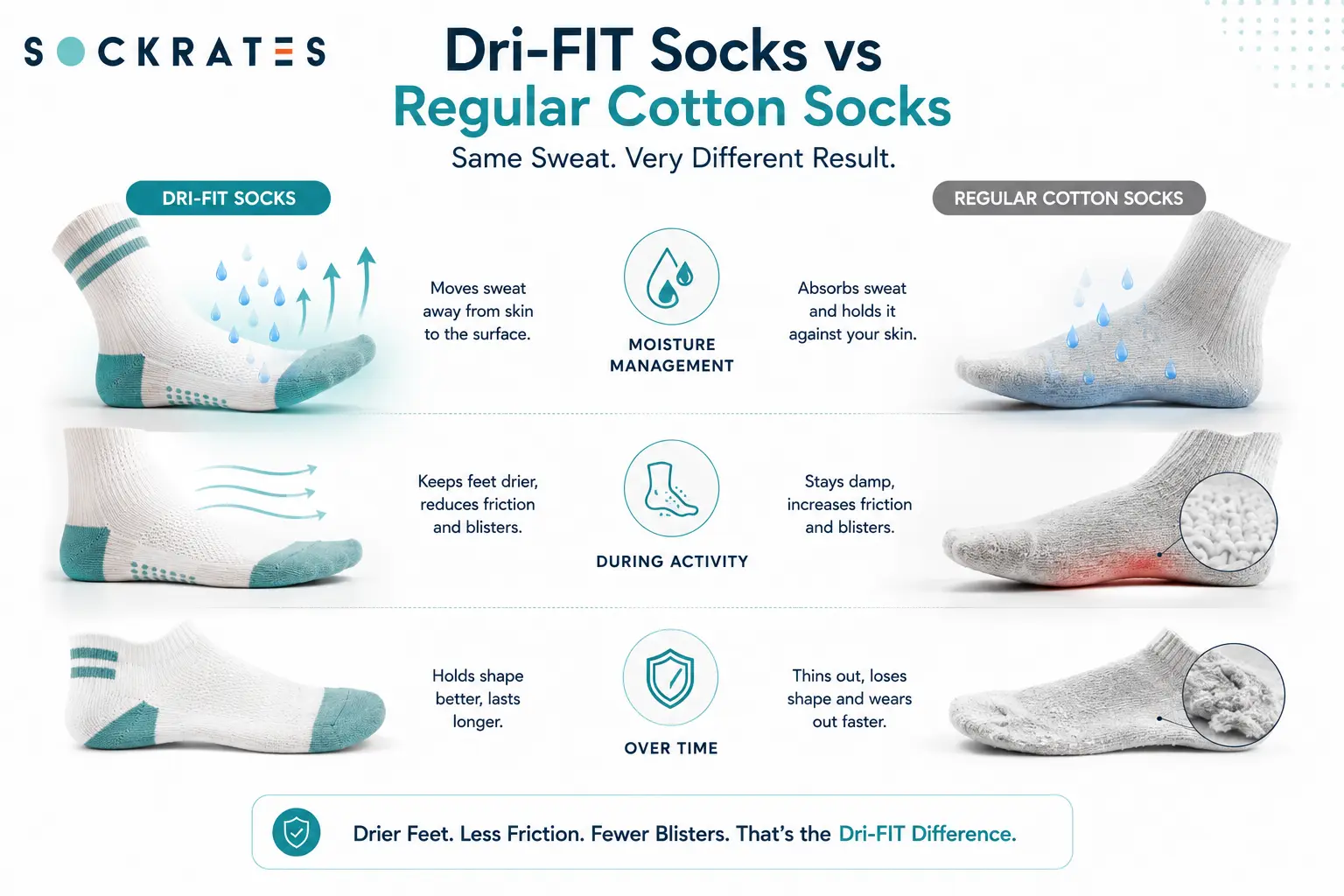
A plain cotton sock absorbs sweat and holds it against your foot. The sock gets heavier and stays damp long after you stop moving. A Dri-FIT sock sends most of that moisture to the outer surface instead. Your skin stays drier even while you are still sweating.
How each feels during extended activity
Damp cotton is where the trouble usually starts. Wet skin grips the fabric, friction rises, and blisters follow. Herring and Richie tested exactly this with 35 long-distance runners, using socks identical in every way except fiber content. The runners wearing 100% acrylic socks had fewer and smaller blisters than those in 100% cotton.
One caveat is worth knowing. The same researchers repeated the test with thinner, generic cushion-sole socks and found no advantage for either fiber. Fiber alone will not save your feet. The padding has to be there too.
How each holds up over time
Cotton-heavy socks tend to thin at the heel and lose cuff grip sooner. Synthetic blends generally hold their shape better through repeated washing. The spandex and nylon in the blend are there largely for that reason. Heat is what shortens their life, so a hot dryer will age any performance sock quickly.
Key Features to Look For in Dri-FIT Socks
1. Moisture management
This is the entire point of the sock, so check fiber content before anything else. A higher synthetic share pulls sweat off the skin faster. Drier skin means lower friction, and lower friction means fewer blisters.
2. Mesh ventilation zones
Look for an open knit panel across the top of the foot. That area sits pressed under the shoe upper and traps heat. A looser knit there lets warm air escape instead of building up around your toes.
3. Arch compression and fit
A good performance sock has a band of tighter knit across the arch. It stops the sock sliding down into your shoe mid-session. A sock that slips ends up bunched under the foot, and bunched fabric rubs.
4. Cushioning placement
Padding belongs where your foot actually lands, at the heel and forefoot. Those two areas absorb the most impact when you run, jump, or stand for hours. Cushioning spread evenly everywhere just makes the sock hotter and bulkier than it needs to be.
Who Are They Best For?
Runners see the clearest benefit, since long sessions produce steady, sustained sweat. Gym-goers get value too, particularly during intervals and heavy lifting. Basketball, soccer, and golf players choose them for the same reason: heat plus repeated movement inside a closed shoe. You do not have to compete to benefit, though. Nurses, teachers, retail and warehouse staff, and anyone travelling all day spend hours on their feet in the same conditions. That group often notices the difference more than athletes do, because the exposure lasts a full shift.
What About Non-Nike Moisture-Wicking Socks?
Because Dri-FIT is a Nike trademark, no other brand can put that name on a sock. Plenty of them work on the same principle under different names, and Coolmax is a fabric brand used across the industry. What matters on the label is fiber content, not the marketing term.
Socks made to order follow the same rules. A custom cycling sock knit from synthetic fibers wicks moisture, compresses, and resists odor the same way a branded performance sock does, often with OEKO-TEX Standard 100 materials and recycled polyamide in the blend. What changes is the design. A logo knitted into the yarn will not crack or peel the way a surface print does, which is why teams, clubs, and event organizers choose it. Runs start at 100 pairs, knit in Castel Goffredo, Italy, with a seven-day turnaround. There is a fuller breakdown of blends, cuff height, and sizing for anyone comparing options first.
How to Care for Dri-Fit Socks
Wash them cold with similar colors. Skip fabric softener, which coats the fibers and slows the wicking. Air dry where you can, or tumble on low, since high heat damages elastic and polyester. Turning them inside out first helps lift the skin oils that hold odor. Replace them once the fabric starts to pill, the cuff sags, or the arch band stops gripping.
Frequently Asked Questions
Create socks your team will actually be proud to give away