
What you'll learn in 30 seconds
Custom running socks are one of the best pieces of race and club merch you can order. This guide covers the difference between knit-in and printed socks, which fabrics actually hold up on long runs, how to design for finisher photos, what things cost at different quantities, and the eight questions you should ask any supplier before placing an order.
Why Running Socks Beat Almost Every Other Piece of Race Merch
Race tees pile up in dresser drawers. Most runners own dozens. Socks are different. They get worn, washed, and worn again. The reach per dollar is hard to beat.
The running market itself is also growing fast. The TCS New York City Marathon finished with over 56,000 runners in November 2024. That made it the largest race in the United States that year, according to Running USA. Per-race participation across the country also grew about 8 percent in 2024, based on the RunSignup RaceTrends report. More runners means more demand for merch they actually want.
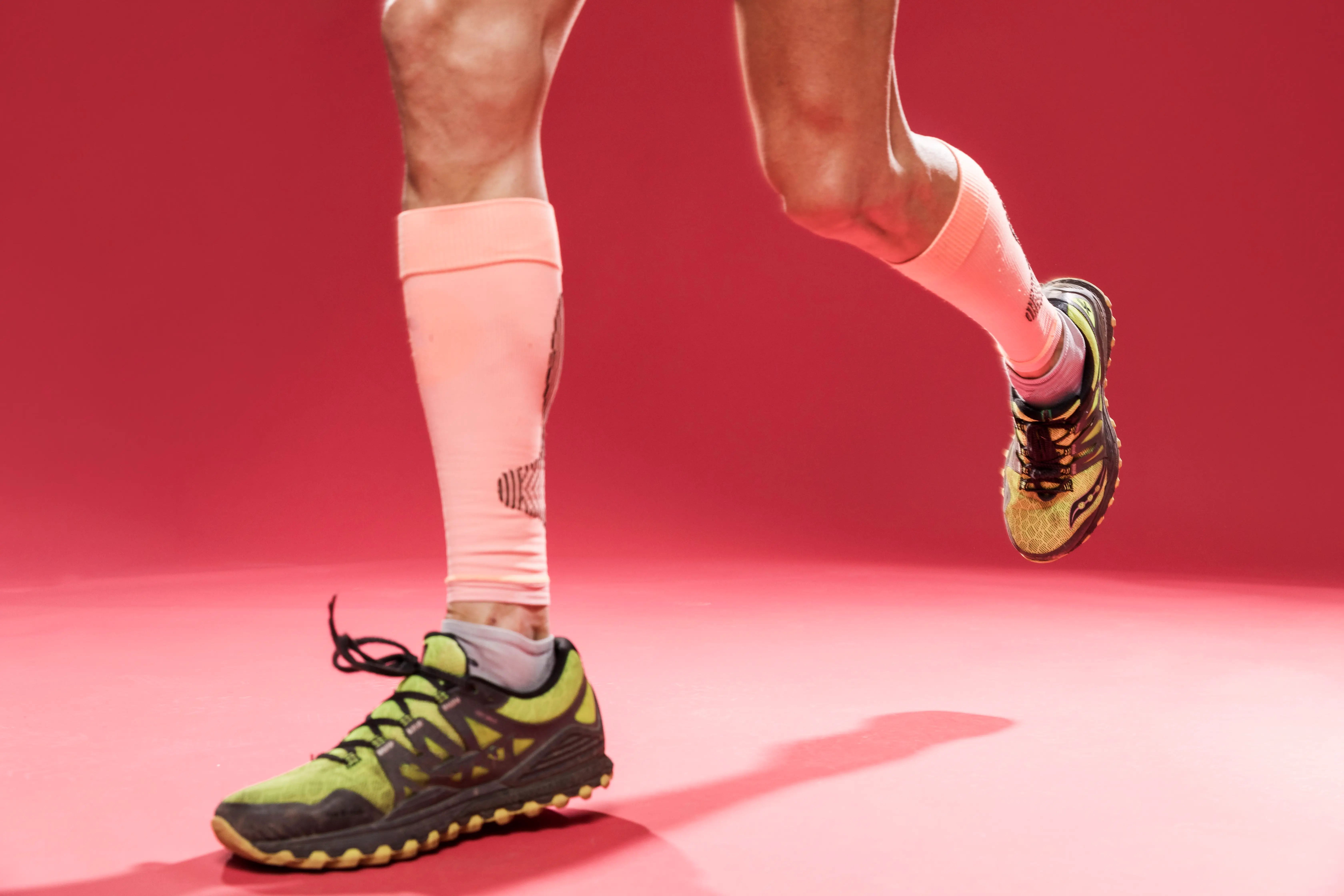
Socks also sit in prime visual space. Finisher photos catch the calf, not the chest. Strava posts show legs and shoes. Sponsor logos on socks get seen during the run, after the run, and on every long run that follows. A four-dollar sock worn fifty times beats a twelve-dollar shirt worn twice.
Knit-In vs. Sublimated Printing: The One Decision That Changes Everything
Most first-time buyers do not know to ask about this. It is the biggest quality lever you have.
What fully knitted means
The design is the fabric. Yarn is fed into a machine stitch by stitch. The logo and the sock are made together. Color does not sit on top. It is woven in.
What sublimated or printed means
A plain blank sock gets printed afterward. Heat presses ink onto the surface. The look is sharp on day one. The trade-offs show up later.
The stretch test
Pull a printed sock over a foot and the ink can crack. White lines appear across the design. Woven designs flex with the fabric because there is no separate ink layer to break. You can see the side-by-side difference on our woven vs. sublimated guide, and it shows up in person within a few wash cycles.
When sublimation actually makes sense
Photo-realistic art. Color gradients. Tiny logos with fine detail. Very small runs where the setup cost of knit production is harder to justify. Outside those cases, knit-in is the safer call for running socks.
Quick verdict
Choose knit-in if your runners will actually wear the socks. Choose sublimation only if your design has gradients you cannot simplify.
The Fabric Conversation: What Your Socks Should Be Made Of
Skip the marketing words. Look at the actual blend.
Why pure cotton fails runners
Cotton holds onto sweat instead of moving it away from the skin. Once your feet get wet, the skin softens and starts to rub against the sock with every stride. That friction is what turns into hot spots and blisters by mile eight. The Center for Endurance Sport explains that moisture increases the rubbing force between foot and sock with each step. Friction blisters end up affecting as many as 39 percent of marathoners, according to a clinical trial summary on ClinicalTrials.gov. Cotton-only socks only make those odds worse, which is why serious running socks always blend in nylon and spandex.
The blend most runners want
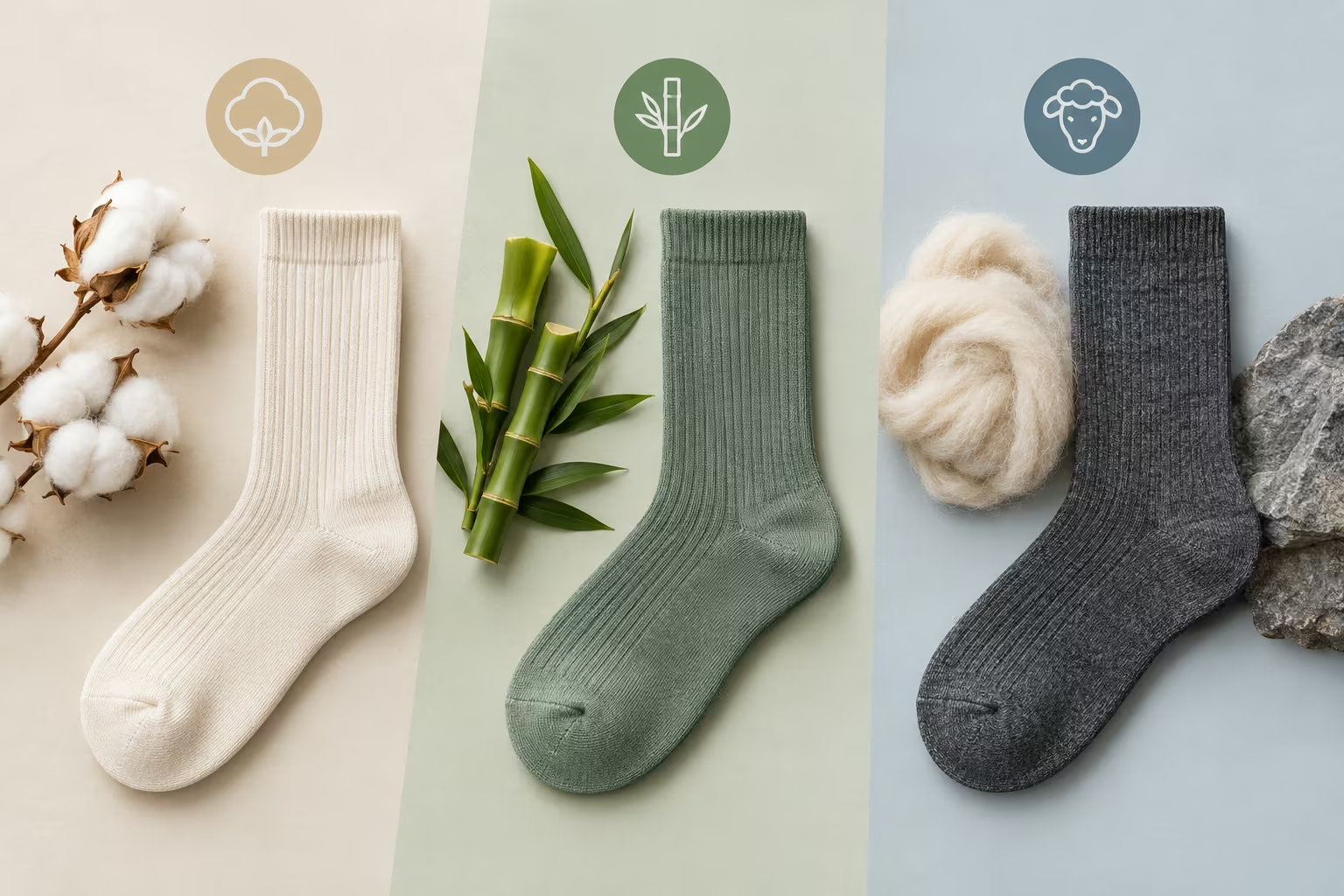
Combed or mercerized cotton, plus nylon (also called polyamide), plus a small percentage of spandex or elastane. Cotton handles softness. Nylon adds strength and faster drying. Spandex holds the sock in place so it does not slip into the shoe mid-run.
Mercerized cotton in plain language
Cotton treated to be smoother, stronger, and brighter in color. It holds dye through many washes. Sockrates uses mercerized cotton blends in most of its custom socks, which is why the colors stay sharp after the season ends.
Merino wool
Best for cold-weather races, trail runs, and premium club drops. It regulates temperature and resists odor. Costs more, but it is the right call for ultra distances and winter clubs.
Yarn source matters
Two socks with the same blend can feel very different. Italian and US-spun yarns are tighter, smoother, and last longer. Bulk imported yarn is cheaper for a reason. Ask your supplier where the yarn is spun, not just what the blend percentages are.
Sock Heights: Picking the Right Cut for Your Runners
Height is part style, part function. Match it to the race or the runner.
- No-show or footie: Summer 5Ks. Road runners who hate visible socks. Smallest branding canvas.
- Ankle or quarter crew: The everyday workhorse. Most popular for general race swag.
- Crew or mid-calf: Best for branding real estate and team identity. The Tracksmith look. Logos read well on the side of the calf.
- Over-the-calf and knee-high: Trail, ultra, obstacle course, compression. Holds up against debris and supports calf muscles.
- Compression: Snug fit through the calf. Graduated compression is tighter at the ankle and looser higher up. Useful for recovery and long races.
If you are unsure, ask what your runners already train in. The sock they reach for at home is the height they will keep wearing.
Designing a Sock That Does Not Look Like Every Other Race Sock
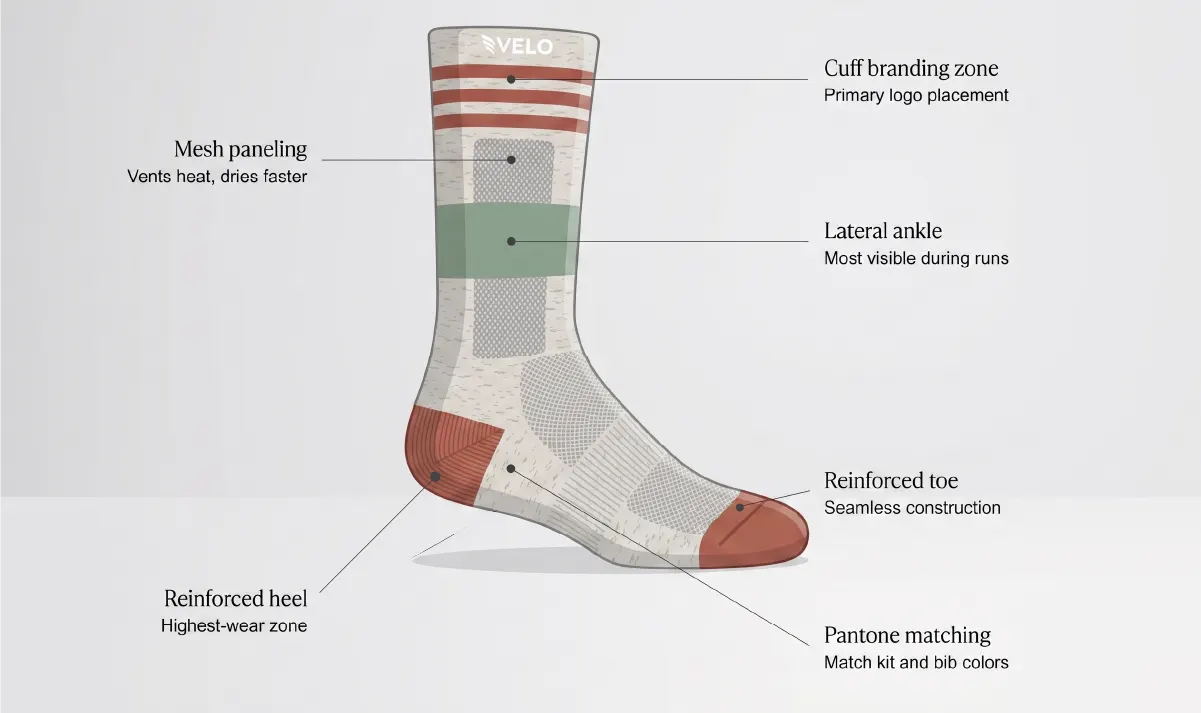
This is where most orders go wrong. The factory builds what you approve. So the design has to be right before production.
Logo placement that survives stretch
The side of the calf is your strongest spot. The center calf works too. The foot top is decent for secondary marks. Avoid placing critical logos where the sock stretches the most, like around the heel or the toe seam.
The rotation rule
Runners do not pay attention to which sock is left or right. Your logo should read whether the runner steps off the left foot or the right. Symmetrical placement helps. So does mirrored design on each sock.
Color count
Knit machines run four to six colors cleanly. Cramming in eight makes the design look muddy. Strip your palette down to the colors that earn their place.
Common rookie mistakes
- Text smaller than 14 points. It turns to pixels in knit.
- Photo-realistic logos in knit production. The details are lost.
- Forgetting the foot or sole. It is a huge branding area people ignore.
- Big race dates printed across the calf. After the event, runners stop wearing them.
Pantone matching
Brand colors only feel like brand colors when they match exactly. Pantone matching is a real process, not a marketing line. Sockrates includes Pantone matching with every order, which is one of the reasons brands like Pepsi and Coca Cola use them for company gear.
Designing for the finisher photo
Think about what shows when the runner is mid-stride. The outside of the calf gets the camera. Put the boldest element there.
How Many Pairs Should You Actually Order?
This is where race directors and club leaders waste the most money. Or run short.
For races
Order against your registered runners. Add 5 to 10 percent for late sign-ups, sponsors, and the team. Race-day giveaways feel generous when you have a buffer. They feel painful when you run out by 9 a.m.
For clubs
A safe rule of thumb is 1.5 times your active members for a first run. Members will buy extras for partners and friends. New joiners will want a pair on day one.
For brands launching merch
Start small. Test demand. A pilot run of 100 to 200 pairs tells you which design sells. Then scale.
Minimum order quantities
Most factories sit between 30 and 200 pairs as a minimum. Sockrates starts at 100 pairs per size and design, which is one of the lower minimums for woven custom socks. Some printed-sock suppliers go lower but the trade-off shows up in quality.
Pricing curve
Per-pair cost drops as volume rises. Expect roughly 30 to 50 percent savings from the smallest tier to the highest tier. The biggest jump usually happens between 100 and 500 pairs.
Sizing strategy
One-size-fits-most works for adult ankle and crew styles. Split into men, women, and youth when fit matters more, like compression styles or high-mileage running socks.
Timelines: When to Place Your Order
Custom socks are not next-day items. Plan backward from your race date.
The honest timeline
- Design proofs: 2 to 5 business days
- Revisions: 1 to 3 business days per round
- Production: 1 to 4 weeks depending on style and quantity
- Shipping: 3 to 10 business days for most regions
Most fully knit custom sock orders ship in 4 to 8 weeks total. Sockrates averages a 7-day turnaround for production after design approval, which is among the fastest in the industry.
How far out to start
- 10 or more weeks out: Comfortable. No rush fees. Room for sample reviews.
- 6 to 8 weeks out: Safe with reliable manufacturers.
- 4 to 5 weeks out: Rush territory. Some factories will say yes, but limits creep in.
- Under 4 weeks: Expect quality compromises or heavy expedite fees. Or both.
Holiday season caveat
Q4 production backs up everywhere. If your event is in November, December, or January, place the order before mid-September.
Pricing: What You Will Actually Pay
Marketing pages love round numbers. Real budgets need real ones.
Realistic ranges per pair
- $10 to $14 per pair at small runs of around 50 to 100 pairs
- $7 to $10 per pair in the 200 to 500 range
- $9 to $10 per pair at 1,000 pairs and above
Hidden fees to ask about upfront
- Pantone color matching fees
- Sample or proof fees
- Custom packaging or header cards
- Individual polybagging
- International shipping and customs duties
- Re-design fees beyond a set number of revisions
The one question that saves money
Ask: "Can I get a quote that includes everything from design to delivery, with no add-ons later?" Sockrates calls this an all-inclusive quote. Other suppliers may not offer one, which is usually a sign that surprise fees are coming.
When cheap socks cost more
A bad sock damages your brand more than a missing sock does. Runners notice itchy yarn, weak elastic, and ink that flakes after two washes. The savings disappear the first time a club member posts a complaint.
Packaging That Makes Your Socks Feel Like a Product
Small detail. Big lift in perceived value.
- Header cards or branded sleeves elevate the unboxing moment
- Individual polybags keep pairs clean during distribution
- Hangtags add retail polish if you plan to sell
- Branded mailer boxes turn a club drop into a launch
Even at race expos, socks with a printed sleeve feel like merch, not swag. Sockrates includes custom labels and packaging within its all-in pricing, which removes a step most other suppliers charge for.
Three Real Use Cases: How to Order Smart for Your Situation
For Race Directors
Two solid plays here.
Include socks in a premium registration tier. Charge an extra $15 to $25 and runners feel they got a deal.
Sell socks as add-ons during registration. Pre-orders mean you produce only what is sold. Less waste, more margin.
Sponsor placement on a sock can be charged at $1,500 to $5,000 depending on race size. Sponsors love socks because their logo runs the full course on the runner's leg.
Hand out at packet pickup. Reserve a small stock for last-minute registrations and VIPs.
For Run Club Organizers
Pre-sale model works best. Open a window for orders. Collect payment. Then produce. Zero inventory risk.
Members-only color drops build community. A limited edition feels rare. Runners post it. Visibility goes up. New members follow.
Some clubs use sock margins to fund coaches, event entries, or charity donations. A $4 cost and a $14 sale price builds a real budget over a season.
For Apparel Brands and DTC Founders
Socks are a strong first product. Low SKU complexity. Strong margins. Repeat purchases.
Aim for a 60 to 70 percent gross margin at retail. That gives you room to discount, gift, and run influencer drops.
Test designs with limited drops of 100 to 250 pairs before scaling. Track sell-through. Re-order the winners.
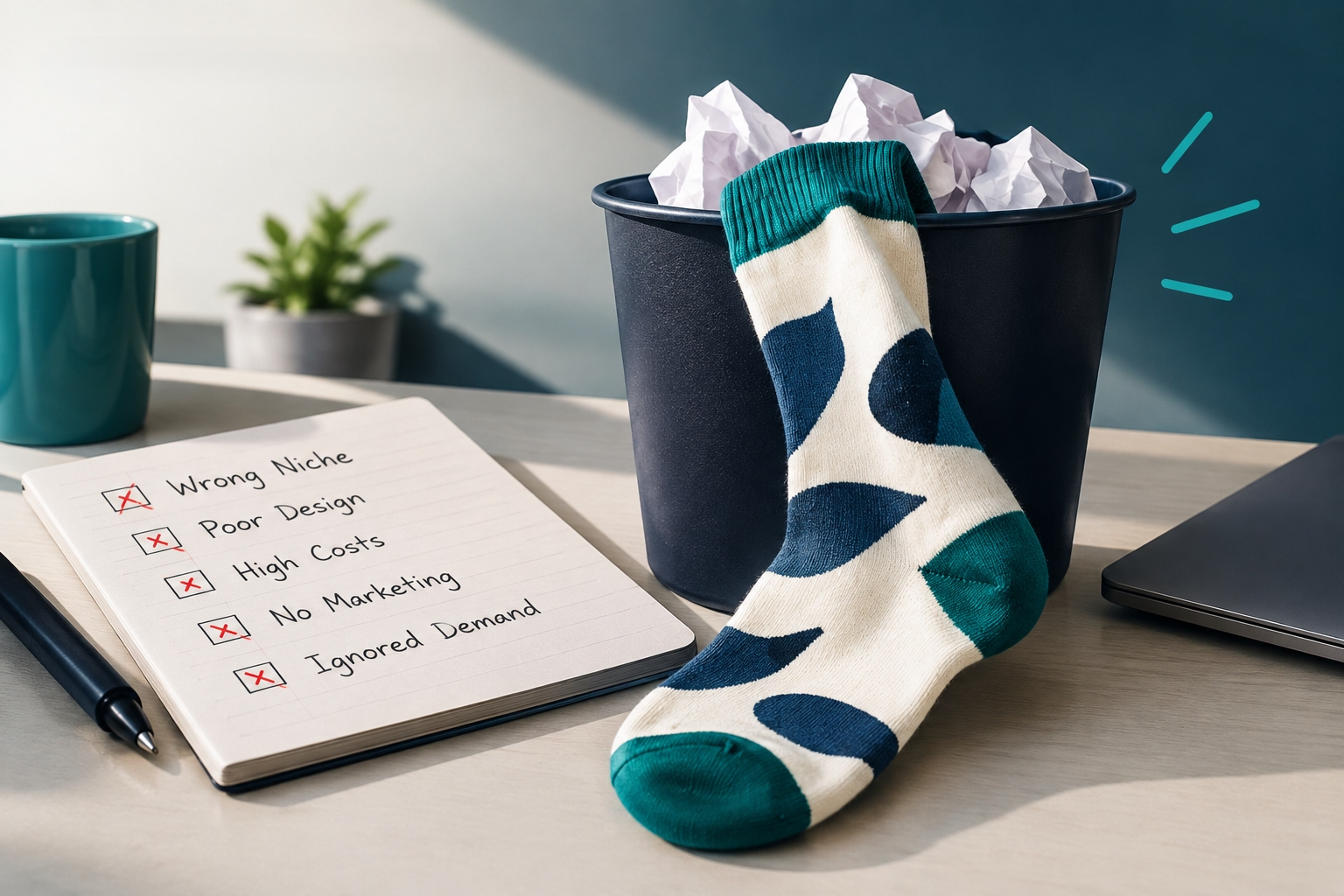
Mistakes That Will Sink Your First Custom Sock Order
- Approving a mockup without seeing a physical sample first
- Choosing the cheapest supplier without checking reorder reputation
- Forgetting to confirm sock height in inches or centimeters
- No backup plan if delivery slips past your race date
- Letting the design team work without your brand Pantone codes
- Ordering one size when your runners are not one size
- Putting the event date so large that wearability ends with the race
How to Vet a Custom Sock Supplier: 8 Questions to Ask
Save this list. Send it to any supplier before paying.
- Are the socks knit-in or printed, and which do you recommend for my design?
- Where are your yarns sourced?
- What is the realistic delivery window for my quantity?
- Are design revisions, samples, and Pantone matching included in the price?
- Can I see a physical sample before full production?
- What is the reorder process and is the minimum lower?
- What happens if there is a quality issue after delivery?
- Can I see past work from similar races, clubs, or brands?
Ready to Put Your Brand on Your Runners' Favorite Sock?
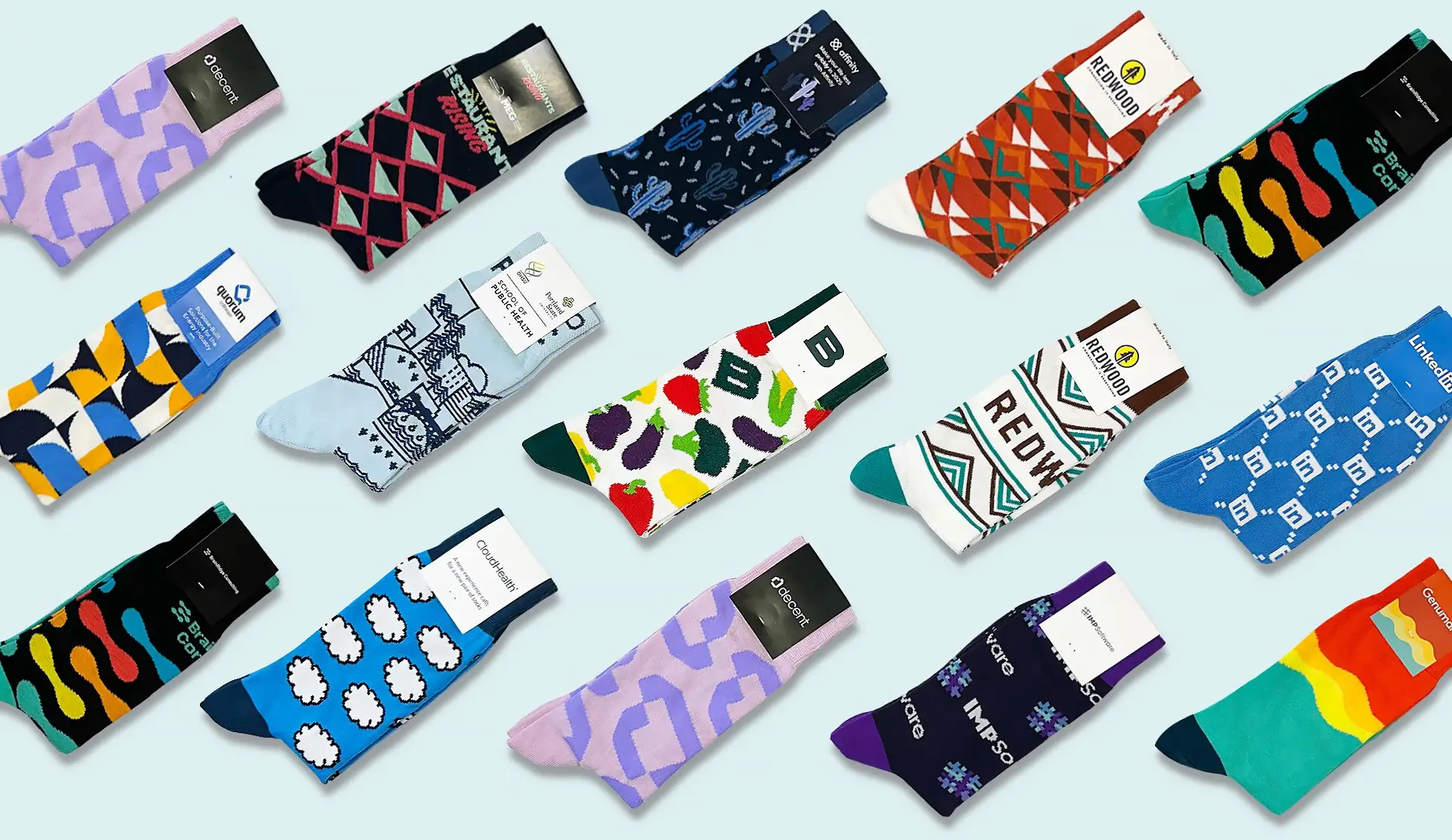
Good running socks are made, not just printed. Sockrates handles design, Pantone matching, and shipping inside one all-in quote. The factory in Italy has been making socks for generations. The turnaround is fast. The minimums are reasonable. And design revisions are unlimited.
Send your logo and idea over and a Socktologist will come back with a custom sockboard mockup before you pay anything. Start a project here.
Frequently Asked Questions
Create socks your team will actually be proud to give away