

What you’ll learn in 30 seconds
Hospital socks are grip socks made for patient safety. Hospitals hand them out to prevent falls, keep feet warm, and keep things hygienic. Almost every patient gets a pair, and most get to keep them. You can also bring your own, and a good pair beats hospital issue. Below, we cover all of it, including what the sock colors mean.
What Are Hospital Socks?
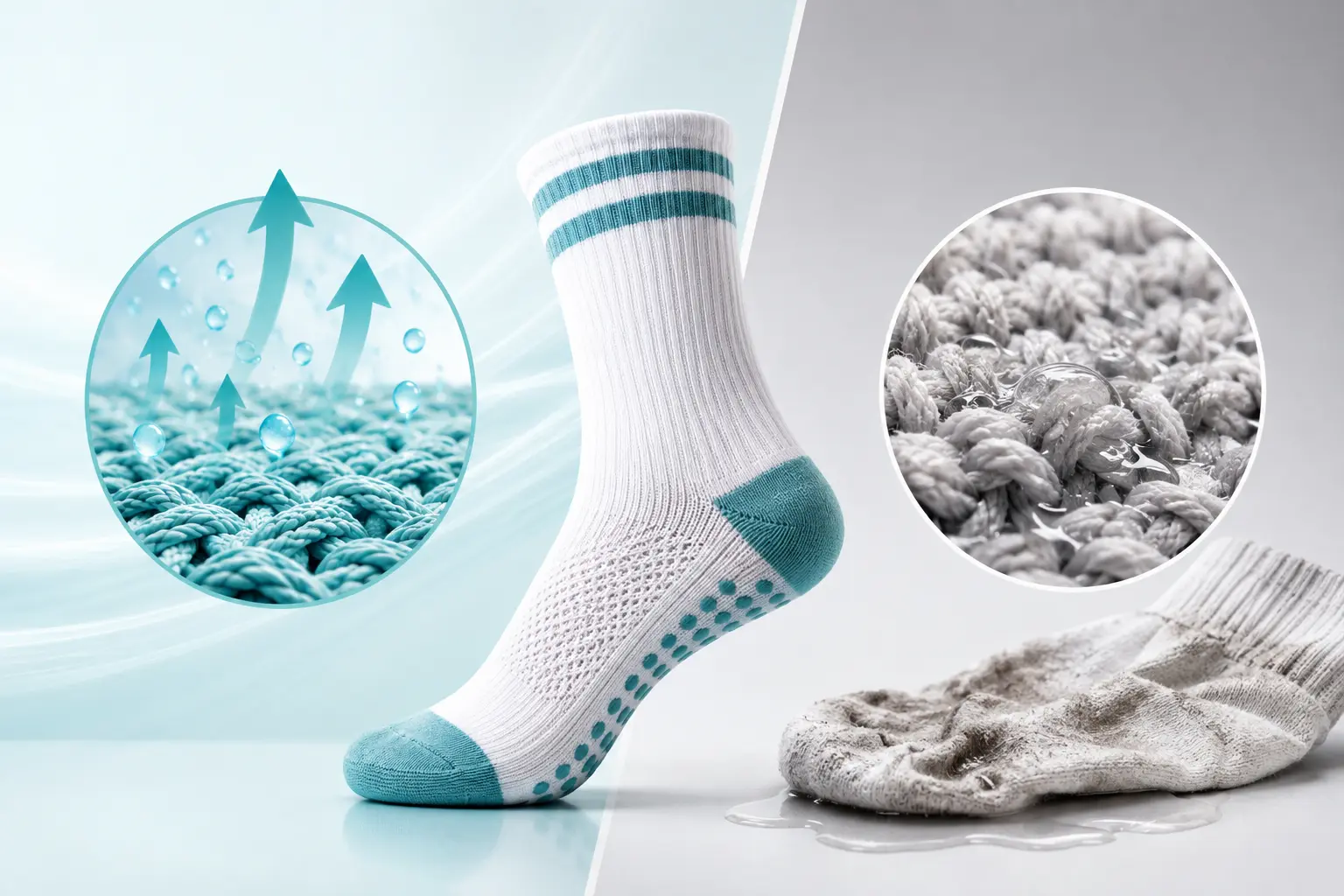
Hospital socks are soft, loose socks with rubber grip pads on the sole. The grips create traction on smooth ward floors and help prevent patient falls. In the UK, the NHS usually calls them slipper socks, though you will also hear grip socks, non-slip socks, or grippy socks.
What Makes Them Different from Regular Socks?
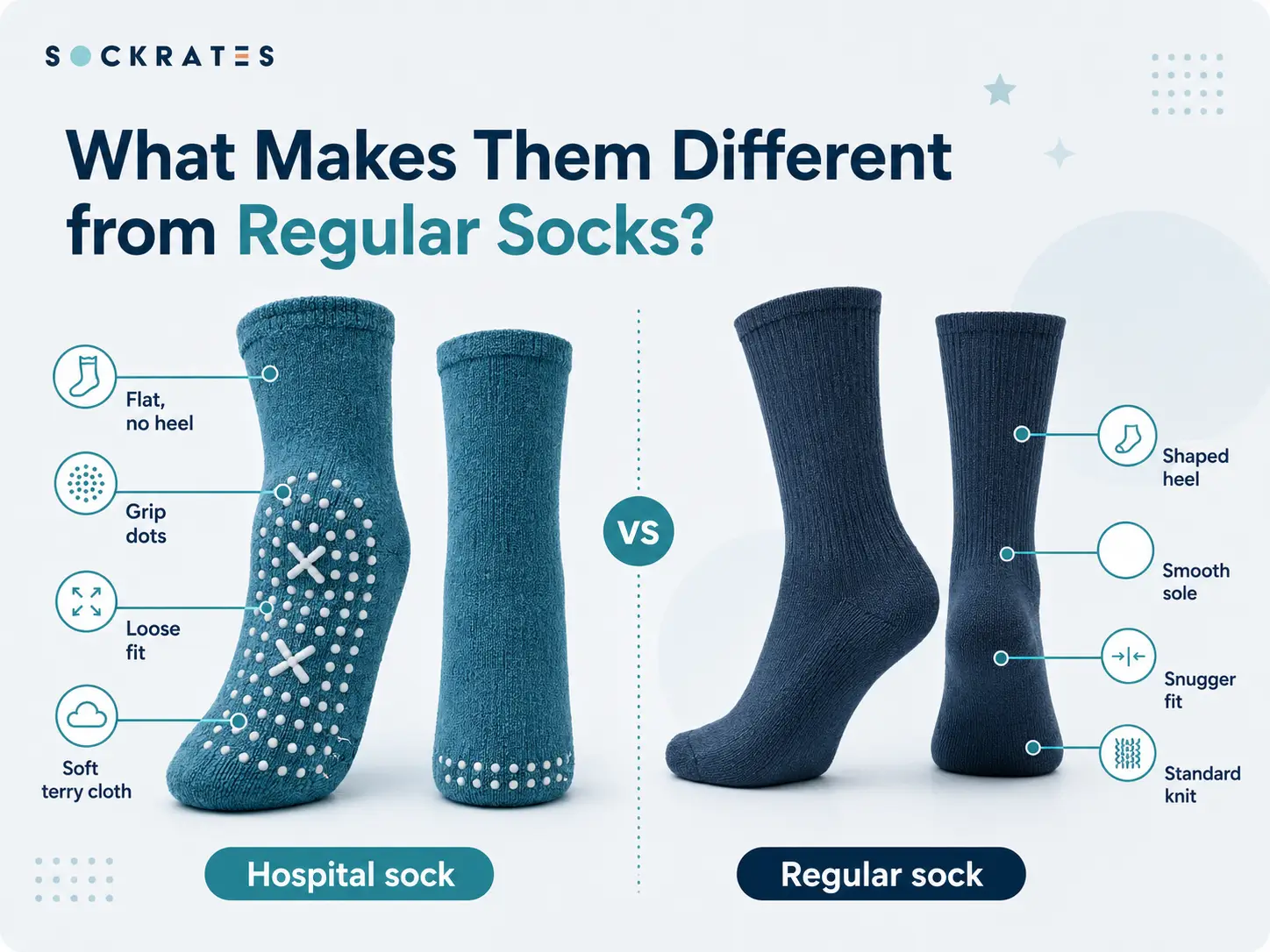
Pick up a hospital sock and you will notice it has no heel. It is cut flat, almost like a mitten for your foot. There is no right or wrong way to wear it. That matters when feet are swollen and a nurse needs to work fast.
Turn it over and you will see the grip pattern. A regular sock has a smooth sole that slides on polished ward floors. Hospital socks have rubber treads printed on the bottom. Many NHS pairs carry treads on both sides. That way, the grip still works even if the sock twists on the foot.
The fit is loose by design. Wards stock a few sizes that cover most adults. A snug sock would squeeze feet that swell after surgery or during bed rest. A loose one slips on with ease and never digs in.
The fabric is usually a soft terry knit. It is warm and breathable, which suits long hours in bed. The trade-off is fit. The fabric stretches and bags out, so these socks never feel tailored.
Why Do Hospitals Give Them Out?
Three reasons: safety, warmth, and hygiene. Ward floors are hard and often polished, and falls are a real risk. Each year, hospitals in England and Wales report about 250,000 inpatient falls. Nearly 100,000 of those patients suffer injuries, from bruises to fractures. Falls overall cost the health and care system an estimated £2.3 billion a year. Slipper socks are one of the cheapest tools wards have against those numbers. The socks also keep feet warm, since hospitals feel cold when you are stuck in a gown. And they act as a clean barrier between bare feet and busy ward floors.
Who Wears Them?
Most admitted patients get a pair, but some groups need them most. Post-surgery patients wear them for their first shaky steps. Elderly patients wear them because their fall risk is highest. Women in labour wear them while pacing maternity ward corridors. Physiotherapy patients wear them during balance and walking exercises. Mental health inpatients wear them because shoes with laces are not allowed. That last group even gave the socks a life online, where a psychiatric stay is now called a "grippy sock vacation." And plenty of people never stop wearing them. The same grip that works on ward flooring works on laminate and tiles at home.
Can You Bring Your Own to the Hospital?
Yes, and the NHS actively encourages it. Hospitals like the Royal Brompton advise patients to pack their own well-fitting, non-slip footwear. A personal pair also feels warmer and far less clinical than standard ward issue. If you are not sure where to start, here is a guide on where to buy hospital socks. Some people go a step further and order custom grip socks with their own colours, names, or designs. A personalised pair is a lovely gift for someone going in for surgery or labour. Just make sure any pair you pack has non-slip grips on the sole.
Frequently Asked Questions
Create socks your team will actually be proud to give away